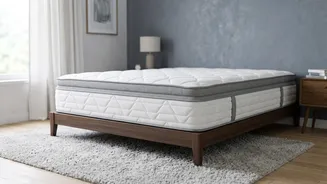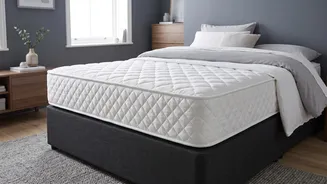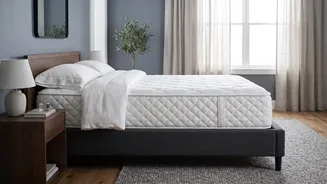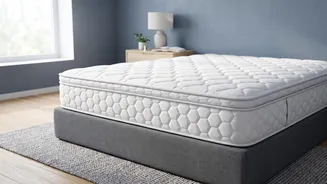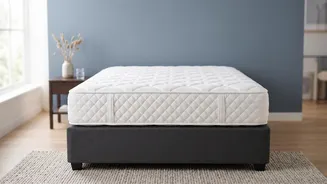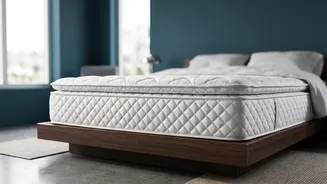







The mattress world is full of dazzling claims about 'cloud-like comfort' and 'perfect sleep'. But the secret to a great spring mattress isn't in the marketing slogan; it’s in the construction. Here’s what you actually need to look for.
The Core of the Matter: Coil Types
The heart of any
spring mattress is its coil system. This is what provides the primary support. There are two main types you'll encounter. Bonnell coils are the traditional, hourglass-shaped springs that are interconnected. They create a firm, durable, and often more affordable mattress but tend to transfer motion, meaning you'll feel your partner move. Pocketed coils, on the other hand, are individually wrapped in fabric pockets. This allows each spring to move independently, offering more targeted support that contours to your body and dramatically reduces motion transfer. For couples or light sleepers, a pocketed coil system is generally the superior choice.
Coil Count vs. Coil Gauge
Shoppers are often told that a higher coil count means a better mattress. This is only partly true. Coil count is the total number of springs in the mattress. While a higher count can offer more precise contouring, the quality of the coils is far more important. This is where coil gauge comes in. Gauge measures the thickness of the wire used for the spring, and the scale is inverse: a lower number means a thicker, firmer wire, while a higher number means a thinner, softer wire. A mattress with 800 well-made, low-gauge coils will be more supportive and durable than one with 1,500 flimsy, high-gauge coils. A good range for durability and support is often between a 13 and 15 gauge. Don't just look at the number of coils; ask about the thickness and quality of the steel.
The All-Important Comfort Layer
The 'comfort' you feel when you first lie down comes from the layers sitting on top of the springs. This comfort system is what cushions your body and relieves pressure. These layers can be made from various materials like memory foam, polyurethane foam (polyfoam), or latex. Memory foam offers deep contouring and pressure relief, which is great for side sleepers. Latex provides a more buoyant, responsive feel and is naturally cooling. The thickness of these layers matters, too. A plush mattress might have four or more inches of comfort layers, while a firm one might only have one or two. Pay close attention to these materials, as they define the initial feel and play a huge role in temperature regulation.
Support For Your Sleep Style
The right mattress is not a one size fits all product ; it depends entirely on your body and how you sleep . Back and stomach sleepers generally need a firmer mattress (think lower gauge coils and thinner comfort layers) to keep their spine in a neutral alignment and prevent their hips from sinking too deeply . Side sleepers , however , often benefit from a softer to medium firm mattress that can cushion the shoulders and hips , which a higher gauge coil and thicker comfort layers can provide . Heavier individuals will likely need the robust support of lower gauge (thicker) coils to ensure durability and prevent sagging .
Decoding Jargon and Fine Print
The mattress industry is notorious for marketing gimmicks . Be wary of proprietary foam names like 'DreamFoam' or 'SuperFoam', as they are often just standard polyfoam with a fancy name . Terms like 'gel infused' for cooling are also common , but the overall breathability of the mattress , largely determined by the open structure of the coils and the cover material , is more impactful . Finally , look beyond the price tag . Constant '50% off' sales often rely on an artificially inflated initial price . Instead , focus on the warranty details , the length of the sleep trial period , and the quality of edge support , which prevents sagging when you sit on the side of the bed .