






A 'Steam World' Confirmed
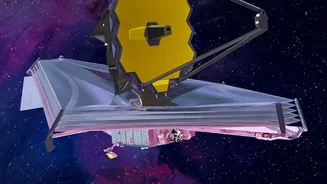
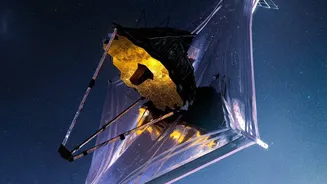
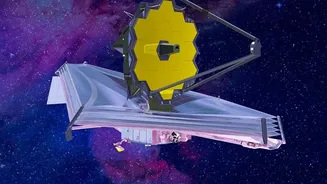
The latest groundbreaking discovery comes from a planet named GJ 9827 d, located nearly 100 light-years away in the constellation Pisces. While hints of water were previously detected by the Hubble Space Telescope, the unparalleled power of the JWST has
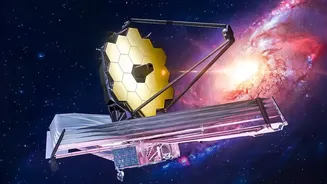
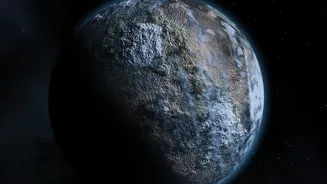
confirmed that the planet's atmosphere is dominated by hot water vapour. Researchers have dubbed it a 'steam world,' a type of planet long theorized but never before observed directly. This world is about twice the size of Earth but orbits its star in just over six days, resulting in scorching temperatures that make it inhospitable for life as we know it. Yet, the confirmation of a water-rich atmosphere on a planet smaller than Neptune is a monumental achievement. It proves that worlds with atmospheres made of heavier molecules, like Earth's, can and do exist elsewhere in the galaxy.
How to See an Atmosphere From Light-Years Away
Detecting what a distant planet's air is made of sounds like science fiction, but it's possible through a technique called transmission spectroscopy. When an exoplanet passes in front of its host star from our point of view—an event called a 'transit'—a tiny fraction of the starlight filters through the planet's atmosphere. Each chemical element and compound, like water vapour or methane, absorbs light at very specific wavelengths, leaving a unique 'fingerprint' on the light that reaches the telescope. By analyzing this filtered starlight, astronomers can decode the atmospheric composition. The JWST's incredible sensitivity allows it to detect these minuscule changes in light with unprecedented detail, turning a faint twinkle into a rich dataset about a world hundreds of light-years away.
Why Water Is the Holy Grail
The search for extraterrestrial water is central to the search for extraterrestrial life. Every form of life on Earth depends on water to survive. Finding it elsewhere, even in the form of steam on a blistering hot planet, is a profoundly important step. It confirms that one of the most crucial building blocks for life is not unique to our solar system. The discovery of water on GJ 9827 d, and other exoplanets like the 'sub-Neptune' TOI-421 b, suggests that the raw ingredients for habitable worlds are common throughout the galaxy. While these specific planets are not habitable, they serve as crucial test cases, refining the techniques astronomers will use to study more Earth-like planets in the future.
Is It a Sign of Life? Not Yet
It's essential to manage expectations: finding water vapour is not the same as finding life. GJ 9827 d is far too hot for liquid water to exist on its surface, with temperatures potentially reaching 400 degrees Celsius, similar to Venus. Scientists are clear that the planet is not hospitable. However, this discovery is a critical piece of the puzzle. By studying a 'steam world,' astronomers can better understand the formation and evolution of planets that fall between the size of Earth and Neptune—the most common type of planet found so far in the Milky Way. This knowledge will help them narrow down the search and identify future targets that might have more life-friendly conditions. The goal is to eventually find a rocky planet in the 'habitable zone' of its star, where temperatures allow for liquid water, and analyze its atmosphere for a cocktail of gases that could only be produced by living organisms.