







What is a Caretaker Government?
In Israel's parliamentary system, there is no governmental vacuum after an election or a no-confidence vote. The outgoing government continues to function until a new one is sworn in and wins the confidence of the Knesset, Israel's parliament. This transitional
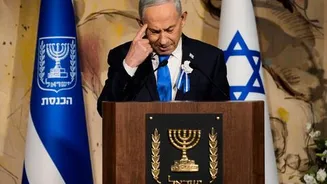
administration is known as a caretaker government. Legally, it retains the full powers of a regular government to manage state affairs, including security and foreign relations. However, a convention of 'restraint' applies, meaning it is expected to avoid making major, irreversible policy decisions unless there is a pressing national need. Benjamin Netanyahu currently leads such a government after his bloc failed to secure a majority in the recent elections. This setup ensures the state continues to operate, but with a leader who lacks a fresh popular mandate.
Netanyahu's Powers and Their Limits
As caretaker prime minister, Netanyahu still wields significant authority. He commands the executive branch, oversees the military, and directs security policy. Israeli law makes no formal distinction between a regular and a caretaker government's powers, and past caretaker administrations have launched major military operations. For instance, the prime minister's cabinet can vote to launch a new war. However, while the legal powers are vast, a government that has lost its majority faces greater public and judicial scrutiny. The Supreme Court has established that a caretaker government's decisions are subject to a stricter standard of reasonableness. Areas like high-level appointments face significant restrictions, but security matters are often considered an exception to the duty of restraint, especially in the face of an immediate threat. This leaves Netanyahu in a powerful but politically precarious position, able to act but aware that any major move will be heavily contested.
The Race to Form a New Government
Following the election, President Isaac Herzog tasked Gadi Eisenkot, leader of the centrist Yashar party, with forming the next government. Eisenkot received recommendations from 67 of the 120 members of the Knesset, giving him the first opportunity to build a coalition. He has 28 days, with a possible 14-day extension, to secure a majority. The challenge is immense, as his support comes from a diverse bloc of parties, including right-wing, centrist, and Arab-led factions who have deep ideological disagreements. The opposition bloc is already moving to assert its power in the Knesset by planning to replace the parliamentary speaker, a move that would give them control over the legislative agenda even before a new government is formed.
High-Stakes Political Negotiations
The path to a new government is a maze of political arithmetic and tense negotiations. Several scenarios are on the table. Eisenkot's preferred path would be to build a stable coalition, but this is proving difficult. His bloc is internally divided over key issues, such as whether to form a government that relies on support from Arab parties. Another option being explored is a partnership with the ultra-Orthodox parties, who have traditionally been allied with Netanyahu. Meanwhile, Netanyahu has called for a 'unity government', and preliminary talks between Likud and Yashar representatives have taken place. However, key figures in Eisenkot's bloc have publicly rejected the idea, citing a lack of trust in Netanyahu. If Eisenkot fails, the mandate to form a government could pass to Netanyahu or another candidate. Should all attempts fail, Israel would be forced into yet another round of elections, with Netanyahu remaining as caretaker prime minister throughout the process.