







The Herald of the Monsoon
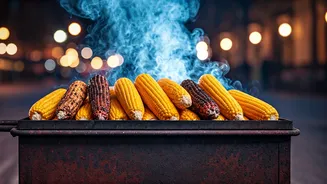
You know the season has truly turned when you spot them: the humble bhutta-wallahs, fanning embers on their mobile carts, a plume of fragrant smoke heralding their return to the city streets. Long before weather apps, the arrival of these vendors was
the most reliable forecast. With the first sign of dark clouds, they materialize on street corners, near parks, and along promenades, ready to serve what is arguably the most democratic and beloved snack of the Indian monsoon: roasted corn on the cob.
An Elemental Experience
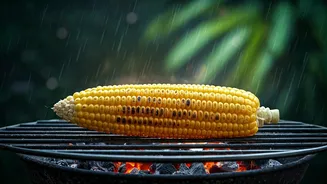
What is it about bhutta that makes it so inextricably linked with the rain? It’s a multisensory experience that begins with the sound—a gentle hiss as the corn hits the glowing coals. You watch, mesmerised, as the vendor patiently turns the cob, the kernels charring and popping, releasing a nutty, smoky aroma that cuts through the damp air. This isn’t a snack that’s pre-made or mass-produced. It’s cooked for you, right there, an elemental dance of fire, air, and earth that feels as ancient as the seasons themselves.
The Holy Trinity of Flavour
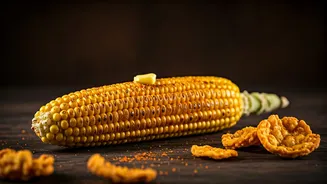
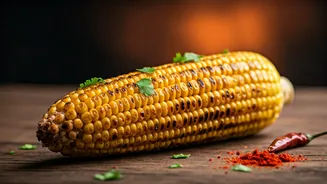
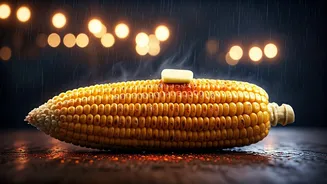
The magic, however, is incomplete without the final ritual. Once the corn is perfectly roasted—blackened in spots but tender within—the vendor performs a culinary masterstroke with the simplest of ingredients. A half-cut lime is dipped into a fiery mix of salt (often the pungent kala namak), red chilli powder, and sometimes a hint of chaat masala. This zesty, spicy, and salty concoction is then vigorously rubbed all over the hot cob, its juices sizzling as they seep into every crevice. The resulting flavour profile is an explosion on the palate: the sweetness of the corn, the smokiness of the char, the sharp tang of lime, and the tingling heat of the chilli. It’s a perfect balance designed to awaken the senses on a grey, rainy day.
More Than Just a Snack
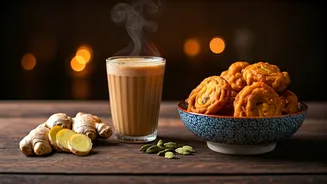
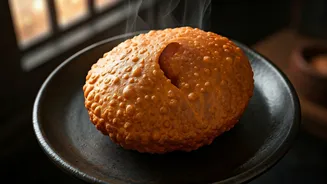
Eating bhutta is a street-side ritual. You huddle under a shop awning or a shared umbrella, the warmth of the cob a welcome contrast to the cool rain. It’s a snack that demands your full attention; it’s messy, hands-on, and utterly delicious. From Mumbai's Marine Drive, where couples share a cob while watching the waves crash, to the misty hills of Shimla, the experience is a shared cultural touchstone. It transcends class and age, uniting everyone in a simple, seasonal pleasure. Of course, bhutta is not alone. The monsoon also ushers in a craving for crisp, oily pakoras, steaming samosas, and endless cups of adrak-wali chai. These foods are the edible embodiment of comfort, a warm hug on a damp day.
The Enduring Appeal
In an era of gourmet cafes and global food trends, the enduring appeal of the humble bhutta is a testament to the power of simplicity and nostalgia. It’s not just food; it’s a memory. It’s the taste of childhood monsoons, of impromptu stops on the way home from school or work, of sharing a simple joy with loved ones. The corn itself might be a simple grain, but when roasted over coals and seasoned with a dash of spice and a squeeze of lime, it becomes a vessel for the entire experience of the Indian rainy season.