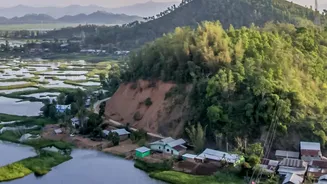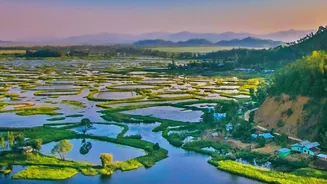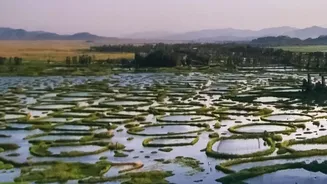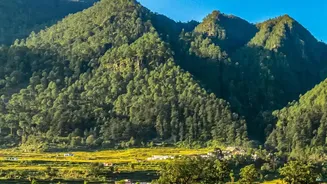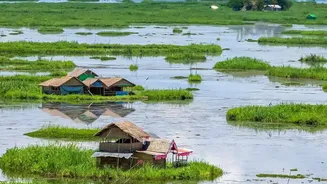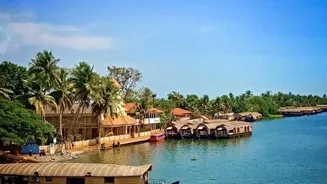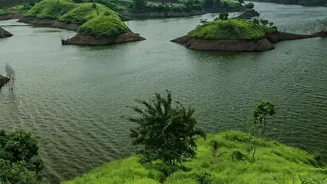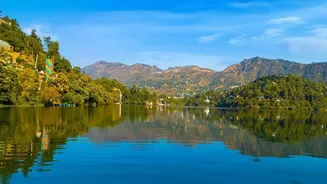




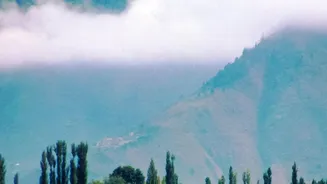
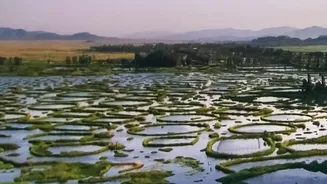
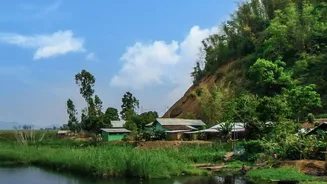
In India's northeastern state of Manipur lies a natural marvel that seems borrowed from a fantasy novel: a vast freshwater lake with islands that float. These are not mere rafts of weeds but entire ecosystems made of soil and vegetation.
What Are These Floating Islands?
Known locally
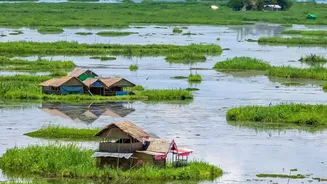
as 'phumdis', these floating islands are a heterogeneous mass of vegetation, soil, and organic matter at various stages of decomposition. They are, in essence, natural rafts. Their composition gives them a spongy, trampoline-like feel, and their thickness can vary from a few centimetres to over two metres. Like an iceberg, the majority of a phumdi's mass, about 80%, remains submerged beneath the water's surface. This unique structure is the result of a natural cycle. During the dry season, as the lake's water level recedes, the phumdis sink to touch the lakebed, where their roots absorb nutrients from the rich soil. When the monsoon rains arrive and the water level rises, they become buoyant again, floating to the surface, nourished and revitalised.
The World's Only Floating National Park
The largest and most famous of these phumdis, covering an area of around 40 square kilometres in the southeastern part of the lake, is home to something truly extraordinary: the Keibul Lamjao National Park. Established as a sanctuary in 1966 and declared a national park in 1977, it holds the distinction of being the only floating national park in the world. This park is not a single, solid landmass but a mosaic of floating meadows and waterways, providing a crucial habitat for a stunning array of biodiversity. It supports over 200 species of aquatic plants and 400 animal species, including reptiles like the Indian python and various waterfowl.
Last Refuge of the 'Dancing Deer'
The park’s most famous resident is the endangered Sangai, a subspecies of the brow-antlered deer found only in Manipur. This graceful animal is also the state animal of Manipur and is often called the 'dancing deer' because of its delicate, prancing gait as it navigates the spongy, yielding surface of the phumdis. The Sangai’s hooves are uniquely adapted to walk on this floating ground. Once thought to be extinct in the 1950s, the species has made a fragile comeback thanks to conservation efforts centred entirely within this floating park, which remains its last natural refuge on Earth.
A Lifeline for Local Communities
Loktak Lake is not just a natural wonder; it is revered as the 'lifeline of Manipur'. For thousands of years, it has been central to the state's economy, culture, and identity. Approximately 100,000 people reside in hamlets around the lake. The fishing communities, in particular, depend almost entirely on it for their livelihood. Many live in traditional huts called 'phumsangs', built on the floating phumdis themselves. They navigate the waters in slender wooden canoes, which serve as their primary mode of transport for everything from fishing to taking children to a floating school. The lake provides fish, edible plants like lotus stems, and drinking water, deeply intertwining the lives of the local Meitei people with its natural rhythms.
A Paradise Under Threat
Despite its beauty and importance, the Loktak ecosystem is in peril. The construction of the Ithai Barrage in the 1980s for a hydroelectric project has been a primary cause of concern. The barrage keeps the water level consistently high throughout the year, preventing the phumdis from sinking to the lakebed to absorb essential nutrients. This has caused them to thin, weaken, and break apart, threatening the entire habitat. Furthermore, pollution from rivers flowing into the lake, agricultural runoff, and soil erosion are degrading water quality. This combination of factors led to the lake being placed on the Montreux Record in 1993, a list of Ramsar wetlands where ecological character is under threat.