




A Microscopic But Mighty Foe
Unlike the dust on Earth, which is weathered smooth by wind and water, lunar dust, or regolith, is fundamentally different. Billions of years of micrometeoroid impacts have shattered the surface into tiny, glass-like particles that are incredibly sharp
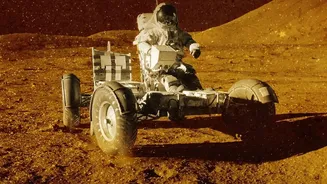
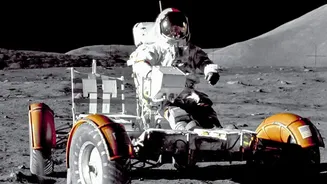
and abrasive. These particles are also electrostatically charged by solar radiation, causing them to cling to everything they touch, from spacesuits and equipment to human skin. During the Apollo missions, astronauts found the dust to be a pervasive nuisance. It eroded space suits, clogged mechanisms, and covered surfaces, making operations difficult. Apollo 17 commander Gene Cernan famously called it "one of the greatest inhibitors to a nominal operation on the Moon."
The Critical Health Connection
Beyond being an operational headache, lunar dust is a significant health hazard. When tracked inside the lunar module, Apollo astronauts experienced what they dubbed "lunar hay fever," suffering from sneezing, watery eyes, and sore throats. The full, long-term effects of inhaling these sharp particles are still unknown, but studies using simulated lunar soil have shown it can be toxic to human lung and mouse brain cells. Researchers believe prolonged exposure could lead to serious respiratory conditions like bronchitis or even increase the risk of cancer. Because the fine particles can penetrate deep into the lungs, NASA has identified dust exposure as a critical risk that must be managed for future long-duration stays on the Moon.
From Problem to Standard
To tackle this challenge, NASA and its partners are formalizing a solution: a unified "dust standard." This isn't a single piece of technology, but rather a comprehensive set of requirements and classifications for testing hardware and systems that will be exposed to planetary dust. The standard, NASA-STD-1008, aims to create a common language and methodology for engineers and scientists. It defines how to simulate dusty environments for testing, ensuring that everything from rovers to habitat seals and life support systems are built to withstand the punishing conditions. This also involves establishing permissible exposure limits (PELs) for astronauts, defining how much dust is safe to be exposed to over a given period. This approach is being developed not just for the Moon, but also for future missions to Mars.
Shaping Mission Architecture
The dust standard directly influences the entire architecture of a mission—the master plan for how all its parts work together. For example, knowing the acceptable limits of dust exposure dictates the design of habitat entryways. Engineers are developing concepts like "suitports" or specialized airlocks to keep contaminated spacesuits outside the primary living quarters. It also drives the development of active and passive dust mitigation technologies. These include everything from advanced brushes and vacuums to innovative electrodynamic dust shields—surfaces that use an electric field to actively repel dust particles from vital equipment like solar panels and camera lenses. Furthermore, operational strategies, such as planning routes for rovers to minimize dust kick-up and designing landing pads, are all part of an integrated approach informed by the standard.