

Meet Pushpak, India’s Spaceplane
Imagine an aircraft that can fly into space, deploy a satellite, and then land back on a runway, ready for its next mission. That is the vision behind ISRO's Reusable Launch Vehicle-Technology Demonstrator (RLV-TD), affectionately named 'Pushpak'. This
winged vehicle is at the heart of India's strategy to make space launches sustainable and affordable. Unlike traditional rockets that are discarded after a single use, Pushpak is designed to be recovered and reused. Recent tests have focused on the most challenging part of its journey: a high-speed, uncrewed, and fully autonomous landing. In these Landing Experiments (LEX), a Chinook helicopter lifts Pushpak to an altitude of 4.5 kilometres and releases it. From there, the vehicle’s onboard computers take complete control, navigating complex manoeuvres and guiding it to a precise, high-speed landing on a runway, touching down at over 320 kmph.
The Economics of Reusability
The primary driver behind the RLV program is cost. Traditionally, the biggest expense in any space mission is the launch vehicle itself. Building a new rocket for every single satellite launch is an incredibly expensive process, akin to building a new airplane for every flight. The rocket's hardware can account for a huge portion of the total mission cost. By developing a vehicle that can return to Earth intact, ISRO can recover and refurbish the most valuable components. This reusability is the key to drastically reducing launch prices. ISRO's ambitious goal is to slash the cost of sending payloads into Low Earth Orbit by as much as 80 percent. Achieving this would make India a highly competitive player in the booming global satellite launch market and open up new opportunities for more frequent and ambitious space activities.
A Leap in Technological Capability
The successful landing tests are more than just a cost-saving measure; they represent a significant advancement in India’s technological prowess. Each autonomous landing validates ISRO’s mastery of crucial indigenous technologies, including sophisticated navigation, guidance, and control systems. The vehicle uses a suite of sensors and India's own NavIC satellite navigation system to perform these pinpoint landings under challenging conditions. Successfully reusing the same winged body and flight systems across multiple tests further demonstrates the robustness and reliability of the hardware. This positions India among a select group of space-faring nations actively developing reusable launch vehicle technology, a field currently dominated by players like SpaceX. This capability is fundamental to ISRO's future plans, enhancing its strategic autonomy and reducing reliance on foreign partners.
The Path to an Orbital Vehicle
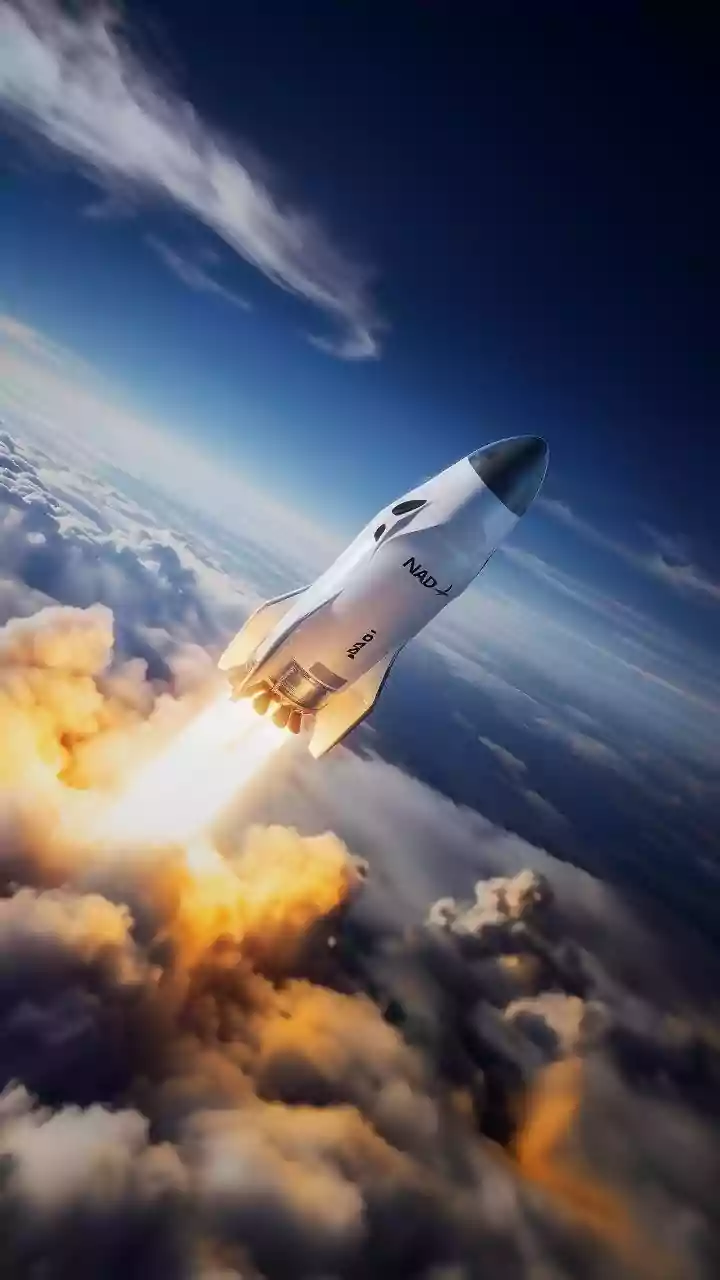
The recent landing experiments are just one part of a larger, phased technology demonstration program. While these tests perfectly simulate the high-speed landing phase of a returning spacecraft, the next major hurdle is the Orbital Re-entry Experiment (ORE). This future mission will involve launching a scaled-up version of Pushpak into orbit on a rocket, letting it spend time in space, and then guiding it through the fiery re-entry into Earth's atmosphere before it performs its autonomous runway landing. Mastering orbital re-entry is the final major technological piece of the puzzle. The ultimate vision is a Two-Stage-to-Orbit (TSTO) launch vehicle, where a reusable winged booster (like Pushpak) forms the first stage, which returns to Earth after launch, while the second, expendable stage carries the satellite into its final orbit.