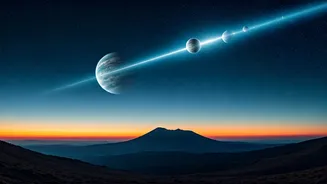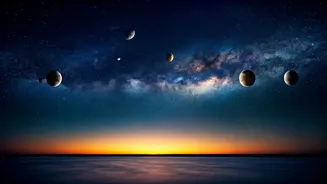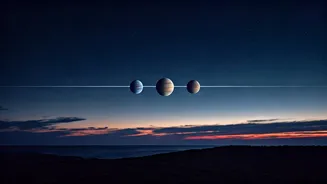





What’s Going On Up There?
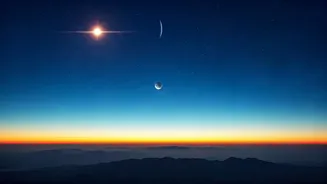
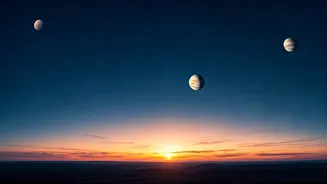
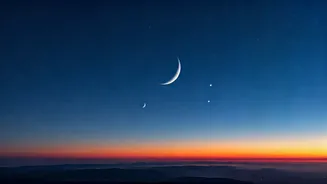
Over the coming evenings, and at various times throughout the year, the night sky puts on a special show. You might notice two bright 'stars' appearing unusually close to each other, often joined by a sliver of the crescent Moon. This isn't an alien invasion
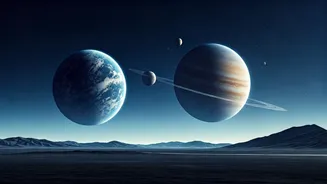
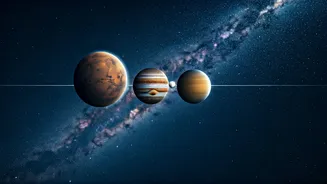
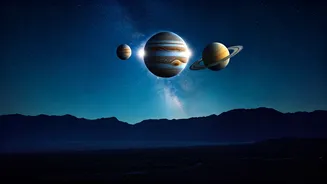
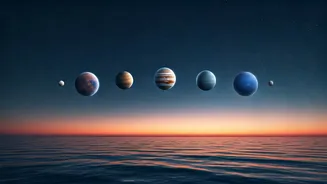
or a new star being born; it's a beautiful, predictable event known as a conjunction. When three celestial bodies get together in a tight grouping from our point of view, it creates a 'cosmic trio'. Often, the players are the Moon and two of the brightest planets, like Venus and Jupiter, or sometimes Saturn and Mars. They cluster in the darkening sky, creating a stunning temporary pattern that changes night after night.
An Alignment of Perspective
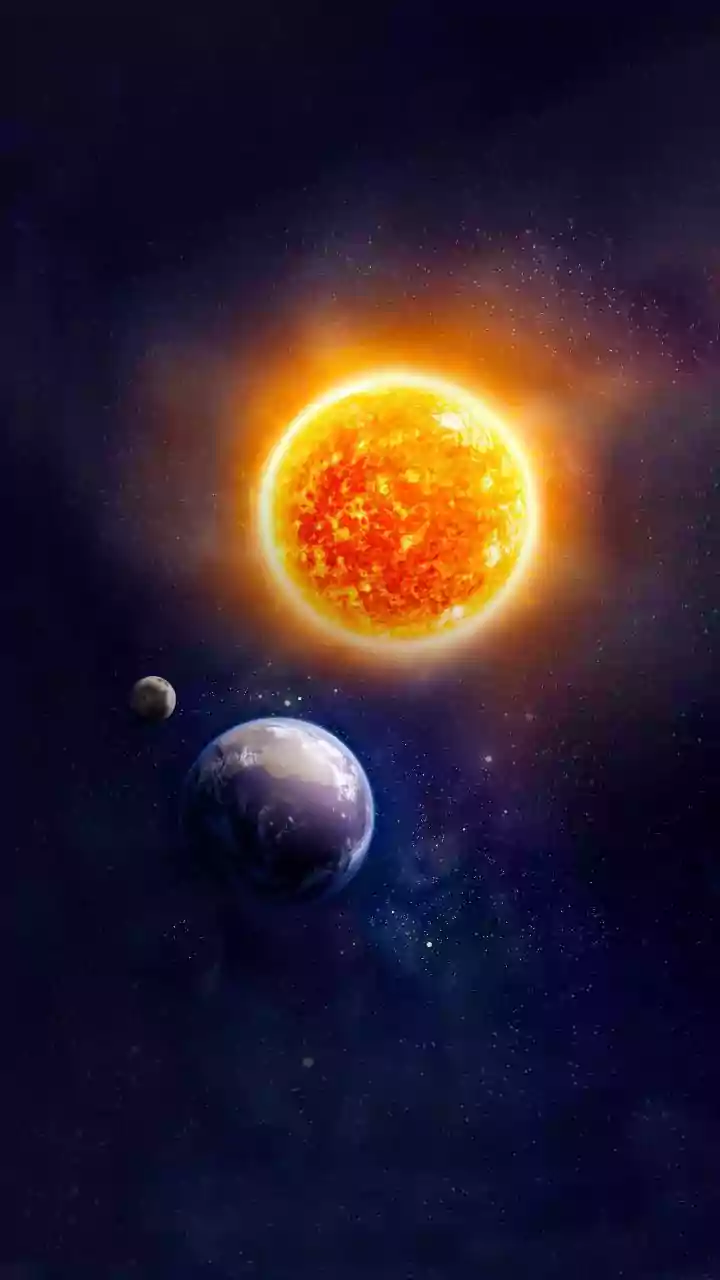
It’s important to remember that these objects aren't actually close to one another. The Moon is about 3,84,000 kilometres away, while a planet like Jupiter could be over 700 million kilometres from us. The spectacle is purely a line-of-sight effect. Imagine you are looking at two distant mountains and a bird flies between them; for a moment, all three align in your vision. Similarly, as the Earth, Moon, and other planets travel along their own orbits around the Sun, their paths occasionally make them appear to bunch up in our sky. This celestial dance is a beautiful reminder of the three-dimensional nature of our solar system and our unique vantage point within it. They are cosmic neighbours waving at each other—and us—from across an unimaginable expanse.
Meet the Nightly Performers
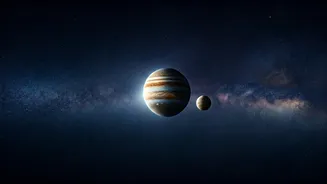
Getting to know the stars of the show makes the experience even richer. Venus, often the brightest 'star' in the evening or morning, is nicknamed the 'Evening Star' or 'Morning Star'. It shines with a steady, brilliant white light because its thick clouds reflect sunlight extremely well. Jupiter, the king of planets, is also unmistakably bright, though usually less dazzling than Venus. If you have a simple pair of binoculars, you might even be able to spot its four largest moons, appearing as tiny dots of light flanking the planet. The Moon, our constant companion, acts as a guidepost. Its phase and position change nightly, making each conjunction a unique event. A slender crescent moon hanging near two bright planets is one of the most elegant sights in all of stargazing.
Your Guide to a Perfect Viewing
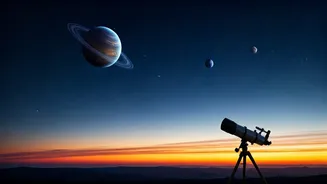
You don't need a fancy telescope to enjoy these cosmic trios. The best tool is a clear view of the western horizon about 30 to 60 minutes after sunset. Here’s how to get the best look: 1. **Find a good spot:** An open field, a rooftop, or a balcony with an unobstructed view to the west is ideal. The further you are from the light pollution of city centres, the brighter the celestial objects will appear against the darkening sky. 2. **Timing is key:** The window for viewing is often short. As the sky transitions from deep blue twilight to black, these trios will be at their most dramatic before they sink below the horizon. 3. **Let your eyes adjust:** It takes about 15-20 minutes for your eyes to fully adapt to the dark. Avoid looking at your bright phone screen during this time. 4. **Use an app (optional):** Free stargazing apps like Stellarium or SkyView can help you identify exactly what you're looking at. Just point your phone at the sky, and the app will label the planets and stars.