





Faster Than a Speeding Bullet (By a Lot)
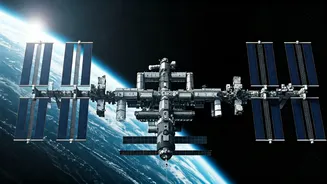
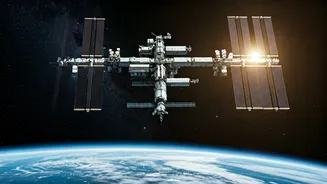
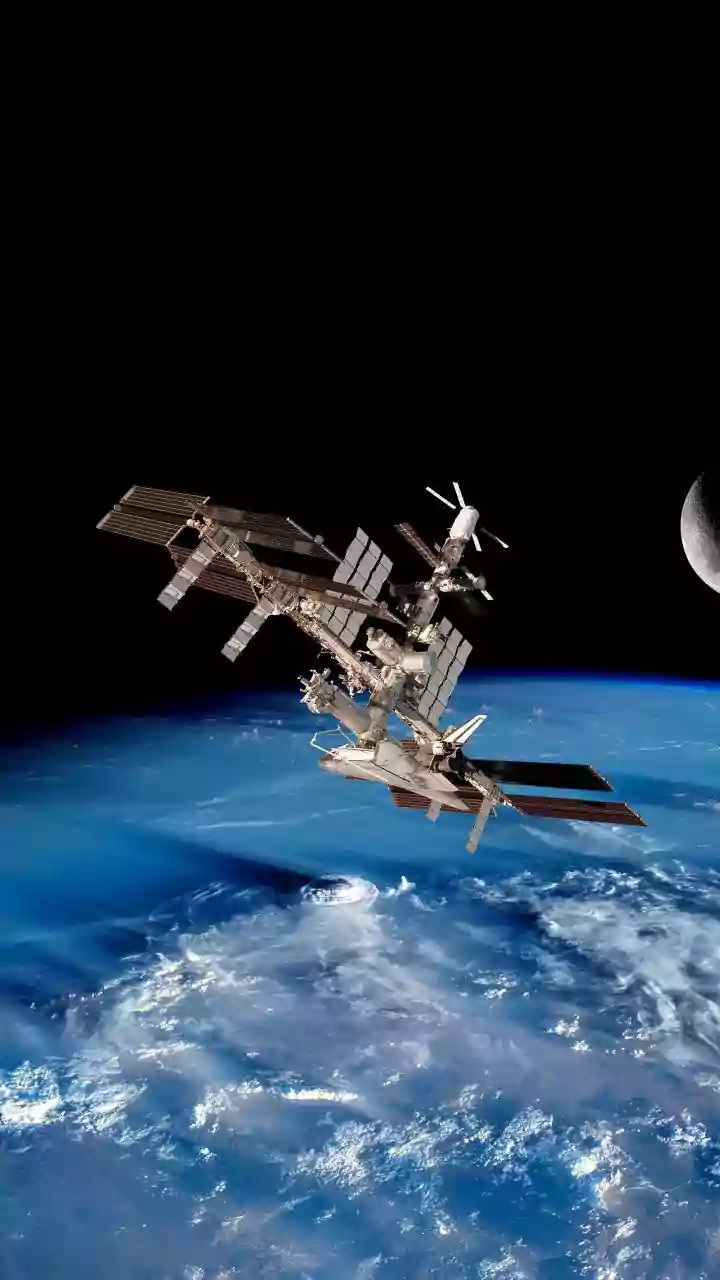
We all know the ISS is fast, but the numbers are staggering. It travels at a blistering 28,000 kilometres per hour. To put that in perspective, a flight from Delhi to Mumbai would take about three minutes. This incredible speed means the astronauts and
scientists on board orbit the Earth once every 90 minutes, witnessing 16 sunrises and 16 sunsets every single day. It’s a constant, high-speed journey that redefines the concept of a ‘day’.
The Most Expensive Thing Ever Built
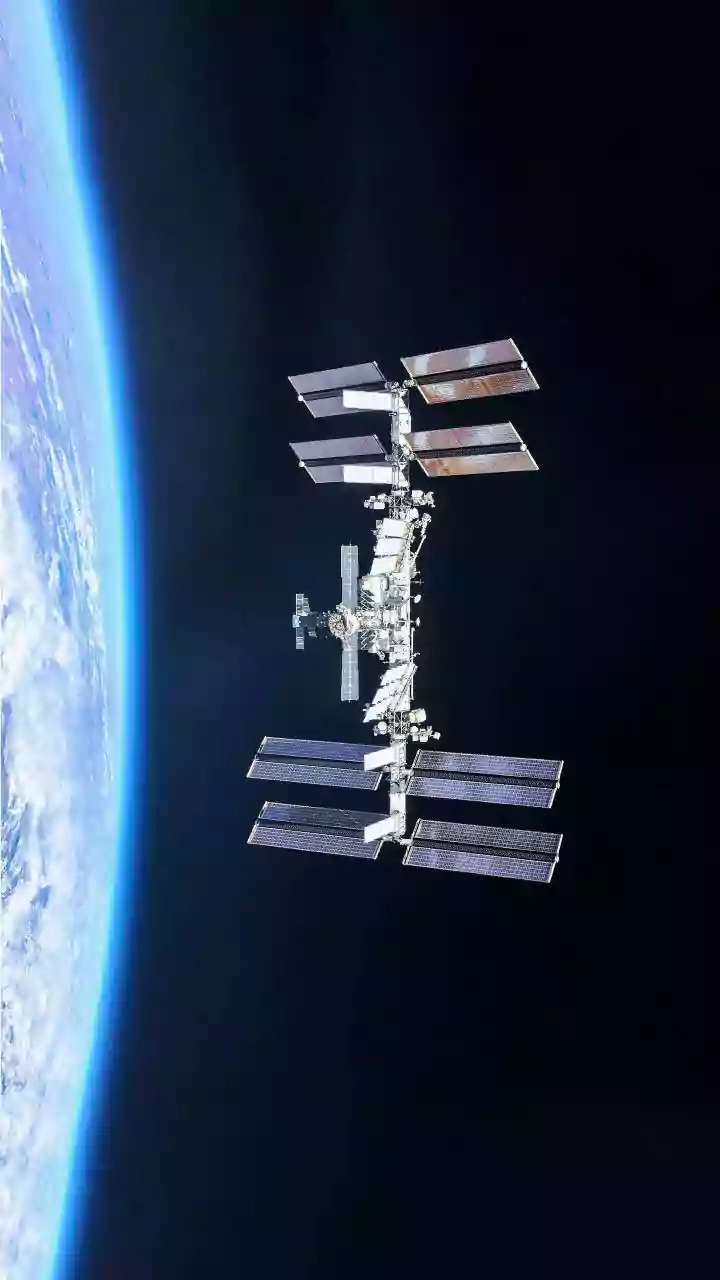
Forget superyachts or skyscrapers; the ISS is the single most expensive object humanity has ever constructed. With an estimated cost of over $150 billion, its price tag reflects the monumental effort of five space agencies and 15 countries. This cost covers not just the initial construction, which required over 115 space flights to assemble in orbit, but also the ongoing operations, supplies, and ground-breaking research. The living and working space inside is equivalent to a large six-bedroom house, complete with two bathrooms and a gym.
Running on Surprisingly ‘Old’ Tech
For the most advanced laboratory in the sky, its core computing power is surprisingly vintage. While astronauts use modern laptops (running Linux and Windows) for daily tasks and experiments, the station's critical Command and Data Handling systems rely on much older, radiation-hardened processors. Some key systems have used processors similar to the Intel 80386 from the late 1980s for their proven stability and resilience against the harsh radiation of space. It’s a classic case of “if it isn’t broke, don’t fix it,” prioritizing reliability over raw processing power for functions like life support and navigation.
It Has Its Own Microbiome
This might be the most shocking fact of all: the ISS is not a sterile environment. It’s a flying ecosystem. Over the years, scientists have discovered a unique community of bacteria and fungi living inside and even outside the station. A 2021 study by a team including US and Indian researchers identified four strains of bacteria, three of which were previously unknown to science. These microbes, some of which are related to bacteria found in soil on Earth, have adapted to survive microgravity and cosmic radiation. More recent research has even studied how multi-drug resistant bacteria mutate in this unique environment, providing crucial insights for future long-duration missions.
The Indian Connection Is Getting Stronger
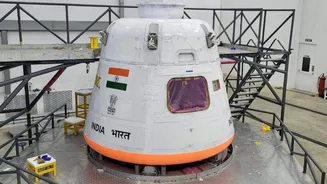
While India is not one of the five primary partners of the ISS, the connection is growing. ISRO has collaborated with NASA on the NISAR satellite mission and is now working with NASA and Axiom Space to send an Indian astronaut to the station. This mission is a stepping stone for India's ambitious Gaganyaan program and its own planned space station, the Bharatiya Antariksh Station, with the first module targeted for a 2028 launch. The experience gained from a joint ISS mission will be invaluable as India solidifies its position as a major space-faring nation, moving from sending astronauts to space to having them live and work there.