






Craving a bold, rich, espresso-like coffee experience without the hefty price tag and counter space of a machine? There’s a classic, stovetop secret that Italian households have cherished for decades: the Moka pot. It’s a brewing icon for a reason.
What Exactly Is a Moka Pot?
The
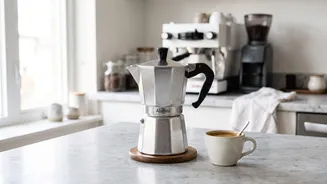
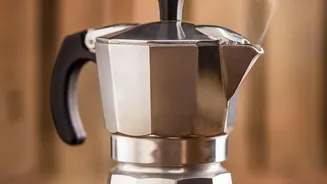
Moka pot is a stovetop coffee maker invented in Italy by Alfonso Bialetti in 1933. Its iconic octagonal shape is a fixture in millions of kitchens worldwide, celebrated for its simplicity and the wonderfully potent coffee it produces. It’s not an espresso machine, but it was designed to bring a similar style of intense coffee from the cafe into the home. Made of either traditional aluminum or modern stainless steel, the pot consists of three simple parts: a bottom chamber for water, a funnel-shaped filter for coffee grounds, and a top chamber where the finished coffee collects.
The Science of a Stovetop Brew
The genius of the Moka pot lies in its straightforward brewing process, which uses steam pressure to push water up through the coffee grounds. When you place the pot on a heat source, the water in the bottom chamber heats up and creates steam. This steam increases the pressure inside the chamber, forcing hot water up through the metal funnel, where it saturates the coffee grounds. The brewed coffee then continues its journey upward until it gurgles into the top collecting chamber, ready to be served. It’s a beautifully simple piece of physics that results in a uniquely textured and aromatic cup.
Is It Really Espresso?
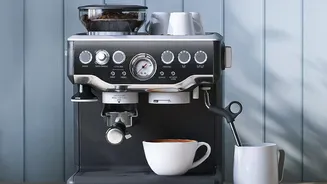
This is the most common question, and the simple answer is no. While it's marketed as producing 'espresso-style' coffee, a Moka pot brew isn't technically espresso. A true espresso shot is extracted using very high pressure—around 9 bars or more. This intense pressure is what creates the signature thick, stable layer of crema on top. A Moka pot, by comparison, generates a much lower pressure of about 1 to 2 bars. The result is a coffee that is far more concentrated and robust than drip coffee, but without the velvety crema and with a slightly different flavour profile. It’s best to think of it as its own unique category: a rich, powerful, and deeply satisfying brew that stands proudly on its own.
Your Step-by-Step Guide to a Perfect Cup
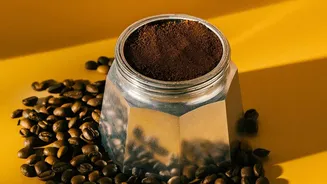
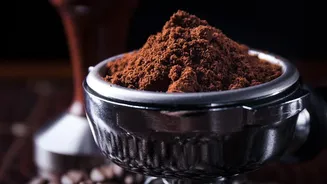
Brewing with a Moka pot is a simple ritual. First, fill the bottom chamber with hot water up to the safety valve. Using pre-heated water shortens the brewing time and prevents the coffee grounds from getting 'cooked' on the stove, which can cause bitterness. Next, fill the filter basket with coffee grounds until it's level, but do not tamp or pack them down. A medium-fine grind, slightly coarser than for espresso, works best. Screw the top chamber on tightly and place the pot on your stove over a medium-low heat. Leave the lid open so you can see when the coffee starts to flow. Once the stream becomes a light, honey colour and starts to sputter, take it off the heat immediately. This prevents over-extraction and ensures a smooth, non-bitter taste.
Common Mistakes and How to Avoid Them
A few common errors can lead to a disappointing cup, but they are easy to fix. The most frequent mistake is using too high a heat. This rushes the process, burns the coffee, and can result in a harsh, metallic, or bitter flavour. Always use a gentle, consistent heat. Another issue is using a coffee grind that is too fine, like for an espresso machine, which can clog the filter. Conversely, a grind that is too coarse will result in weak, under-extracted coffee. Finally, never leave the pot on the heat to sputter for too long. That sputtering sound is a sign that the brewing is done and all that’s left is steam, which will ruin the flavour of the coffee you so carefully just brewed.