



India's Data Revolution and Its Power Thirst
India is in the middle of a data centre construction boom. Driven by a surge in cloud computing, the explosion of Artificial Intelligence (AI) workloads, 5G rollout, and data localisation policies, the country's data centre capacity is expanding at an unprecedented
rate. Projections show that India's capacity could grow from around 1.6 GW in 2026 to between 8 and 10 GW by 2030. This expansion, backed by billions of dollars in investment, is crucial for supporting India’s digital ambitions. However, this digital growth comes with a significant and often overlooked cost: a colossal demand for electricity. Estimates suggest that by 2030, data centres could consume up to 3% of India's total electricity, a substantial jump from less than 1% today. This steep rise in energy consumption is now a central concern for investors, operators, and government planners.
Why Are Data Centres So Energy-Hungry?
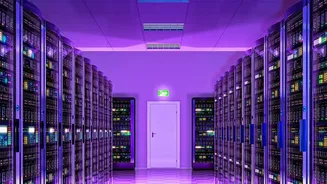
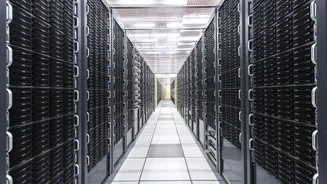
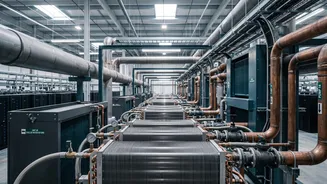
A data centre's primary function is to run thousands of servers around the clock, which consumes a tremendous amount of power. But the energy use doesn't stop there. These servers generate immense heat, requiring powerful and continuous cooling systems—often massive air conditioning units—to prevent overheating. Together, computing and cooling account for the bulk of a data centre's electricity draw. The advent of AI has intensified this demand significantly. AI training and queries are far more computationally intensive than traditional tasks; one estimate suggests a single AI query can use nearly ten times the electricity of a simple Google search. As a result, new AI-focused data centres are being built on a 'hyperscale' level, with some individual facilities designed to consume as much electricity as 100,000 homes.
A Looming Challenge for the Grid
This rapid, concentrated growth in energy demand poses a significant challenge to local and national power grids. Power officials have raised concerns that the constant, high-level load from data centres, which operate 24/7, could strain infrastructure. Unlike traditional industrial loads, the electricity demand from AI data centres can also fluctuate sharply depending on global usage patterns, creating a 'ramping impact' that slow-to-adjust power generators struggle to manage. This concentration of demand in specific hubs like Mumbai, Chennai, and Hyderabad further risks localised grid instability, including voltage and frequency challenges. There are also fears that without careful planning, this new industrial demand could put upward pressure on electricity prices for ordinary consumers, a concern the Indian government is keen to avoid. Furthermore, the reliability of the grid is a two-way street; any instability, in turn, threatens the mission-critical uptime required by these digital facilities.
The Search for Sustainable Solutions
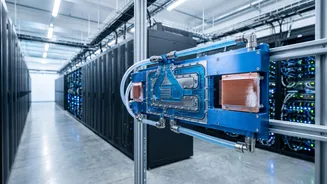
Recognising the challenge, the industry and government are actively seeking sustainable solutions. The most critical shift is towards renewable energy. Many data centre operators are now pursuing long-term power purchase agreements (PPAs) for solar and wind energy, or even building their own captive renewable plants. Some state policies actively incentivise this, offering subsidies and tax breaks for data centres that source a significant portion of their power from green sources. Beyond clean energy sourcing, there is a major push for efficiency within the data centres themselves. Innovations in liquid cooling, which is more efficient than traditional air cooling, are being adopted for high-density AI servers. The Indian government is also promoting the development of the 'Green Energy Corridor'—an expanding transmission network designed to move renewable power from resource-rich states to demand centres—and exploring nuclear energy as a source of stable, clean power. Ultimately, success will hinge on integrating these new, massive loads into the grid without compromising stability or sustainability.