








The Systems Thinker's Advantage
Industrial engineering has always been about optimization. At their core, industrial engineers are systems thinkers, trained to make complex processes more efficient, reduce waste, and improve productivity. Their expertise lies not just in machines or software,
but in the holistic system that integrates people, materials, information, and equipment. Traditionally, this meant streamlining factory floors, optimizing supply chains, and implementing quality control protocols. This unique, big-picture perspective is precisely why they are becoming indispensable in an era where infrastructure is no longer just about concrete and steel, but about data, sensors, and intelligent automation.
When AI Meets Infrastructure
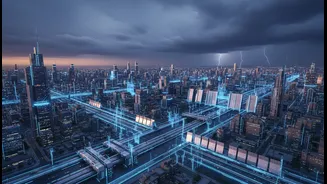
India's infrastructure sector is being fundamentally reshaped by Artificial Intelligence. AI is no longer a theoretical concept but a practical tool being deployed across the entire lifecycle of a project. In the planning and design phase, AI helps with demand forecasting and optimizes building designs for efficiency. During construction, it enables the use of autonomous equipment and enhances quality control. But its most revolutionary impact is in operations and maintenance. AI-powered predictive maintenance uses sensor data to anticipate equipment failures, minimizing downtime for everything from power grids to water treatment plants. Smart traffic management systems, automated waste sorting, and intelligent energy grids are all becoming realities, turning our cities and industries into living, data-generating ecosystems.
The New Frontier for Industrial Engineers
The convergence of AI and infrastructure is creating a surge in demand for engineers who understand both physical processes and data-driven optimization. Recent reports highlight that India's AI data center boom is creating an unexpected windfall for mechanical, electrical, and industrial engineers. As companies like AWS, Google, L&T, and Tata Projects invest billions in AI-specific infrastructure, roles that were once overshadowed by software jobs are now in the spotlight. Industrial engineers are needed to design and manage these complex facilities, particularly in areas like cooling systems, power management, and process automation, which are critical for energy-intensive AI operations. They are being hired as AI infrastructure architects, critical facilities managers, and supply chain data analysts, tasked with making these new, intelligent systems work seamlessly.
Upskilling for an Intelligent Future
To seize these opportunities, industrial engineers must augment their traditional skill set. While a foundation in process optimization and project management remains crucial, expertise in data analysis, machine learning principles, and simulation software is now essential. Understanding how to work with large datasets to extract actionable insights is no longer optional. Familiarity with programming languages like Python and proficiency with AI platforms are becoming key differentiators in the job market. The role is evolving from a process optimizer to an architect of intelligent systems. It's not about AI replacing engineers, but about AI-augmented engineers replacing those who don't adapt. The professionals who can speak both the language of industrial processes and the language of data science will be the most sought-after.