



A New Window on the Universe
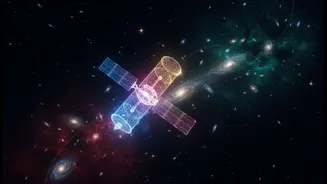
Named after Nancy Grace Roman, NASA's first chief of astronomy and the “Mother of Hubble,” the Roman Space Telescope is an infrared observatory with a powerful, wide-eyed view of the universe. While its primary mirror is the same size as the Hubble Space Telescope's
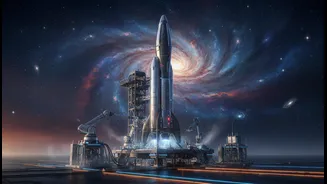
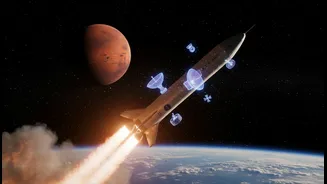
at 2.4 meters, its Wide Field Instrument will capture a patch of the sky at least 100 times larger in a single shot. This incredible efficiency means that in just one month, Roman can gather the equivalent of a century of Hubble's observations. The telescope recently arrived at the Kennedy Space Center in Florida for its final pre-launch preparations. After launching aboard a SpaceX Falcon Heavy rocket, it will travel to the second Sun-Earth Lagrange point (L2), a stable orbital location a million miles from Earth, which it will share with the James Webb Space Telescope (JWST).
Shedding Light on Dark Matter and Dark Energy
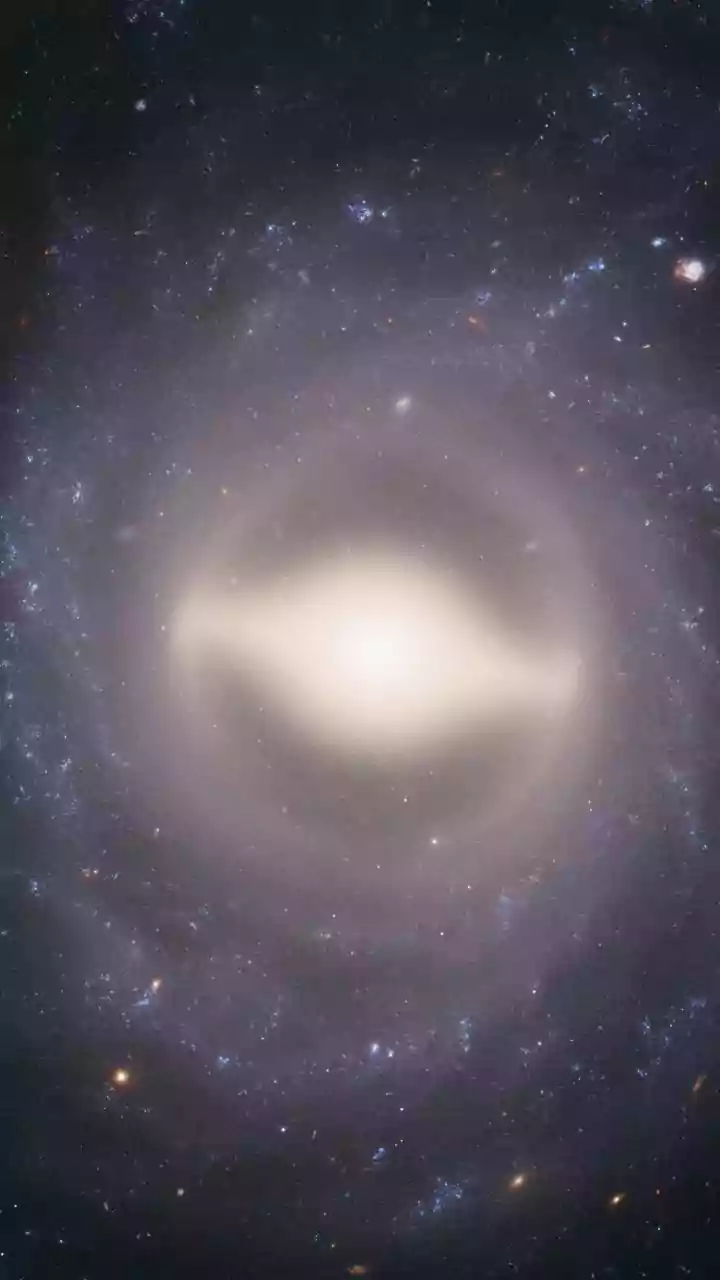
Two of the most profound mysteries in cosmology are dark energy and dark matter, which together are thought to make up about 95% of the universe. Dark energy is the enigmatic force causing the universe's expansion to accelerate, while dark matter is the unseen material whose gravity holds galaxies together. Roman will address both puzzles head-on through its High Latitude Wide Area Survey (HLWAS). This survey will map the positions and shapes of hundreds of millions of galaxies, allowing scientists to study how the distribution of galaxies and dark matter has evolved over cosmic time. By analyzing how the light from distant galaxies is bent by the gravity of intervening matter—a phenomenon called gravitational lensing—Roman will create the most precise maps of dark matter ever made. These observations will help scientists test theories about the nature of dark energy and narrow down the candidates for dark matter particles.
A Galactic Census of Exoplanets
While telescopes like Kepler and TESS have found thousands of exoplanets, they are best at detecting large planets orbiting very close to their stars. Roman will conduct a different kind of search, using a technique called gravitational microlensing. This method detects planets by observing how their gravity, combined with their host star's, bends and magnifies the light of a more distant, unrelated star that momentarily aligns with them from our point of view. Microlensing is especially sensitive to planets with wider orbits, from the habitable zone outwards, and can even detect rogue planets that roam the galaxy untethered to a star. By staring at the dense starfields in the center of our Milky Way, Roman is expected to find thousands of new worlds, including planets with masses as low as Mars. Combined with its ability to find up to 100,000 planets using the traditional transit method, Roman will provide a groundbreaking census of planetary systems, helping us understand how common solar systems like our own truly are.
A Panoramic View to Guide the Future
Roman is not just a standalone mission; it's a powerful survey tool that will complement other observatories. While JWST is designed to take incredibly deep, narrow-field images of specific targets, Roman will rapidly scan huge sections of the sky. This makes it a perfect discovery machine, identifying the most interesting targets—from exploding stars to unusual galaxies—for Webb and other telescopes to investigate in greater detail. Its High Latitude Wide Area Survey will map roughly 12% of the entire sky over its primary five-year mission. This vast dataset, which will be publicly available, is expected to fuel astrophysical research for decades, enabling studies across nearly every class of astronomical object.