
The Reliable Perseid Meteor Shower
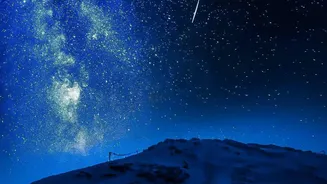
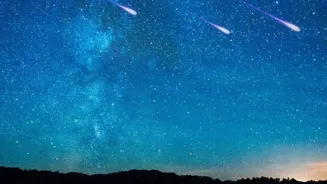
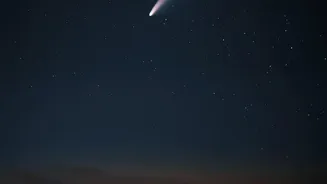
The Perseid meteor shower is one of the best and most reliable of the year, and August is when it puts on its grandest display. These 'shooting stars' are actually tiny bits of debris left behind by Comet Swift-Tuttle. As Earth passes through this dusty
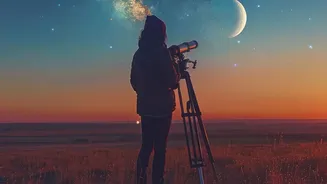
trail, the particles burn up in our atmosphere, creating bright streaks of light. The shower is active from mid-July to late August, but its peak occurred around August 12-13. However, activity remains high for several days after the peak, so you still have a great chance to see them. For the best experience, find a location away from city lights, perhaps in a rural area or a designated dark sky park. Give your eyes about 20-30 minutes to fully adjust to the darkness. The meteors can appear anywhere in the sky, but they seem to originate from the constellation Perseus in the northeast. Lie back, be patient, and enjoy the show.
The Evening Star: Brilliant Venus
Throughout August, the planet Venus will be a stunningly bright object in the early evening sky. Look to the west just after sunset, and you won't be able to miss it; it shines more brilliantly than any star. On August 15, Venus reached its greatest eastern elongation, meaning its farthest point from the Sun in our sky, making it particularly prominent. For the rest of the month, it will continue to dominate the western twilight. Around August 16 and 17, the waxing crescent Moon will pass near Venus and the bright star Spica, creating a beautiful celestial gathering. These planetary and lunar conjunctions are wonderful opportunities for beginners to identify different objects in the sky.
Spot the Ringed Planet, Saturn
Yellowish Saturn is another naked-eye planet gracing our August nights. You can find it rising in the east in the evening. As the night progresses, it will climb higher in the sky, making it easier to spot. Unlike stars that twinkle, planets like Saturn typically shine with a steadier light. While you won't be able to see its famous rings without a telescope, knowing you are looking at the distant, giant world is a thrill in itself. The near-Full Moon will pass close to Saturn around August 28, which can serve as a helpful guide to locate the planet. It will be visible all night, setting in the west around sunrise.
The Red Planet, Mars, in the Morning
If you're an early riser, you can catch a glimpse of Mars. The Red Planet is visible in the hours before dawn, appearing as a distinct, reddish point of light in the eastern sky. Mars has been a subject of human fascination for centuries, and seeing it for yourself is a rewarding experience. It rises a few hours before the sun, so look for it in the pre-dawn twilight. Earlier in the month, on August 9, the waning crescent Moon was close to Mars, helping observers locate it.
A Giant Landmark: The Summer Triangle
For those new to identifying constellations, the Summer Triangle is the perfect starting point. It's not an official constellation but an 'asterism'—a prominent pattern of stars. It is high in the sky during August evenings and is made of three bright stars from three different constellations. The brightest is Vega, in the constellation Lyra (the Lyre). The second is Deneb, the tail of Cygnus (the Swan), which forms a pattern often called the Northern Cross. The third star is Altair, in Aquila (the Eagle). By learning to spot this large, easy-to-find triangle, you can then begin to trace the shapes of the constellations associated with it, opening up the wider map of the night sky.
A Glimpse of the Milky Way
August is also an excellent month to try and spot our own galaxy, the Milky Way. From a truly dark location, far from the light pollution of India's cities, it appears as a faint, hazy band of light stretching across the sky. The bright core of the Milky Way is located in the direction of the constellations Sagittarius and Scorpius, which are well-placed for viewing on summer nights. While monsoon clouds can be a challenge, a clear night in a location with dark skies, like parts of Ladakh or the Rann of Kutch, can reveal this breathtaking sight. It’s a humbling reminder of our place in the cosmos, visible with nothing more than the naked eye.