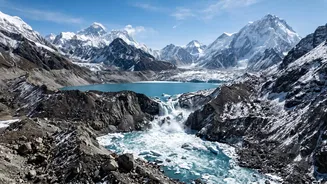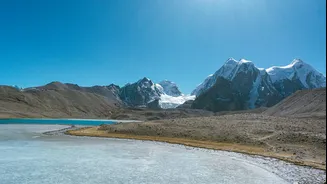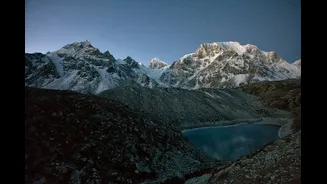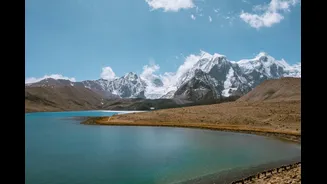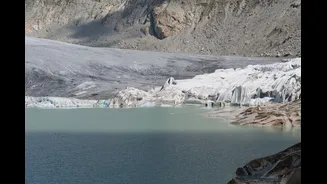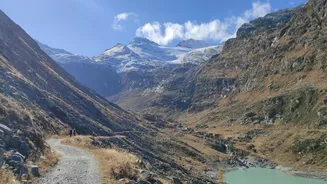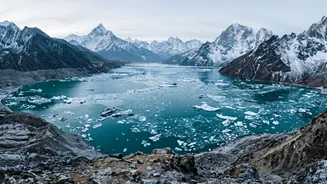








The majestic Himalayas, the source of life-giving rivers for millions, are now harbouring a growing threat. Recent United Nations-linked reports are sounding the alarm on an increasing probability of catastrophic floods from bursting glacial lakes.
The Anatomy of a Ticking Time Bomb
A Glacial
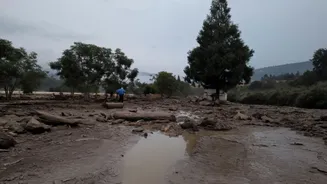
Lake Outburst Flood, or GLOF, is a sudden and powerful release of water from a lake formed by a melting glacier. As global temperatures rise, glaciers across the Himalayas are retreating at an accelerated pace. This meltwater often pools behind natural dams made of moraine—a loose and unstable mixture of ice, rocks, and sediment left behind by the glacier. These moraine dams are not like engineered concrete structures; they can be weak and prone to failure. Triggers for a breach can include avalanches or landslides falling into the lake, heavy rainfall, or simply the immense pressure of the growing body of water. When these dams break, they can unleash a torrent of water, mud, and boulders downstream with little to no warning, causing devastation for kilometres.
The UN's Stark Warning
Several recent reports connected to the United Nations have painted a grim picture of the escalating GLOF risk. According to a UN-led global report, India has tragically recorded the highest number of deaths from GLOFs among eight countries in the Hindu Kush Himalaya region between 1835 and 2025. Another pair of reports released ahead of the global climate summit (COP 31) warns that Himalayan regions are warming much faster than the global average. This accelerated warming leads to the rapid formation and expansion of glacial lakes, increasing the potential for these outburst floods. One UN official from the Development Programme (UNDP) noted that the number of people at risk from GLOFs in the region now runs into the millions, a figure significantly higher than previous estimates. These reports collectively serve as a critical wake-up call, emphasizing that climate change is directly amplifying the frequency and scale of this mountain hazard.
A Clear and Present Danger at Home
For India, this is not a distant threat. The Indian Himalayas are home to thousands of glacial lakes, with a significant number identified as potentially dangerous. States like Sikkim, Himachal Pradesh, Arunachal Pradesh, and Uttarakhand are on the front lines. Himachal Pradesh is considered particularly vulnerable, with the number of potential GLOF-causing lakes nearly doubling between 2019 and 2023. The devastating GLOF in Sikkim in October 2023 serves as a tragic recent example. The breach of the South Lhonak lake led to a catastrophic flood in the Teesta River basin, claiming dozens of lives, displacing thousands, and causing widespread destruction of homes, bridges, and a major hydropower dam. This event highlighted the immense destructive power of GLOFs and the vulnerability of downstream communities and critical infrastructure.
The Race Against Time
Averting this threat requires a multi-pronged approach, and Indian authorities are taking notice. The National Disaster Management Authority (NDMA) has issued guidelines specifically for managing GLOF risks. These guidelines focus on identifying and monitoring high-risk lakes using satellite technology and drones, alongside developing robust Early Warning Systems (EWS). In some cases, structural interventions like controlled draining or siphoning of water from dangerous lakes are being considered to reduce the pressure on unstable moraine dams. Following the Sikkim disaster, the central government approved ₹150 crore for a GLOF risk mitigation project in four vulnerable Himalayan states. The project aims to build GLOF-resilient infrastructure and enhance warning systems. Furthermore, transboundary cooperation is crucial, as highlighted by a recent GLOF in Bhutan that triggered alerts in downstream Assam and West Bengal, demonstrating that these hazards do not respect international borders.