

The Problem with 'Dog Dictionaries'
For generations, dog owners have relied on a kind of mental dictionary for canine behaviour: tail wag equals happy, yawn equals tired, growl equals aggressive. However, a growing body of research from canine ethologists and behaviourists shows this one-to-one
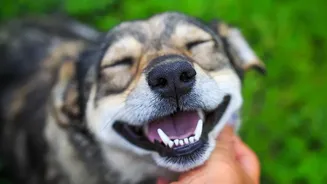
translation is not only wrong but also potentially damaging to the human-animal bond. Experts argue that dog behaviour is a language of nuance, where the same signal can have multiple meanings. A recent Arizona State University study highlighted that humans often judge a dog's feelings based on the situation rather than the dog's actual body language. The key to fluency, they say, is not memorising vocabulary but understanding the grammar of context. An action never happens in a vacuum; it’s a response to the environment, the dog's internal state, and what just happened a moment before.
The Tale of the Tail
The tail wag is perhaps the most widely misinterpreted signal. While it can indicate happiness, it’s more accurately a sign of emotional arousal. The specifics of the wag tell the real story. For example, a high, stiff, fast wag can signal agitation or overstimulation, not joy. A low, slow wag might indicate anxiety or appeasement. Research has even shown that the direction of the wag matters. A 2007 study found that dogs tend to wag more to the right side of their body when they see something positive, like their owner, and more to the left for negative stimuli, like an unfamiliar, dominant dog. This asymmetry is linked to which hemisphere of the brain is being activated. So, before you assume that wagging tail means it’s safe to approach, look at the whole picture: are the dog's muscles tense? Are their ears pinned back? Context is everything.
Whispers of Stress: Yawns and Lip Licks
Many of the most important signals dogs give are subtle and often missed. These are known as “calming signals,” a term popularised by Norwegian dog trainer Turid Rugaas to describe behaviours dogs use to de-escalate stress in themselves or others. A dog yawning right before a vet visit isn't necessarily tired; they are likely trying to calm their own anxiety. A quick lip or nose lick when a stranger looms over them isn't about hunger; it’s a sign of discomfort. Other common calming signals include sniffing the ground intently, turning their head away, moving slowly, or suddenly scratching. These are the dog’s attempts to politely say, “I’m uncomfortable with this situation.” When we misinterpret these as simple quirks or ignore them, we miss an opportunity to support our dog, who may feel they need to escalate their communication to be heard.
The Growl You Shouldn't Punish
Of all signals, the growl is the most misunderstood and feared by owners. Many people’s first instinct is to punish the growl, demanding silence. Yet, behaviourists are united in their advice: never punish a growl. A growl is not aggression; it is a critical warning that a dog is deeply uncomfortable and a bite could follow if the stressful situation continues. It’s the dog’s last polite request for space before they feel forced to defend themselves. Punishing the growl simply teaches the dog not to give a warning. This creates a far more dangerous animal—one who goes from uncomfortable straight to biting, with no audible signal in between. Instead of punishing the growl, you should listen to it. Immediately remove your dog from the situation and then work to understand the trigger so you can manage it better in the future through training and creating a safer environment.
How to Become a Better 'Reader'
Becoming fluent in your dog's language requires a shift in perspective. Instead of focusing on a single action, practice observing the whole picture. First, look at the whole dog: what are their ears, eyes, mouth, and body posture doing? A loose, relaxed body looks very different from a tense, rigid one. Second, consider the environment. What is happening around the dog? Is there a new person, a loud noise, or another animal? Finally, think about the sequence of events. What happened right before the behaviour? A dog who freezes and sniffs the ground when another dog approaches is sending a very different message than one who does the same thing alone in a field. By consistently observing these layers of context, you move from simply seeing your dog to truly understanding them. This deeper understanding not only prevents bites and behavioural issues but also builds a stronger, more trusting bond.