





The Study's Sobering Findings
A major international study led by the Paul Scherrer Institute has put firm numbers on a long-debated issue: the impact of agricultural fires on urban air quality. During the post-monsoon harvest season, smoke from crop residue burning in states like
Punjab is a primary contributor to the smog that chokes cities across the Indo-Gangetic Plain. The research found that during this peak period, these emissions can account for 22% of the organic particulate matter in Delhi and a staggering 43% in Kanpur. Critically, the study links this smoke to severe health outcomes, estimating it can be responsible for up to 32% of PM2.5-related acute deaths in Delhi and 53% in Kanpur during these months. These findings underscore that this is not just a rural issue or a city issue, but a connected regional crisis.
The Science of the Smog
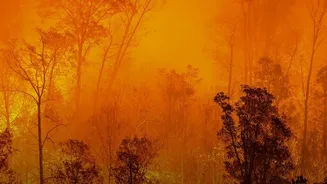
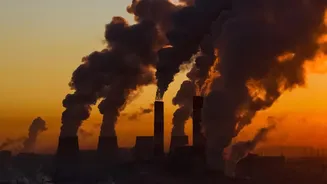
The smoke from burning crop stubble is a toxic cocktail. It is loaded with fine particulate matter, especially PM2.5, which are microscopic particles that can penetrate deep into the lungs and enter the bloodstream. These particles are a major component of the thick, soupy smog that reduces visibility to just a few hundred metres on the worst days. The smoke is also rich in black carbon, a pollutant that not only harms human health but also warms the atmosphere. When this plume of agricultural smoke, originating hundreds of kilometres away, travels towards cities like Delhi, it mixes with local urban pollution from traffic, industry, and construction dust. This combination, trapped by cooler winter air, undergoes chemical reactions under sunlight, creating an even more potent and hazardous secondary layer of smog.
Why the Fires Happen Every Year
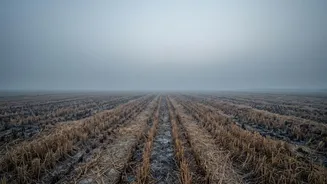
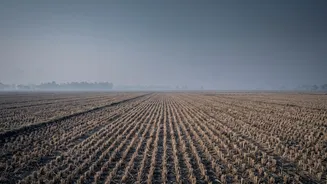
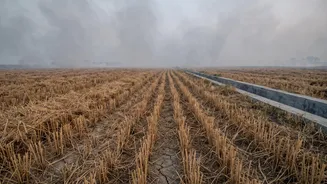
This is not a problem of malice, but of economics and timing. After harvesting rice (paddy), farmers in Punjab and Haryana have a very narrow window of only a few weeks to clear their fields and sow the next crop, wheat. The widespread use of mechanised harvesters leaves behind several inches of stubble. For many small-scale farmers, burning this residue is the fastest and cheapest method to prepare the land for the next planting cycle. While alternatives exist, they often come with barriers. Specialised machinery like 'Happy Seeders', which can plant wheat without needing to remove the stubble, can be expensive or in short supply. Without strong financial incentives or readily available, affordable alternatives, the cycle of burning continues as the default option for clearing millions of tonnes of crop residue.
The Search for Lasting Solutions
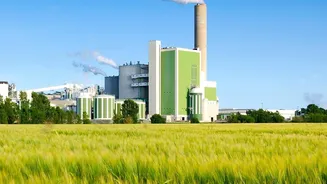
Tackling this annual pollution crisis requires a multi-pronged strategy that goes beyond simply penalising farmers. Governments have been promoting solutions with mixed success. Subsidies for crop residue management (CRM) machinery aim to make alternatives more affordable, though challenges with availability and suitability for small farms remain. Another key area is creating economic value from the stubble itself. Converting the residue into biofuel or using it in biomass power plants could turn a waste product into a source of income for farmers, creating a powerful incentive to not burn it. Improved public awareness campaigns are also crucial, as some surveys show a lack of understanding in rural areas about the far-reaching health and environmental consequences of the smoke. Ultimately, the new study reinforces the need for coordinated regional policies that address the problem at its source in the fields, not just when the smoke arrives in the city.