



More Than Just Preventing a Fall
Using a wall for support in balancing postures like Tree Pose goes far beyond simply avoiding a tumble. The wall acts as an honest guide for your alignment. By providing a stable reference point, it allows you to feel where your body is in space, a sense
known as proprioception. This feedback is crucial for building the muscle memory needed for proper form. When you aren't worried about falling, your nervous system can relax, allowing you to focus on the subtleties of the pose: keeping your hips level, engaging your core, and lengthening your spine. This builds confidence and helps strengthen the stabilising muscles in your standing leg, ankle, and foot more effectively.
How to Set Up Your Practice
There are a few effective ways to orient yourself. You can stand with your back to the wall, with your heels a few inches away. This allows your glutes and shoulder blades to have light contact, giving you feedback on your spinal alignment. Another common method is to stand parallel to the wall, about an arm's distance away. This setup allows you to place a hand on the wall for support as needed. A third option is to face the wall, standing about a foot away. This enables you to use your fingertips on the wall to create stability and even gentle traction to help lift your chest. Whichever you choose, the goal is to use the wall as a light guide, not a heavy support, so your muscles are still working to find balance.
Mastering the Foundational Pose
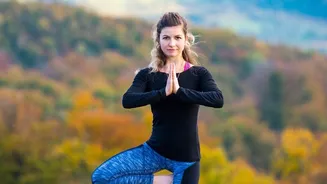
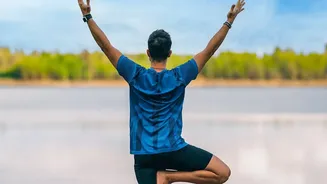
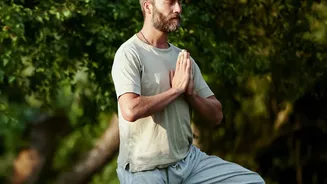
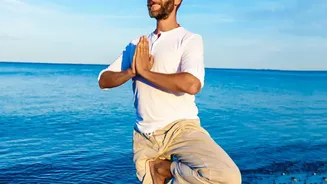
Once you're in position, shift your weight onto your standing leg. Begin by lifting your other foot and placing the sole on your inner ankle or calf, making sure to avoid placing it directly on the knee joint. Engage your core and press the foot of your bent leg and your standing inner leg against each other. This creates an active, stable connection. If you're standing beside the wall, rest your fingertips or palm lightly on its surface. Breathe deeply. Feel the micro-adjustments your standing foot is making. This is your balance being built in real time. The wall’s presence allows you to hold the pose longer, deepening the benefits of strengthening your ankles and legs.
Safely Exploring Variations
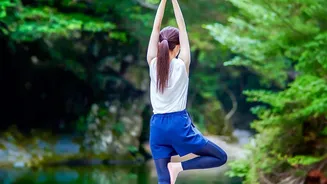
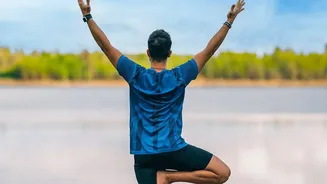
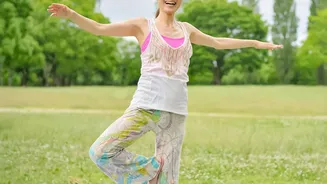
The stability provided by the wall is your invitation to play with variations that might feel inaccessible in the middle of the room. With the wall's support, you can experiment with raising your bent foot to your inner thigh. This deeper version requires more hip-opening, which the wall helps you explore safely. You can also experiment with different arm positions. While one hand is on the wall, you can bring the other to your heart in a prayer position. As you feel steadier, you can try lifting both hands to your heart or extending them overhead like branches, perhaps taking your supporting hand off the wall for just a breath or two at a time. The wall gives you the security to explore these new ranges of motion without the fear of falling, which often causes us to tense up and restrict movement.
Graduating from the Wall
The ultimate goal is to internalise the lessons the wall teaches you. It's a progressive tool. Start by relying on the wall for full support. As you build strength and confidence, begin to use it less and less. Lighten the touch of your hand until your fingertips are barely grazing the surface. Try closing your eyes for a moment to challenge and deepen your proprioception. Eventually, you can practice a few inches away from the wall, knowing it's there for you if you need it. This psychological safety net is often enough to help you find your own independent balance. You are not just learning to balance next to a wall; you are learning how your body creates and maintains stability, a skill you can then take anywhere.