

Cosmic Visitors on a Grand Tour
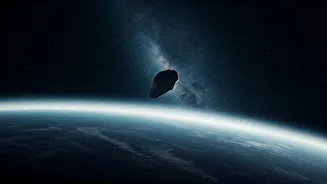
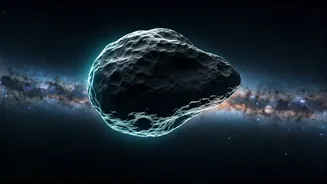
An interstellar object is exactly what it sounds like: a comet or asteroid that originated outside our solar system, not gravitationally bound to our Sun. These objects were likely ejected from their own home star systems and have wandered through the Milky
Way for millions, or even billions, of years before their chance encounter with us. Their trajectories are hyperbolic, meaning they enter our solar system at high speed, swing around the Sun, and then shoot back out into deep space, never to return. Until recently, detecting these faint, fast-moving visitors was nearly impossible. But thanks to advances in survey telescopes, we've started to catch them in the act.
A Growing List of Interlopers
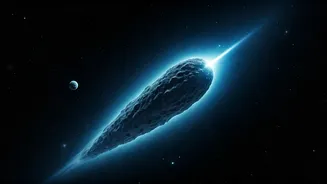
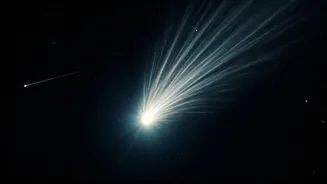
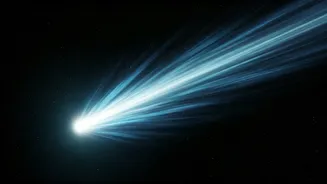
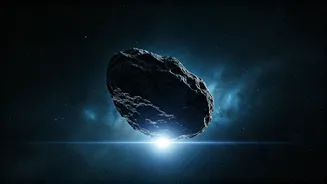
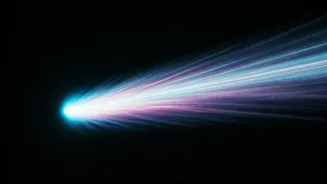
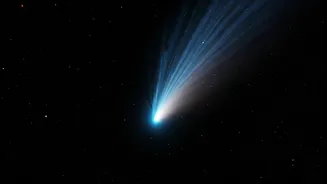
To date, scientists have confirmed three interstellar visitors. The first was 1I/ʻOumuamua, detected in 2017. Its unusual, elongated shape and lack of a visible cometary tail sparked intense scientific debate. Then came 2I/Borisov in 2019, which looked much more like a conventional comet, complete with a tail of gas and dust. The latest arrival is 3I/ATLAS, discovered in 2025. Each visitor has been unique, providing a tantalizingly diverse look at what other solar systems might contain. ʻOumuamua was rocky, Borisov was icy, and ATLAS has shown a chemical composition that challenges our assumptions.
Reading the Chemical Mail
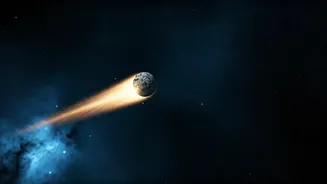
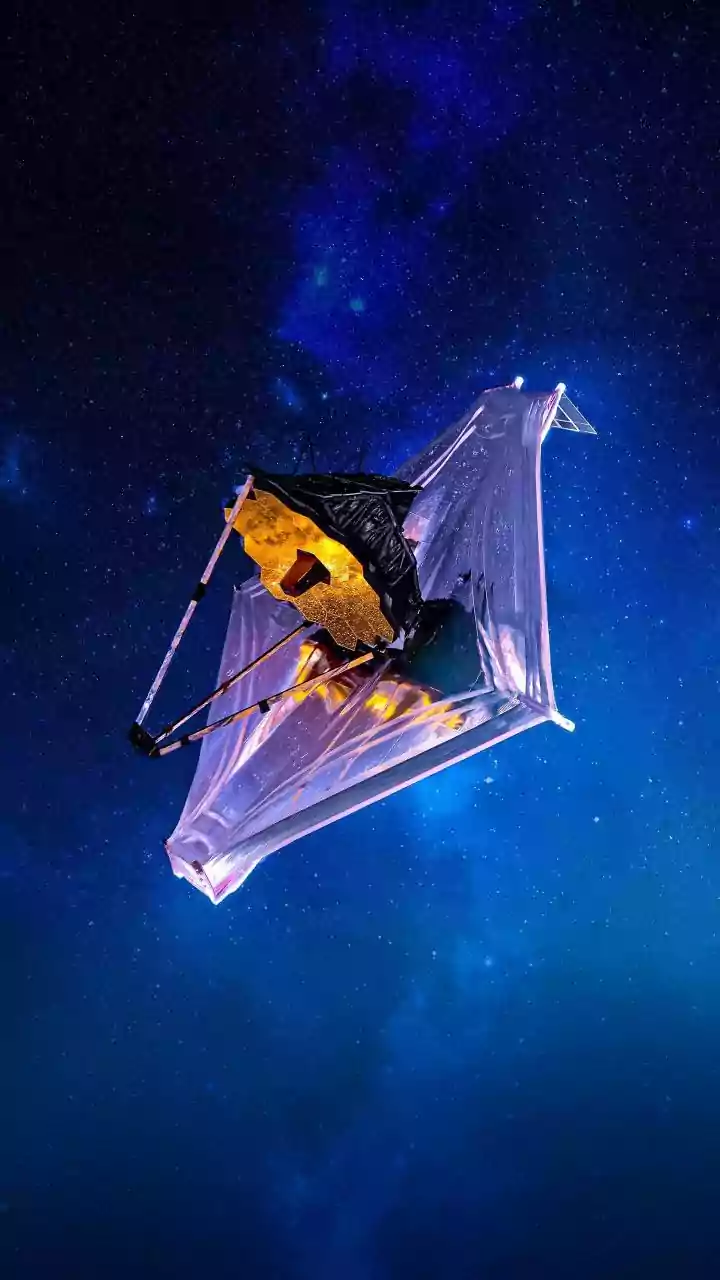
So, what makes these comets 'natural samples'? They are, quite literally, frozen pieces of the protoplanetary disks that formed planets around other stars. By studying their composition, astronomers can learn about the raw materials available in other parts of the galaxy. This is like a geologist studying a rock from another continent to understand its formation. When these comets get close to our Sun, the heat causes ices to vaporize, creating a cloud called a coma. By analyzing the light from this coma with instruments like the James Webb Space Telescope, scientists can identify the specific molecules present, such as water, carbon monoxide, and carbon dioxide.
Clues to a Different Origin
The analysis of these visitors has already yielded fascinating results. For example, comet 2I/Borisov had a much higher concentration of carbon monoxide than any comet from our own solar system. Comet 3I/ATLAS was found to be surprisingly rich in carbon dioxide and had an elevated ratio of deuterium—a heavy form of hydrogen. This suggests that it formed in an environment even colder than the one that created our own comets. Another study of 3I/ATLAS found that it lacked certain types of silicates that are common in our solar system's comets, hinting that its home system may have had a less turbulent formation history. These subtle chemical fingerprints are powerful clues about the diversity of conditions in star systems across the galaxy.
A New Era of Interstellar Prospecting
The discovery of three interstellar objects in just a few years is no accident. It's the dawn of a new era in astronomy, powered by wide-sky surveys that scan the heavens more comprehensively than ever before. The Vera C. Rubin Observatory, which began its survey in 2026, is expected to be a game-changer. This observatory will image the entire visible sky every few days, creating an unprecedented time-lapse movie of the universe. Scientists predict that Rubin could discover dozens of interstellar objects every year, transforming our understanding from a few isolated examples into a large-scale population study. This wealth of new data will help answer fundamental questions about how common or rare our own solar system's ingredients are.