





The Reality of Post-Monsoon Roads
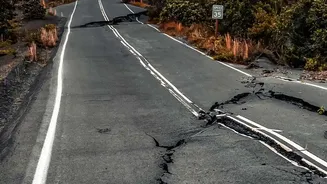
The Indian monsoon, typically lasting from June to September, unleashes intense rainfall on the Himalayas. This saturates the soil on steep slopes, leading to frequent and unpredictable landslides that can block roads with tonnes of rock and mud. In July
2026, for instance, a massive landslide in Uttarakhand washed away nearly 100 metres of the Yamunotri National Highway, leaving travellers stranded. That same weekend, heavy rains blocked around 120 roads across the state. The damage is not fleeting; routes can remain closed for days or even weeks, and temporary bridges can be washed away. Areas like the Shimla-Kinnaur highway (NH-5) and the Mandi-Kullu stretch along the Beas River are notoriously vulnerable to rockfalls and road collapses. For travellers, this means a planned route can become impassable without warning.
Planning is Your First Line of Defence
Flexibility is the most important item to pack for a Himalayan journey. While October is generally post-monsoon, the lingering effects and late-season showers can still cause disruptions. Before you even start the engine, your planning should be thorough. Start by monitoring weather forecasts and official advisories from sources like the India Meteorological Department (IMD). Never trust old social media posts for road conditions. Instead, consult real-time sources. The Border Roads Organisation (BRO) often posts updates on Twitter/X, and district police control rooms have the most current on-ground information. Build buffer days into your itinerary. A journey that looks like a two-day drive on a map could easily take four if a major landslide occurs. Have a Plan B and C for your route and overnight stays. Finally, download offline maps for your entire route, as mobile connectivity is often non-existent in remote valleys.
Safe Driving on Treacherous Terrain
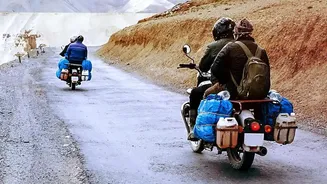
Once you are on the road, your safety depends on cautious driving and situational awareness. Reduce your speed significantly, especially on wet roads, as braking distances increase. Maintain a safe distance from the vehicle ahead and use lower gears when driving downhill to avoid overheating your brakes. Always use your headlights in rain or fog to improve visibility. One of the most critical rules is to avoid driving at night. Poor visibility makes it impossible to spot 'shooting stones', fresh mudflows, or broken road edges. Pay attention to your surroundings; listen to advice from local drivers and dhabawallas, as they often have the most reliable information about the road ahead. Be wary of seemingly calm water crossings, as these 'pagal nallahs' (mad streams) can swell into dangerous torrents within minutes. Never attempt to cross fast-flowing water.
When You Encounter a Roadblock
It is not a matter of 'if' but 'when' you will encounter a roadblock. When you do, the first step is to assess the situation calmly. Is it a minor blockage that might be cleared in a few hours, or a major road collapse that will take days? Talk to BRO personnel, police, or other drivers. If the delay is short, find a safe place to park, well away from any unstable slopes. Do not park under trees or near steep hillsides. If the road is closed indefinitely, it is time to consult your alternate routes. This is where your pre-trip planning pays off. Sometimes, authorities will officially divert traffic via another route, such as the Kataula-Bajaura road when the main Mandi-Kullu highway is blocked. If there is no safe alternative, the only choice is to turn back. Frustrating as it may be, pushing forward on unsafe or closed roads is a risk not worth taking.
Essential Resources for Travellers
Being prepared means knowing who to call and where to look for information. Before you go, save these emergency numbers in your phone: the National Highway Authority of India (NHAI) helpline is 1033, and the national tourist helpline is 1363. For local conditions, find the contact numbers for the district police control rooms along your planned route. Social media groups on platforms like Facebook and WhatsApp can also be valuable for real-time updates from fellow travellers on the road, but always verify information with official sources. Carry a well-stocked first-aid kit, extra water and snacks, a power bank, and cash, as digital payments are often unavailable in high-altitude areas. This preparation ensures that a delay remains an inconvenience, not an emergency.