




The Challenge That Gets You Thinking
In the world of fitness, it's easy to fall into a routine. The same exercises, the same weights, the same number of sets. While consistency is key, our muscles are smart; they adapt. To keep making progress, you have to introduce new challenges. Shilpa
Shetty, a long-time advocate for a holistic approach to wellness, often shares snippets of her workouts that highlight this very principle. A recent example that has fans talking involves not a complex machine, but a simple, everyday object that forces the body to work harder. In one notable session, she demonstrated a mobility challenge that required getting up from the floor without using hands, a move that tests core strength, balance, and coordination all at once. This 'complication' is the secret sauce to a better workout.
Why 'Complicating' Your Workout Works
Adding a prop or a new rule to a familiar exercise is a classic fitness strategy known as introducing instability or increasing the range of motion. When you perform an exercise on a stable surface like the floor, your larger muscle groups do most of the work. But the moment you introduce an unstable element—like balancing on one leg, or placing a foot on a small stool for a lunge—your body has to work much harder. Smaller, stabilising muscles around your joints and deep within your core are forced to activate to keep you from wobbling. This not only makes the exercise more challenging but also more effective, building functional strength that helps in everyday life, improves posture, and prevents injuries.
The Power of a Simple Prop
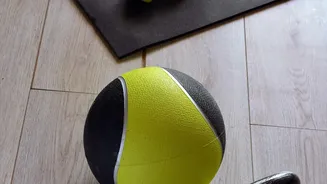
You don't need a high-tech gym to apply this principle. The beauty of Shilpa's approach is its accessibility. The 'prop' can be anything from a small stool, a bench, a yoga block, or even a resistance band. For example, elevating your rear foot on a stool during a split squat (also known as a Bulgarian split squat) increases the load on your front leg, targeting the quads and glutes more intensely. Using a bench for pushups can either make them easier (by placing your hands on the bench) or harder (by elevating your feet). Props can also provide valuable feedback on your form and alignment, ensuring you're engaging the right muscles.
How to Add Smart Complications to Your Routine
Inspired to shake up your own workout? Start small. Pick one or two exercises in your current routine and add a prop. If you do bodyweight squats, try holding a light weight or even a large water bottle to add resistance. If you do planks, try lifting one foot off the ground for a few seconds at a time. The goal isn't to make the exercise impossible, but to make it feel new and challenging again. Listen to your body and prioritise good form over everything else. Remember to perform movements on a non-slip surface and have sturdy support nearby if you are trying balance-focused exercises for the first time. The key is to be mindful and intentional with the changes you make.