


Seeing the Sun’s Ghostly Crown
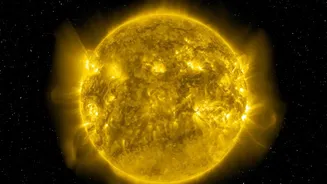
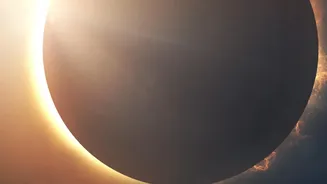
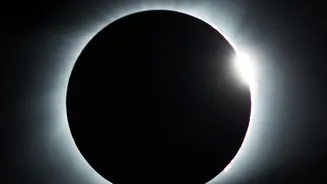
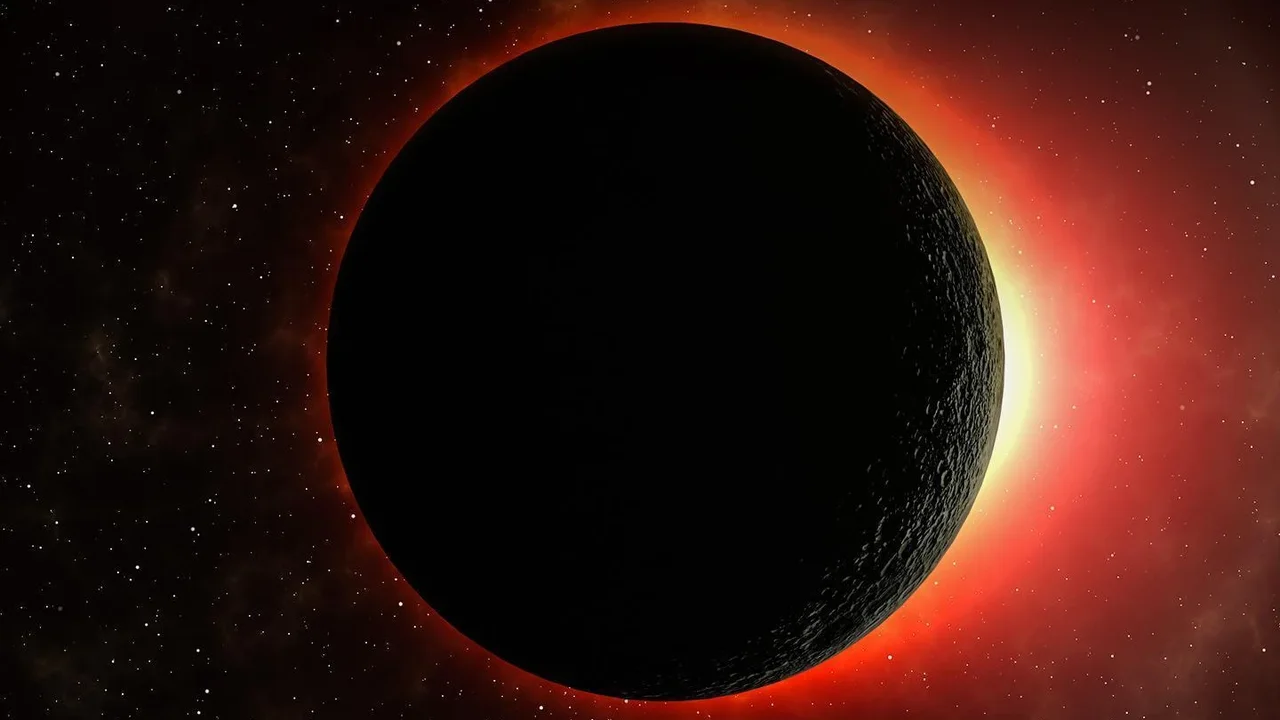
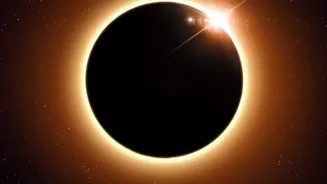
The single most important revelation during a total solar eclipse is the sun's corona. This is the star's outermost atmosphere, a wispy halo of superheated plasma that stretches millions of kilometres into space. Normally, the sun's surface, or photosphere,
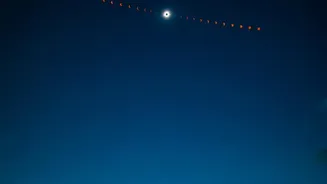
is about a million times brighter, making the corona completely invisible. But when the Moon blocks the photosphere, this ethereal crown is revealed. Scientists can then study its intricate loops, streamers, and plumes, which are shaped by the sun’s complex magnetic fields. Observations during events like the recent August 12, 2026, eclipse over Europe help researchers tackle the 'coronal heating problem'—the long-standing mystery of why the corona is hundreds of times hotter than the sun’s surface below it. The temperatures can soar to over a million degrees Celsius, while the surface is a relatively cool 5,500°C.
Testing the Fabric of the Universe
Perhaps the most famous scientific contribution of a solar eclipse came in 1919. It was then that Sir Arthur Eddington led expeditions to observe stars near the sun during totality. The goal was to test Albert Einstein’s revolutionary theory of general relativity. Einstein predicted that a massive object like the sun would bend the fabric of spacetime, causing light from distant stars to curve as it passed by. This effect would make the stars appear slightly shifted from their normal positions. Such an observation is impossible under normal conditions because the sun's glare washes out the light from those background stars. But during the eclipse, the stars became visible, and Eddington's photographs confirmed that their light was indeed bent by the sun's gravity, providing the first major evidence supporting Einstein's theory and forever changing our understanding of gravity.
Chasing Solar Storms and Wind
The sun is not a static ball of fire; it is a dynamic and violent star. It constantly ejects massive clouds of plasma and magnetic fields known as coronal mass ejections (CMEs). These solar storms, along with the continuous stream of charged particles called the solar wind, can have significant effects on Earth. They can disrupt satellite communications, damage power grids, and create beautiful auroras. Total solar eclipses offer a unique opportunity to study the origin of these phenomena in the lower corona, a region that is difficult to observe even with specialized instruments called coronagraphs. By watching how material moves away from the sun's surface during totality, scientists can better understand how the solar wind is accelerated and how CMEs are launched, improving our ability to forecast space weather.
Modern Science in the Moon’s Shadow
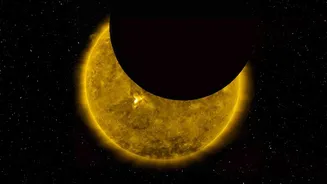
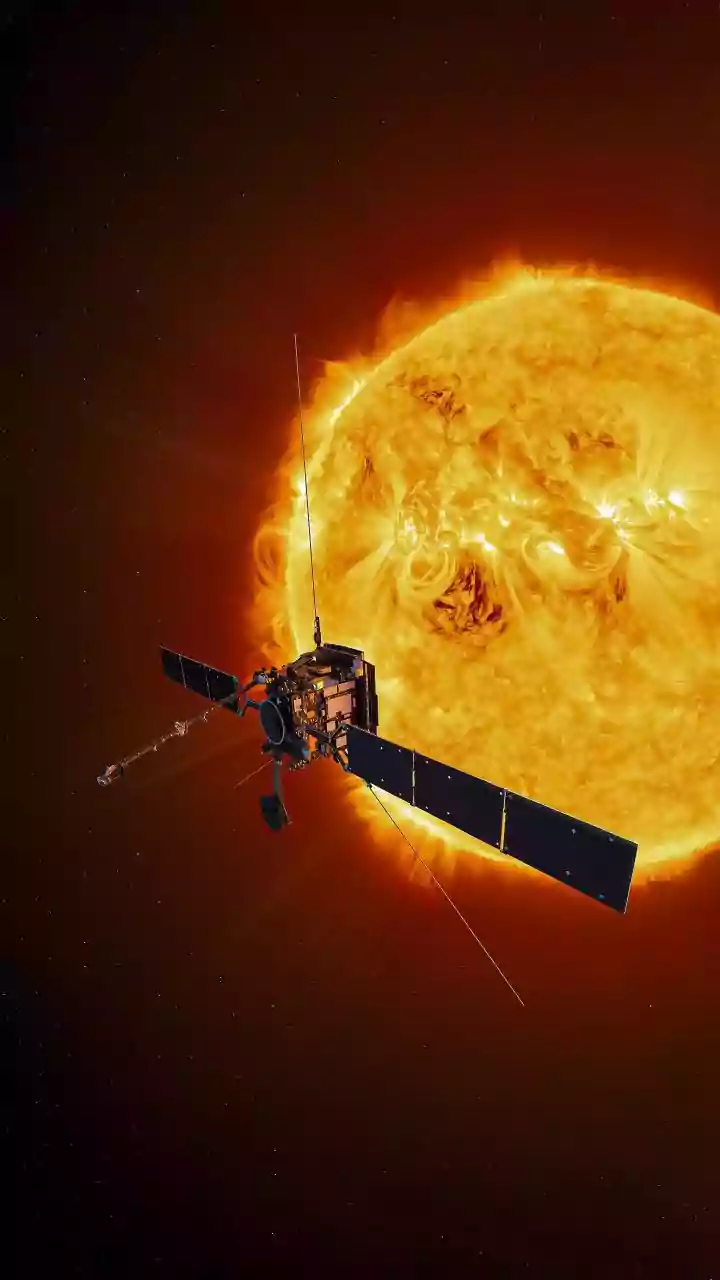
While historical eclipses led to foundational discoveries like the element Helium (in 1868) and proof of relativity, modern scientists continue to push the boundaries of knowledge. During the August 2026 eclipse, NASA flew a high-altitude WB-57 jet along the path of totality to extend observation time and capture high-resolution images of the corona in different wavelengths of light. These missions aim to connect features on the sun's surface to the structures seen in the corona and the outflowing solar wind. Data is also gathered by spacecraft like NASA's Parker Solar Probe, which flies directly through the corona, and the European Space Agency's Solar Orbiter. The ground-based observations during an eclipse provide crucial context for the data gathered by these probes, creating a more complete picture of our star's behaviour.