


The Policy Shift Launching Private Ambitions
The single biggest catalyst for this new era is the government's decision in 2020 to open the space sector to private enterprise. This led to the creation of the Indian National Space Promotion and Authorisation Centre (IN-SPACe), a single-window agency
designed to promote, authorise, and supervise the activities of private space companies. Think of it as the air traffic controller for the private space ecosystem. IN-SPACe facilitates everything from sharing ISRO's world-class facilities to helping startups navigate regulations. This policy shift has transformed the industry, with India now home to over 400 space-tech startups, up from just a handful a few years ago. Projections show India's space economy could grow from around $8.4 billion to $44 billion within the next decade, creating a massive demand for skilled professionals.
Upstream: Building the Rockets and Satellites
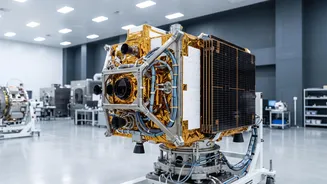
The most visible part of the private space race is in the 'upstream' sector: companies that build the hardware that goes into space. These startups are designing and manufacturing launch vehicles (rockets) and satellites. Hyderabad-based Skyroot Aerospace became the first Indian private company to launch a rocket, the Vikram-S, proving it could be done. Chennai-based Agnikul Cosmos is also a major player, developing its Agnibaan rocket, which is designed for 'launch-on-demand' services. In the satellite manufacturing space, companies like Dhruva Space and Pixxel are leading the charge. Dhruva provides full-stack satellite solutions, while Pixxel is building a constellation of hyperspectral imaging satellites to monitor Earth's health. Careers here are ideal for engineers with a background in aerospace, mechanical, propulsion, avionics, and structural engineering. Roles include designing rocket engines, building satellite structures, and developing the complex guidance, navigation, and control (GNC) systems.
Downstream: Turning Space Data into Earthly Insights
While rockets grab headlines, a huge part of the space economy's future is in the 'downstream' sector—using data from satellites to create valuable services on Earth. Companies in this domain don't necessarily build the hardware, but they are experts at interpreting the terabytes of data sent back by Earth-observation satellites. Bengaluru-based SatSure, for example, uses satellite imagery and analytics to provide insights for agriculture, insurance, and climate risk management. Pixxel, in addition to building its own satellites, has a massive data and analytics wing to help clients in sectors like agriculture, energy, and mining make better decisions. This field is a hotbed for data scientists, geospatial analysts, software developers, and machine learning engineers. If you have skills in Python, AI, GIS software, and remote sensing, the downstream sector offers a direct path into the space industry without needing a degree in aerospace engineering.
The Support Ecosystem: The Unseen Jobs
A thriving space industry needs more than just rocket scientists and data analysts. An entire ecosystem of supporting roles is emerging. This includes specialists in mission operations who manage ground stations and control satellites in orbit. There is also a growing need for professionals in embedded software, who write the code that runs on the spacecraft's computers, and network engineers to manage the complex IT infrastructure. As the industry commercialises, there is even demand for roles that might seem surprising, like finance experts, supply chain associates, and space lawyers to handle contracts and international regulations. Companies like Dhruva Space and Agnikul explicitly mention hiring for communicators and business roles alongside their engineering teams, highlighting the diverse talent required. This means professionals from various backgrounds can find a place in the expanding Indian space sector.
What Skills Do You Need to Break In?
While a B.Tech in aerospace or mechanical engineering remains a common entry point, the private sector's needs are much broader. Proficiency in software and analytical tools is highly valued across the board. Knowledge of programming languages like Python, C++, and MATLAB is crucial for roles in simulation, data analysis, and embedded systems. Experience with design and analysis software such as CATIA and ANSYS is essential for hardware roles. For downstream applications, skills in Geographic Information Systems (GIS), remote sensing, and machine learning are in high demand. Beyond technical skills, private startups value a different mindset. They look for individuals who are adaptable, can take ownership of projects, and are comfortable in a fast-paced environment where they might work on a system that flies within months, not years. Many companies also offer internships and apprenticeships, providing a direct pathway for recent graduates to gain practical experience.