






Beyond the Six-Pack: What Is 'Core Engagement'?
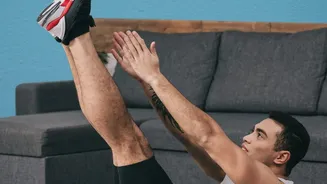
Before comparing, it's crucial to understand that the 'core' is more than just the rectus abdominis, or 'six-pack' muscles. It’s a complex cylinder of muscles including the deep transverse abdominis, the obliques on your sides, the muscles of the lower
back like the erector spinae, the diaphragm, and the pelvic floor. True core engagement isn't just about crunching; it’s about creating stability to protect the spine, transferring force between the upper and lower body, and allowing for controlled movement through different planes. Both dancing and rowing excel at this, but they train these functions for entirely different purposes.
The Rower's Core: A Foundation for Power
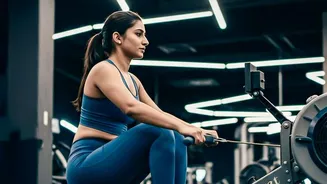
In rowing, the core’s primary job is to be a rigid, stable link in a powerful chain. The movement is repetitive and occurs largely in one plane of motion—forwards and backwards. As a rower initiates the 'drive' by pushing with their legs (which generate over 60% of the power), the core locks down to transfer that immense force through the torso, into the back and arms, and onto the handle. This is largely an act of isometric contraction, where muscles tense without changing length to prevent movement. Think of it as bracing. The abdominals, obliques, and lower back muscles co-contract to keep the spine supported and straight, preventing energy leaks and protecting against injury. The core works constantly to control posture during the drive and the return 'recovery' phase, but its main role is stabilization, not rotation or flexion.
The Dancer's Core: A Center for Dynamic Movement
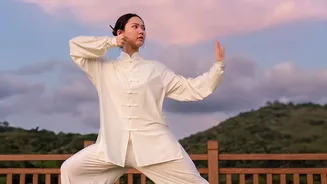
A dancer's core is the opposite of rigid; it's the dynamic epicenter from which all movement flows. While stability is essential, it’s a fluid, adaptable stability. Dancing requires the torso to flex, extend, and rotate constantly. Think of a pirouette, a body roll in hip-hop, or the fluid spinal movements in contemporary dance. This demands a core that can initiate and control movement through multiple planes. The obliques are heavily recruited for rotational power and control, while the deep abdominal muscles work subtly to maintain balance during shifts in weight. Unlike the rower's braced spine, a dancer’s spine is meant to be mobile, and the core muscles must be coordinated enough to support it through every bend and twist. Core work for dancers is less about pure bracing and more about coordinated control through a full range of motion.
Stabilization vs. Mobilization: The Key Difference
The fundamental difference boils down to stabilization versus mobilization. Rowing trains the core to be a master of stabilization. It teaches the body to resist force and maintain a rigid posture to maximize power output in a single direction. This builds incredible endurance and strength in the muscles that prevent your torso from collapsing under a heavy load. Dancing, on the other hand, trains the core for mobilization and control. It develops the coordination to move the torso with grace, power, and precision in any direction, all while maintaining balance on a shifting center of gravity. A dancer’s strength is in their ability to seamlessly transition from a stable balance to a powerful, rotational leap, using the core as the control center for it all.
Which Is Right For Your Goals?
Neither activity is 'better'—they simply build different kinds of functional strength. If your goal is to build raw power, cardiovascular endurance, and a rock-solid posterior chain (glutes, hamstrings, back), rowing is an exceptionally efficient choice. It’s a low-impact powerhouse for developing functional strength that supports good posture and powerful, straightforward movements. If your goals are more focused on agility, balance, coordination, and rotational power, dancing is unparalleled. It builds a different kind of core intelligence, one that thrives on variety and multi-planar movement. Many dance styles also incorporate explosive movements and fine motor control that challenge the body in ways repetitive cardio cannot. For a truly well-rounded physique, incorporating both types of training—one focused on linear stabilization and the other on dynamic, multi-directional control—could offer the most comprehensive benefits.