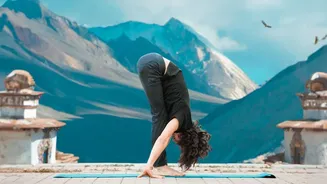




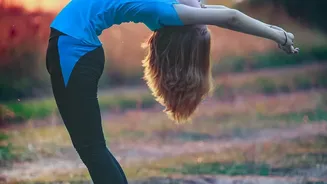
Paschimottanasana, or the Seated Forward Bend, is a cornerstone of yoga that offers a deep stretch for the entire back of the body. But the secret to unlocking its calming benefits lies not in force, but in a gentle, mindful forward reach.
The True Goal: Length, Not Depth
The primary
aim of Paschimottanasana is to lengthen the entire posterior chain of the body, from your heels to the crown of your head. Many practitioners mistakenly focus on getting their head to their knees, which often leads to rounding the spine and straining the lower back. The real work happens when you prioritise creating a long spine before folding deeper. The 'gentle reach' is about moving forward with an extended torso, not collapsing downward. This mindful approach protects the fragile attachments of the hamstring muscles and prevents compression of the spinal discs. Think of it as reaching your chest towards your feet, rather than forcing your forehead to your shins.
Start with a Solid Foundation
Proper alignment begins before you even start to fold. Begin by sitting on your mat in Dandasana (Staff Pose), with your legs extended straight in front of you. Your spine should be tall, as if a string is gently pulling the crown of your head upward. Actively flex your feet, drawing your toes back towards you. This simple action engages the leg muscles and helps protect your knee joints during the stretch. If you find your lower back rounding or feel a strain just from sitting upright, elevate your hips by sitting on the edge of a folded blanket or cushion. This small adjustment tilts the pelvis forward, making it significantly easier to hinge from the hips correctly.
Mastering the Hip Hinge
The most crucial element of a gentle forward reach is the hip hinge. The movement must originate from your hip creases, not your waist or upper back. As you inhale, lengthen your spine upwards. As you exhale, begin to fold forward, leading with your chin and keeping your spine as straight as possible for as long as possible. A common mistake is to immediately round the shoulders and upper back in an effort to reach the feet. Instead, imagine your navel moving towards your thighs. This encourages the fold to come from the pelvis, ensuring the stretch is distributed safely along the hamstrings and back, rather than being concentrated in the vulnerable lower back.
The Power of Props and Breath
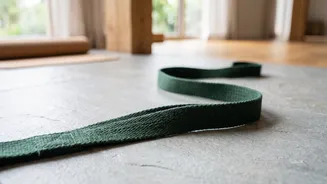
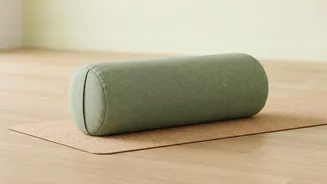
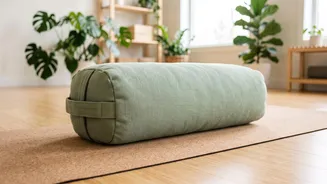
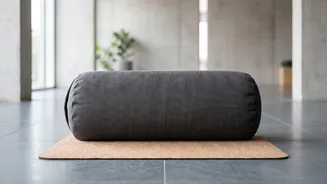
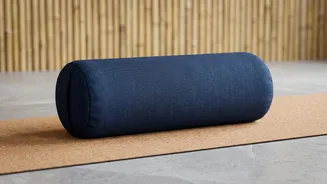
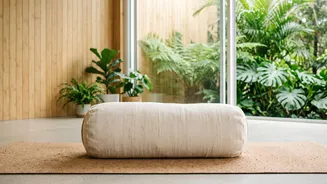
Props are not a crutch; they are intelligent tools for a safer practice. If your hamstrings are tight, looping a yoga strap around the balls of your feet is an excellent way to extend your reach without compromising your posture. Hold the strap with both hands, keeping your elbows soft, and use it to maintain a long spine as you hinge forward. Do not use the strap to yank your body down. Your breath is your other essential tool. Use each inhalation to find a little more length in your spine and each exhalation to gently deepen into the fold, releasing tension without force. For a more restorative version, you can also bend your knees generously and rest your torso on a bolster placed across your thighs.
Common Mistakes to Avoid
To ensure your practice is beneficial and not harmful, be mindful of a few common errors. Avoid pulling aggressively on your feet or ankles, which can lead to rounding the spine and straining your shoulders. Another frequent misstep is locking the knees, which can place undue stress on the joint. Always maintain a micro-bend in your knees, or bend them more significantly if needed to keep your back safe. Finally, avoid craning your neck to look forward, which can compress the cervical spine. Instead, let your neck be a natural extension of your long spine, allowing your head to relax downward as you fold.