



A Glimpse into a Cosmic Spider's Lair
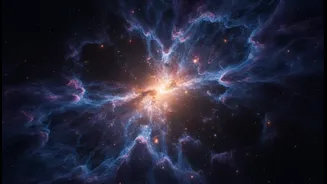
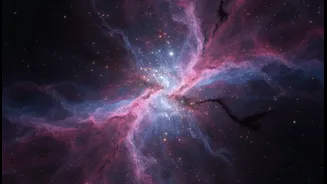
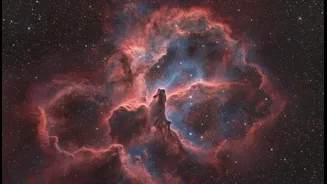
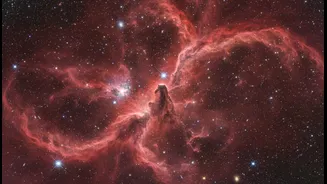
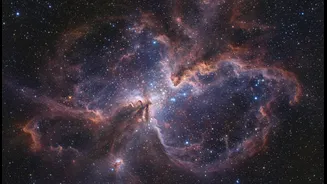
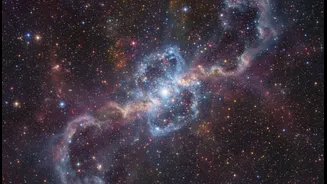
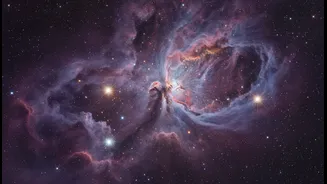
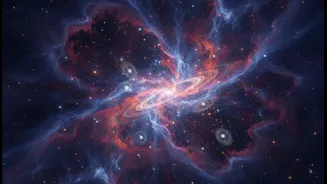
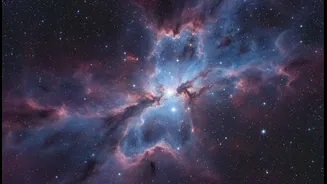
The latest celestial portrait from the iconic Hubble Space Telescope showcases the magnificent Tarantula Nebula. Located 160,000 light-years away in the Large Magellanic Cloud, a satellite galaxy of our own Milky Way, this region is a sprawling cosmic
web of gas and dust. Its name comes from its appearance in deep-sky photographs, where its glowing filaments of ionised gas resemble the legs of a spider. But this is no ordinary web. The Tarantula Nebula is the largest and most active star-forming region known in our local galactic neighbourhood. If it were as close to us as the more familiar Orion Nebula, it would be so bright it could cast shadows at night and even be visible during the day. This new image provides an unprecedentedly sharp view, turning a distant, fuzzy patch in the sky into a vibrant landscape of creation.
Making Star Birth Simple
So what are we actually looking at? The Tarantula Nebula is what astronomers call a 'stellar nursery'—a giant cloud of gas and dust where new stars are born. The process itself is a cosmic tug-of-war. Gravity pulls massive clumps of gas and dust together, causing them to collapse and heat up until a nuclear furnace ignites at their core, and a star is born. What makes this image so special is its clarity. It allows us to see different stages of this process happening all at once. In one area, you can see the dense, dark clouds of gas that are the raw ingredients for stars. In another, powerful radiation from brilliant, newborn massive stars is carving out huge cavities in the surrounding gas, creating the nebula's iconic glowing tendrils. This visual map makes the chaotic and complex sequence of star formation feel more intuitive and easier to grasp, a bit like watching an entire ecosystem at work in a single frame.
A Rosetta Stone for the Early Universe
The significance of the Tarantula Nebula goes beyond just being a beautiful star factory. Its chemical composition is very similar to that of the gigantic star-forming regions that existed in the early universe, billions of years ago. Back then, during an era astronomers call 'cosmic noon', galaxies were churning out stars at a much faster rate than they do today. Because the Tarantula Nebula is relatively close to us, Hubble can resolve individual stars within it, something that's impossible to do for galaxies in the distant, early cosmos. This makes the nebula a perfect local laboratory—a kind of 'Rosetta Stone'—for understanding the violent and energetic conditions that governed star formation when the universe was young. By studying it, astronomers can test their theories about how the first generations of stars and galaxies came to be.
Hubble’s Enduring Legacy of Discovery
For over three decades, the Hubble Space Telescope has been humanity's eye on the cosmos, and this latest image is another testament to its enduring power. While newer telescopes have come online, Hubble's unique capabilities, especially in visible and ultraviolet light, continue to provide critical insights into the workings of the universe. Discoveries like this tap into a fundamental human curiosity and a drive for exploration, a spirit shared by India’s own ambitious space program. Each new image from Hubble doesn't just expand our scientific knowledge; it brings the wonders of the universe closer to home, reminding us of the vast and beautiful cosmos we are a part of. It simplifies the complex, inspires the next generation of scientists, and keeps us all looking up.