

The Geographic Overlap
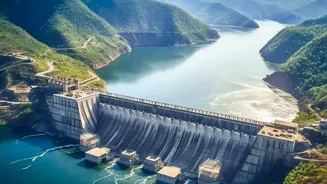
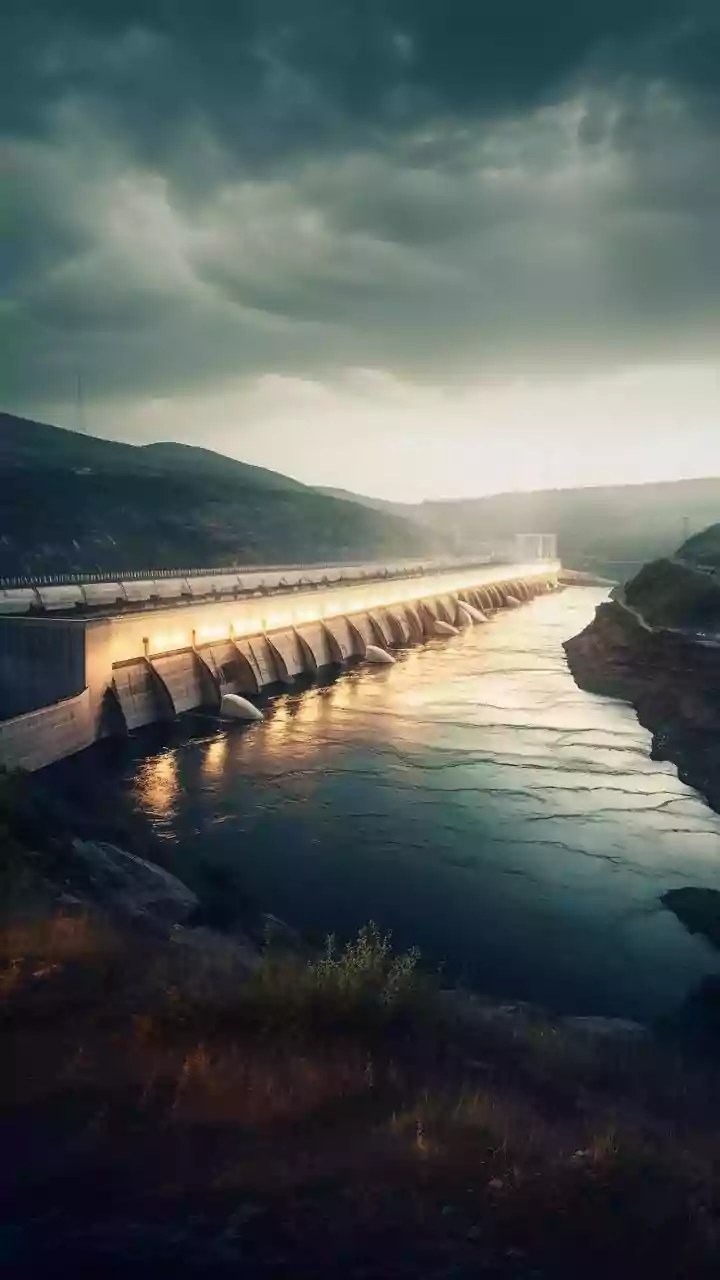
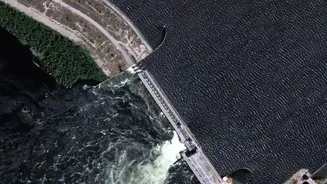
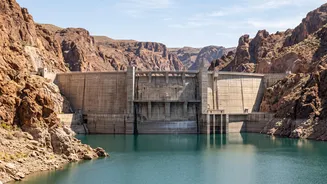
The controversy stems from a striking geographical correlation. Water security experts and military analysts, after reviewing maps of US-Israeli airstrikes against suspected Iranian military sites, noticed a significant overlap with the locations of Iran's
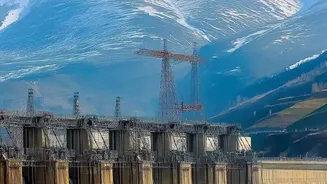
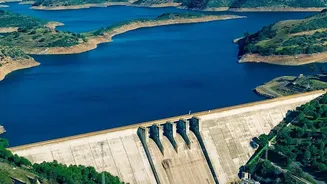
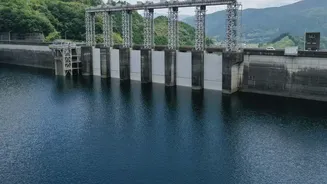
dams. Nima Shokri, a water security expert at Germany's Hamburg University of Technology, has tracked at least 533 dams across Iran and noted that the pattern of airstrikes resembled his map of dam locations. This observation led to the hypothesis that some of Iran's hundreds of water projects, many of which have been criticized for lacking clear civilian justification, might have a dual purpose. The theory suggests these dams could be providing the steady, independent water and electricity supplies needed to operate sprawling, underground military complexes.
Iran's 'Missile Cities'
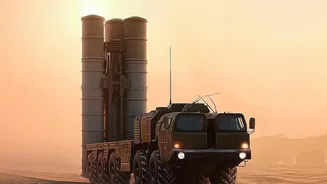
For years, Iran has been constructing a network of what it calls 'missile cities'. These are vast underground bases, some reportedly buried as deep as 500 meters, designed to protect the nation's ballistic missile arsenal from attack. These subterranean fortresses house facilities for producing, storing, and launching missiles and drones, creating a hardened and survivable deterrent. According to Farzin Nadimi, a specialist at the Washington Institute, Iran may have at least 30 such sites. For these hidden bases to remain operational, especially during a conflict, they require immense and reliable power and water—resources a nearby dam could readily provide. This gives Tehran potential 'operational continuity,' ensuring its missile forces are not dependent on the national civilian grid, which is more vulnerable to attack.
A Strategy of Concealment
The co-location of military assets with civilian infrastructure fits into a broader pattern of Iranian military strategy. A leaked 2026 document, reportedly a directive from the Islamic Revolutionary Guard Corps (IRGC) missile command, detailed a system for embedding missile operations within ordinary civilian geography. The document described using civilian structures like industrial sheds and sports halls for concealing, supporting, and preparing missile launches. This doctrine complicates targeting for adversaries and blurs the lines between civilian objects and military objectives. While using civilian infrastructure as a shield is a violation of the laws of war, it provides a strategic advantage by making potential strikes carry higher political and humanitarian risks.
Speculation or Substance?
Despite the suggestive evidence, the link between Iran's dams and its missile program remains a hypothesis. Critics of the theory argue that spatial proximity does not prove causality. They point out that both dams and strategic military sites are often built in mountainous regions for topographical reasons—dams for hydroelectric power and water retention, and military bases for natural protection. Furthermore, some experts note that Iran's dam-building boom can be explained by decades of inefficient planning and political interests, rather than a grand military strategy. They warn that promoting a speculative military link could endanger essential civilian infrastructure, which is protected under international law.
Official Reactions and Escalating Tensions
The public discussion around the issue has drawn sharp reactions from Tehran. Iranian Parliament Speaker Mohammad-Bagher Ghalibaf called the theory a pretext for future attacks on civilian infrastructure. He issued a counter-threat, stating that by the same logic, 'any dam, port, or power plant near a US or Israeli base is dual-use.' This exchange highlights the tense environment, where analysis and speculation can quickly become part of the information war. Without definitive proof or transparency from Iran, the purpose of its extensive reservoir network and its proximity to sensitive military sites will likely remain a subject of intense debate and suspicion for the international community.