



Why a Functional Core Matters
Many people associate core workouts with achieving a 'six-pack'. While aesthetic goals are valid, the true purpose of core training is to build functional strength. Your core is more than just your abs; it includes muscles in your back, hips, and pelvis.
These muscles work together to stabilize your spine, improve posture, and provide a solid foundation for all your movements. A strong, functional core makes everyday activities like lifting groceries, playing with your children, or even just sitting with better posture, easier and safer. Functional exercises mimic these real-world movements, training muscle groups to work in coordination, which can reduce the risk of injury and improve balance and stability.
The Forearm Plank
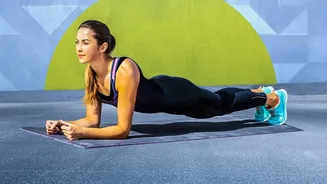
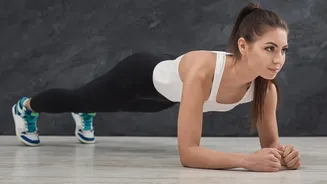
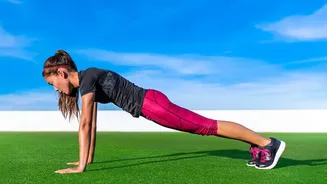
The plank is a fundamental exercise for core stability. It engages the entire core, including the deep transverse abdominis muscles that act like a corset for your spine. To perform a forearm plank, start by lying face down. Place your forearms on the floor with your elbows stacked directly under your shoulders. Step your feet back one at a time to lift your body, forming a straight line from your head to your heels. It is crucial to avoid letting your hips sag or rise too high. Engage your core by imagining you are bracing for a light punch to the stomach, and squeeze your glutes. Hold this position, focusing on maintaining proper form. If you're a beginner, start with holding for 15 to 20 seconds and gradually work your way up to 60 seconds.
The Dead Bug
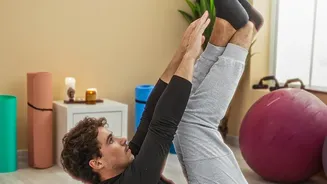
This unusually named exercise is fantastic for developing core control and coordination without straining the lower back. To begin, lie on your back with your arms extended toward the ceiling, directly above your shoulders. Lift your legs so your knees are bent at a 90-degree angle and stacked directly over your hips. This is your starting tabletop position. Engaging your core, press your lower back gently into the floor. On an exhale, slowly lower your right arm and your left leg toward the floor simultaneously. Go as low as you can without letting your lower back arch. Inhale to return to the starting position with control. Repeat on the opposite side, lowering your left arm and right leg. That completes one repetition.
The Bird-Dog
The bird-dog is another excellent exercise for promoting stability in the spine and strengthening the core, glutes, and back muscles. Start on all fours in a tabletop position, with your hands directly under your shoulders and your knees under your hips. Maintain a neutral spine by engaging your abdominal muscles. While keeping your hips and shoulders square to the floor, extend your right arm straight forward and your left leg straight back. Imagine you are creating a long, straight line from your fingertips to your heel. Hold for a few seconds before slowly returning to the starting position. Repeat with the opposite arm and leg. The key is to move with control and avoid any rotation in your hips or torso.
The Glute Bridge
While often seen as a glute exercise, the bridge is also a powerful tool for activating the entire posterior chain and core. It strengthens the glutes and hamstrings, which are crucial for supporting the lower back and improving hip extension. Lie on your back with your knees bent, feet flat on the floor about hip-width apart, and your heels about 6-8 inches from your glutes. Rest your arms by your sides. Brace your core and squeeze your glutes as you lift your hips off the floor until your body forms a straight line from your shoulders to your knees. Hold the position at the top for a moment, focusing on the glute contraction, before slowly lowering your hips back down.