







A More Natural Conversation
First, it's important to understand what Gemini Live is. Unlike traditional voice assistants that require clunky, turn-based interactions, Gemini Live is designed for natural, free-flowing conversation. You can speak to it, interrupt it, change the subject,
and it follows along in real-time, much like a human conversation. This is achieved by processing audio directly, which results in lower latency and more intuitive interactions. The platform can even respond with emotional cues and preserve a speaker's tone, making the experience feel more personal. Until recently, this advanced capability was primarily limited to major global languages.
Bridging India's Linguistic Divide
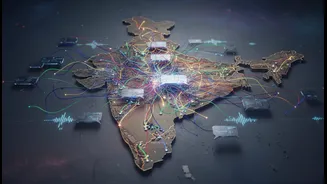
The real breakthrough is the recent expansion to include over 25 Indian languages and regional dialects, including Bhojpuri, Maithili, and even Sanskrit. This is not just about adding more languages to a list; it's a fundamental shift in accessibility. For decades, the digital world in India has been dominated by English, creating a significant barrier for hundreds of millions of citizens. While support for major Indian languages has grown, it often fails to capture the nuances of regional dialects spoken by vast populations. By training its AI on these specific linguistic variations, Google is making its technology relevant to a much broader swathe of the Indian population, from bustling cities to remote villages.
Transforming Everyday Accessibility
The word "transform" is strong, but the potential impact justifies it. For a person with visual impairments, a truly conversational AI in their native dialect means they can navigate apps, get information, and manage their schedule hands-free and with greater ease. For individuals with low literacy, who may find typing and reading challenging, a reliable voice interface opens up the entire digital world, from accessing government services to online banking. It also empowers elderly users who may be less comfortable with complex smartphone interfaces. This update moves beyond simple voice-to-text; it enables genuine digital participation for those previously left behind.
The Engine of Inclusion
This development is part of a broader push for linguistic inclusivity in India's tech space. It builds on initiatives like Project Vaani, a collaboration with IISc-Bangalore to open-source speech data for numerous Indic languages, creating the foundational datasets needed for such advancements. By enabling AI to understand and speak the languages of 'Bharat', technology ceases to be a tool for the few and becomes an engine for widespread empowerment. This move unlocks possibilities in education, where students can learn in their mother tongue, and in healthcare, where AI can assist with patient communication in local dialects.
The Road Ahead
While the announcement is a significant milestone, the journey is far from over. The quality of voice recognition will need to be robust across various accents and in noisy environments to be truly effective. However, by investing in this complex linguistic landscape, Google is not only expanding its market reach but also setting a new standard for what digital accessibility should mean in a multilingual nation. This shift from a one-size-fits-all approach to a deeply localized one is crucial. It ensures that as India advances its AI ambitions, it does so in a way that includes and empowers all its citizens, regardless of the language they speak.