







The Grand Promise of AI Agents
For years, the tech world has buzzed with the idea of AI agents—autonomous software that understands your intent and performs multi-step tasks on your behalf. Instead of opening three different apps to plan a night out, you would tell your agent to book
a ride, reserve a table, and buy movie tickets. The core idea is shifting from manually operating software to delegating your goals. This vision, fueled by powerful Large Language Models (LLMs), suggested that the cluttered grid of app icons on our phones was on the verge of becoming obsolete. The future was supposed to be a single, conversational interface for everything. This shift isn't just about chatting with a bot; it's about giving an agent the authority to act for you, transforming apps into background services it can call upon.
Reality Check: The Trust and Complexity Gap
Despite the hype, replacing apps is proving incredibly difficult. The primary hurdles are complexity and trust. Many tasks we perform in apps are not simple, one-shot commands. They involve browsing, comparison, and visual confirmation—things conversational AI struggles with. Think about booking an Airbnb: you want to see photos of the property, read reviews, and check the map. Ordering from DoorDash often involves discovering a new restaurant or scrolling through a visual menu. These are high-context, often emotional decisions that users are not yet comfortable outsourcing to a machine that might misunderstand nuance or miss a critical detail. Recent data from Uber showed that in one quarter, only four rides were booked by third-party AI agents, highlighting a massive gap between theory and real-world adoption.
Uber's Cautious AI Integration
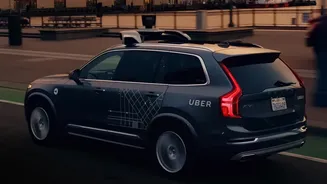
Uber's approach reveals the true role of AI in these platforms today: augmentation, not replacement. While the company is building an 'agentic AI stack' to orchestrate complex workflows, its most visible AI tools are not replacing the core booking experience. Instead, AI is used internally to streamline operations, for customer service bots that handle common queries, and for pricing algorithms. Sean Berryman, Uber's Global Head of AI Policy, noted in an August 2026 interview that most of the company's agentic AI work will likely be internal-facing before it becomes external. The few hundred Uber Eats orders placed by agents in Q3 2026, compared to the millions processed daily, show that for now, the app remains the definitive user interface for the company's core business.
DoorDash and The Discovery Dilemma
DoorDash's 'Ask DoorDash' AI assistant is a powerful tool for meal discovery and planning, but it also highlights the challenges. It can help users find restaurants or build a grocery list from a recipe photo. However, a core part of the food delivery experience is visual browsing and discovery—something a purely conversational interface struggles to replicate. The company's own engineers have noted, 'Building a useful AI agent is hard. Knowing if it is actually good is even harder'. While their AI has shown a 15% higher conversion for open-ended queries, it functions as a feature within the app, not a replacement for it. DoorDash is also using AI to help drivers and merchants with scheduling and troubleshooting, demonstrating a focus on operational efficiency over replacing the main consumer app.
Airbnb and High-Stakes Visual Decisions
Booking travel and accommodation involves significant financial commitment and a high degree of trust, making it a difficult area for AI agents to conquer. Airbnb's use of AI is focused on enhancing the existing user journey within the app. AI helps personalize search results, suggests relevant filters, summarizes reviews, and powers an AI Assistant to answer questions about a property. These tools make it easier for users to navigate the platform and find what they want, but the final decision remains firmly in the user's hands, supported by visual evidence like photos, floor plans, and guest reviews. The AI acts as a smart guide, not an autonomous booking agent, because the stakes of getting it wrong are too high.
The Future Is Hybrid, Not Replaced
The dream of a single AI agent managing our digital lives hasn't died, but its timeline has been adjusted by a dose of reality. The immediate future is not about AI agents replacing apps, but augmenting them. The app interface excels at tasks requiring visual confirmation, complex comparisons, and user discovery. For now, AI is being strategically deployed where it adds the most value with the lowest risk: powering smarter search, automating customer support, and optimizing backend logistics. The platforms of Uber, DoorDash, and Airbnb show that the 'app-slayer' narrative was premature. The app isn't dead; it's becoming the interface through which we manage the increasingly intelligent services working for us in the background.