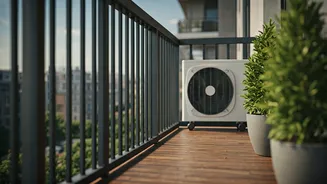









The Unseen Dangers of Your Balcony
A balcony is more than just an open space; it's a structural extension of a building that endures constant exposure to the elements. In India, the intense heat followed by heavy monsoon rains creates a cycle of stress on building materials. Water seepage
is a primary enemy. It can penetrate concrete and cause the internal steel reinforcement bars to rust and expand, leading to cracks and weakening the entire slab. Over time, this deterioration, known as spalling, can cause chunks of concrete to fall off. Another major risk is overloading. Balconies are designed with specific weight limits, which can be easily exceeded by placing heavy furniture, large planters, or hosting too many people. Illegal or poorly executed extensions and enclosures add further stress that the original structure was never meant to bear, significantly increasing the risk of collapse. Recent incidents, like a tragic collapse in Lucknow during a gathering, underscore how quickly a moment of joy can turn into a disaster when balconies are overburdened.
A Simple Balcony Safety Checklist
You don't need to be a structural engineer to spot potential warning signs. Performing regular visual checks can help you catch problems early. Start by examining the surface for any visible cracks, especially where the balcony meets the building wall. Look for water stains, peeling paint, or dark patches, as these can indicate moisture damage. Check the floor for any signs of sagging or unevenness. Next, inspect the railings. They should be firm and not wobble under pressure. According to the National Building Code of India, railings should be of a certain height (often 1.0 to 1.2 metres) and have narrowly spaced vertical bars to prevent children from slipping through. Finally, ensure the drainage outlet is clear and allows water to flow out freely, preventing water from pooling and seeping into the structure. If you spot wide cracks, significant rust stains, or any loose structural components, it's crucial to stop using the balcony and consult a qualified civil engineer immediately.
The Cooler Conundrum: More Than Just a Breeze
In the sweltering Indian summer, an air cooler is a lifeline. However, a poorly installed or maintained unit, especially those precariously placed in windows, presents a dual threat: the risk of it falling and causing serious injury below, and electrical hazards. Many coolers are installed without proper support brackets, relying on the window frame alone, which may not be strong enough to bear the weight, especially with the constant vibrations. Over time, screws can loosen, and the unit can shift. The other major risk is electrical shock. If a cooler has internal faults and the home's wiring lacks proper earthing, the entire metal body can become electrified. Touching the cooler or even the water inside it can be fatal, with homemakers and children being particularly vulnerable when filling water or operating switches with wet hands. Regular maintenance is often neglected, leading to clogged filters, faulty wiring, and stagnant water that becomes a breeding ground for mosquitoes.
Your Essential Cooler Maintenance Guide
Ensuring your air cooler is safe is straightforward. First, check its installation. If it's a window unit, it must be supported by a sturdy, heavy-duty metal bracket securely fastened to the wall. The unit should sit level and be tightly secured to prevent any movement. Regularly inspect the power cord for any signs of wear or damage, and always plug it into a proper socket, avoiding overloaded extension cords. Before the season starts and every few weeks during use, get it serviced by a qualified technician to check the motor and wiring. Crucially, always switch off and unplug the cooler before filling the water tank or performing any cleaning. Regularly clean the water tank and cooling pads to prevent the growth of mould and bacteria. Installing an Earth Leakage Circuit Breaker (ELCB) in your home's main electrical panel is a highly recommended safety measure that can automatically cut off power in case of any current leakage, preventing a potential tragedy.