





Why is Kolkata often called the 'London of India'? This intriguing nickname points to a deep, complex history, a riverside setting, and a skyline rich with architectural echoes of a bygone era. Let's delve into the story behind the comparison.
The 'City of Palaces'
The most
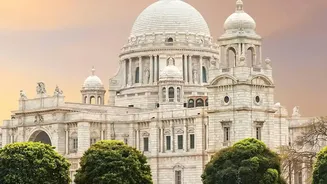
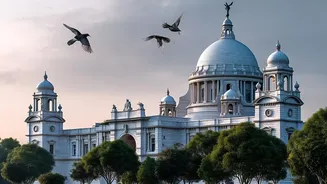
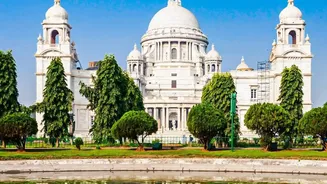
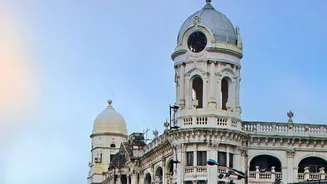
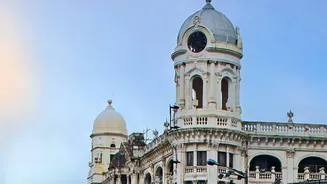
visible link between Kolkata and London is the architecture. For over a century, until 1911, Kolkata—then Calcutta—was the capital of British India. During this period, it grew into the second most important city of the British Empire after London itself. The British built grand administrative offices, stately mansions, and public buildings in styles popular back home, including Neoclassical, Gothic Revival, and Victorian. This flurry of construction led to another of Kolkata's famous nicknames: the 'City of Palaces'. Magnificent structures like the Victoria Memorial, a grand white marble monument, the Indo-Gothic St. Paul’s Cathedral, and the imposing Raj Bhavan were designed to project imperial power and prestige. These buildings gave parts of the city a distinctly European feel, forming the bedrock of the 'London of India' comparison.
A Tale of Two Rivers
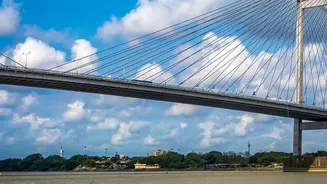
The comparison extends to the very lifeline of both cities: their rivers. Just as London developed along the banks of the Thames, Kolkata's identity is inextricably linked to the Hooghly River. A major distributary of the Ganges, the Hooghly was the artery through which the British East India Company sailed into Bengal, establishing a crucial trading post. For centuries, it has been a vital channel for commerce and transport. The riverfront, with its series of ghats (steps leading to the water), promenades, and old warehouses, evokes a visual parallel to London's own riverside landscape, reinforcing the connection between the two port cities. The iconic Howrah Bridge, a massive cantilever bridge built in 1943, stands as a testament to the engineering ambition that shaped the city's relationship with its river.
Echoes of Intellectual Life
Beyond brick and mortar, the nickname also touches upon a shared intellectual and cultural vibrancy. During the colonial era, Kolkata was the epicentre of politics, law, and education in India. This environment, a confluence of European and Bengali cultures, gave rise to the Bengal Renaissance in the 19th century. This was a period of extraordinary intellectual and social reform, fostering new movements in literature, art, and philosophy that challenged colonial norms. Luminaries like Nobel laureate Rabindranath Tagore were central figures in this awakening, creating a rich literary heritage that earned Kolkata its reputation as the 'Cultural Capital of India'. Much like London has long been a global hub for ideas and arts, Kolkata established itself as India's foremost centre for intellectual discourse.
A Modern City with a Nostalgic Heart
Today, Kolkata is a bustling modern metropolis, yet reminders of its past are everywhere. The city is the only one in India that still operates a tram network, a mode of transport introduced in the 19th century. The slow-moving trams winding through busy streets add to an old-world charm that feels distinctly nostalgic and European. While the 'London of India' moniker is rooted in a colonial past, and the city has forged its own unique identity, the name captures a specific historical moment and an architectural grandeur that continues to define its skyline. It speaks to a time when the city was a pivotal node in a global empire, and its legacy is a complex tapestry of imperial ambition and vibrant local culture.