





The Urban Farmer's Silent Struggle
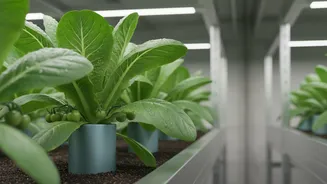
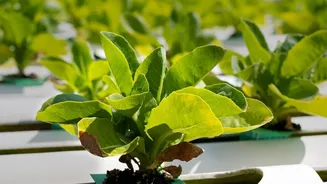
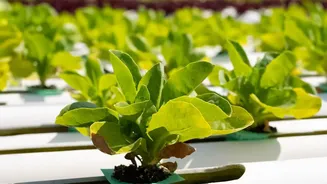
Urban farms, from vertical operations in warehouses to rooftop gardens, are at the forefront of the local food movement. They promise fresh, nutritious produce with a tiny carbon footprint. But they face a universal agricultural challenge: pests. For
these controlled environments, broad-spectrum chemical pesticides are often a non-starter. Regulations on spraying near residential areas can be strict, and consumers are increasingly demanding produce free from chemical residues. This creates a pressing need for innovative, non-toxic pest management strategies that are safe, effective, and tailored for the unique conditions of city farming.
Speaking the Secret Language of Insects
It turns out that the plant world is a noisy place, just not in a way humans can hear. Many insects, including common agricultural pests like aphids, whiteflies, and leafhoppers, communicate using subtle, substrate-borne vibrations. They send these signals through plant stems and leaves to find mates, warn of danger, or locate food. Think of it as a kind of morse code tapped out along a plant's vascular system. This vibrational world is essential for their survival and reproduction. Predators, too, can create vibrations as they move, prompting a 'startle response' in their prey. It is this ancient, hidden language that scientists are now learning to hack.
The Technology of Disruption
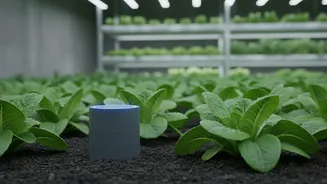
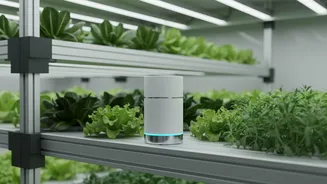
The new pest control method works by introducing disruptive 'noise' into this vibrational network. Small devices, sometimes called exciters or transducers, are attached to plant supports, hydroponic systems, or even the plants themselves. These devices generate low-frequency vibrations that travel through the structures. This can work in two main ways. First, it can act as a mating disruption, creating a constant vibrational 'static' that masks the specific calls between male and female insects, making it nearly impossible for them to find each other and reproduce. Second, certain frequencies can mimic the presence of a predator, triggering a constant state of alarm that discourages insects from settling, feeding, and laying eggs.
From the Lab to the Lettuce Patch
This isn't just theory; it's being put into practice. Research has shown promising results. In one study, applying specific vibrations to tomato plants significantly reduced the number of whitefly adults and larvae. Another experiment demonstrated that disrupting the mating 'songs' of the pear psylla pest with playback vibrations yielded encouraging outcomes. Japanese researchers found that non-contact vibrations could dislodge 50-60% of whiteflies from leaves and cut the number of eggs they laid in half. While still an emerging field, these studies show a clear potential for managing notoriously difficult pests like whiteflies and aphids, which are common culprits in greenhouse and urban farm settings.
The Future is Good Vibrations
This bio-acoustic approach represents a major step toward smarter, more sustainable agriculture. By manipulating pest behavior rather than relying solely on lethal chemicals, it aligns perfectly with the ethos of integrated pest management (IPM). Of course, challenges remain. The cost and scalability of the equipment are key considerations, as is the need to fine-tune frequencies for specific pests and crop systems. Environmental factors like background noise and humidity can also affect performance. However, as the technology becomes more refined and affordable, vibrating farms could become a key tool in ensuring our cities are not just places we live, but also places where we grow our food—safely and sustainably.