



What Exactly Is a Planetary Alignment?
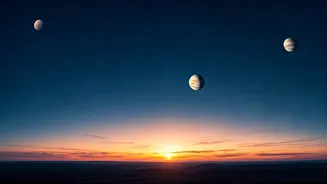
First, let's clear up a common misconception. When we talk about a planetary 'alignment,' the planets aren't actually forming a perfect straight line in space. That kind of cosmic billiard shot is incredibly rare. Instead, what we're seeing tonight is a 'conjunction,'
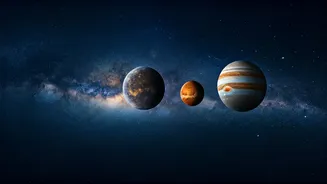
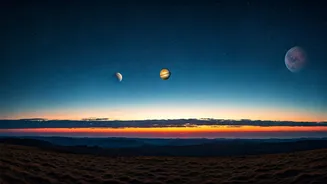
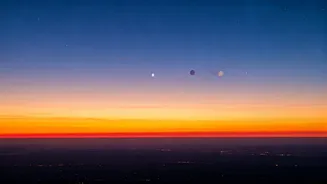
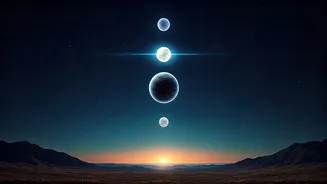
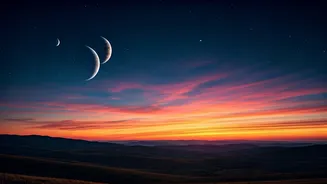
which is arguably more beautiful. From our vantage point here on Earth, Jupiter, Mercury, and Mars will appear to be clustered together in a small, stunning section of the sky. Think of it less as a formal line-up and more as a celestial party where three distinguished guests are mingling close to each other. It’s a trick of perspective, but a truly breathtaking one that has captivated sky-gazers for millennia.
Meet the Planets on Display
Tonight's celestial trio features three distinct personalities. The headliner is Jupiter, the largest planet in our solar system. You won't miss it; it will be the brightest point of light in the group, shining with a steady, brilliant glow. Next is Mars. Look for a point of light with a distinct, faint reddish-orange tint. The Red Planet is always a treat to spot. The third and most challenging member of the trio is Mercury. As the closest planet to the sun, it never strays far from the horizon and is often lost in the sun's glare. It will be the faintest of the three and closest to the horizon, so spotting it will feel like a real accomplishment. Finding all three is the ultimate prize for the evening.
Your Viewing Guide: When and Where to Look
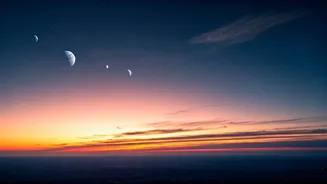
Timing and location are everything for an event like this. The magic happens shortly after the sun sets. Your best viewing window opens about 30 minutes after sunset and will last for roughly an hour before the planets themselves begin to set below the horizon. As the headline suggests, you need to be looking towards the west—the same direction where the sun just disappeared. The planets will be relatively low in the sky, so finding a spot with an unobstructed view of the western horizon is crucial. High-rise buildings, tall trees, or hills can easily block the show, so plan your viewing spot accordingly.
Pro Tips for the Best Experience
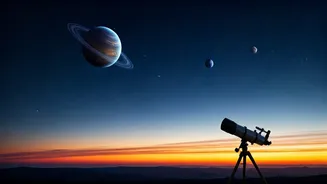
You don't need any expensive equipment to enjoy this cosmic show. The beauty of a planetary conjunction is that it’s visible to the naked eye. However, to enhance your experience, follow these simple tips. First, get away from city lights if you can. Less light pollution means a darker sky, which will make the planets—especially faint Mercury—pop. Second, give your eyes time to adjust to the darkness. It takes about 15-20 minutes for your eyes to become fully dark-adapted. If you have a pair of binoculars, bring them! They won't be necessary to see the planets, but they will give you a much clearer view of Mars's colour and might even reveal Jupiter's four largest moons, known as the Galilean moons, which look like tiny pinpricks of light huddled close to the giant planet.
Why This Moment Is So Special
While planetary conjunctions happen from time to time, each one is a unique and fleeting event. This isn't just about ticking boxes on a celestial checklist. It's about taking a moment to step outside, look up, and connect with the vastness of the universe. For a brief period, you'll be watching the same sky that our ancestors did, seeing these wandering stars paint a temporary masterpiece. It's a free, awe-inspiring show that reminds us of the grand, silent dance of the cosmos happening above our heads every single night. Sharing this moment with family or friends can turn a simple glance at the sky into a lasting memory.