







A Field of Glass and Green
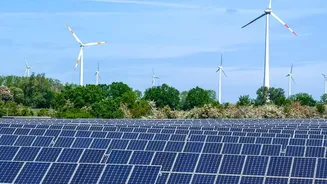
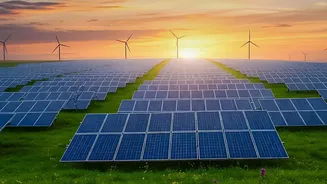
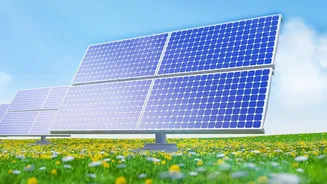
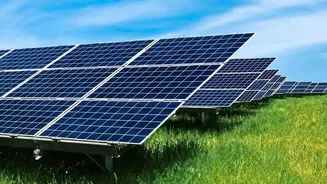
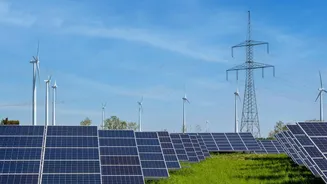
Solar farming, or agrivoltaics, is a deceptively simple concept: installing solar panels on elevated structures several feet above active farmland. Unlike traditional solar parks that occupy land exclusively, this dual-use model allows sunlight to be
'shared'. Some of it powers photosynthesis for the crops growing underneath, while the rest is converted into clean electricity. This innovative approach addresses a critical conflict over land use, especially in a densely populated country like India where fertile land is a precious resource. By integrating energy production directly into the agricultural landscape, the goal is to make every acre of land more productive.
The Promise for Water-Stressed Lands
For India's arid and semi-arid zones, such as those in Rajasthan and Gujarat, agrivoltaics offers more than just extra income. The shade from the panels creates a unique microclimate that provides significant agricultural benefits. Studies show that this shading can reduce soil temperature, which in turn cuts down on water evaporation from the soil by up to 30%. This means crops require less irrigation, a crucial advantage in areas where water is scarce. This protective canopy can also shield crops from extreme weather like intense heat and hail. For certain shade-tolerant crops, these conditions can even lead to improved yields and quality.
A Dual-Income Lifeline for Farmers
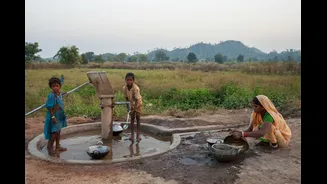
The most direct benefit for farmers is the creation of a second, stable revenue stream. Beyond their agricultural earnings, they can use the generated power for their own needs, like running irrigation pumps, which reduces their reliance on expensive diesel or an unreliable grid. They can also sell surplus electricity back to the grid, transforming their farms into small power plants. This financial diversification is critical for farmers, especially small and marginal ones who make up about 85% of India's farming community and are most vulnerable to climate and market volatility. Early estimates suggest that farmer earnings could increase significantly, providing a much-needed boost to rural economies.
The Government's Policy Push
Recognizing this potential, the Indian government has been actively promoting solar energy in agriculture, most notably through the Pradhan Mantri Kisan Urja Suraksha evam Utthaan Mahabhiyan (PM-KUSUM) scheme launched in 2019. The scheme has multiple components, including subsidies for farmers to install solar pumps and support for building small, grid-connected solar plants on their land. More recently, in late 2026, the government announced it is drafting a comprehensive national policy specifically for agrivoltaics. The plan includes setting technical standards, creating financial models, and initially targeting 5 GW of capacity, with a potential 10 GW component in a future PM-KUSUM 2.0.
Hurdles on the Horizon
Despite the promise, significant challenges remain. The primary obstacle for many farmers is the high upfront cost of installing elevated solar structures, which can be 25–30% more expensive than conventional ground–mounted projects. While subsidies exist, navigating the bureaucracy to access them can be difficult. There are also technical hurdles, as the optimal panel height and density vary depending on the crop, and not all crops thrive in shade. Furthermore, progress on schemes like PM–KUSUM has been slower than hoped, hampered by issues like weak grid infrastructure in rural areas and low tariff rates for the power farmers sell.