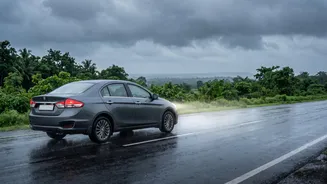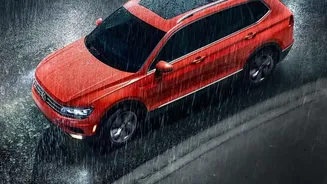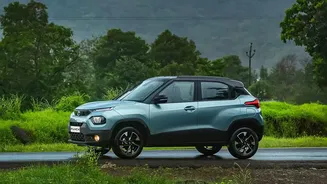




Risk 1: Waterlogged Roads and Underpasses
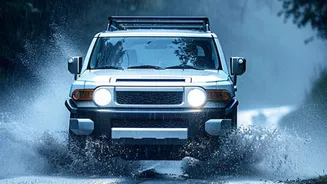
One of the most common and dangerous risks during the Indian monsoon is waterlogging. What looks like a simple puddle can often conceal depths capable of stalling your vehicle or causing you to lose control. Driving through even six inches of water can be
enough for many cars to stall as water gets into the engine's air intake. A foot of water can cause a vehicle to float, leading to a complete loss of control, while two feet of rushing water can sweep away even larger SUVs. The golden rule is simple: if you can't see the road surface or the kerb, it's too deep. Before heading out, use navigation apps with live traffic updates, which often report flooded areas. Many local traffic police departments also post real-time updates on social media. If you encounter an unavoidable patch of water, stay in a low gear and keep your engine revs steady but drive slowly to prevent a wave from washing into your engine bay. However, the safest choice is always to turn around and find an alternative, safer route.
Risk 2: Hidden Potholes and Damaged Surfaces
Heavy rain doesn't just create new potholes; it masterfully hides existing ones under a sheet of murky water. Hitting a deep, water-filled pothole at speed can have consequences ranging from a burst tyre and damaged wheel rims to severe suspension problems. The impact can be equivalent to a major collision, potentially causing a driver to swerve suddenly and lose control of the vehicle. Puddles are a major red flag; always be cautious and avoid driving through them if possible, as you can never be sure of the hazard lurking beneath. If you must traverse a road known for poor conditions, significantly reduce your speed to minimise the force of any impact. Maintaining a greater distance from the vehicle in front of you is also crucial. This not only gives you more time to react if they brake suddenly but also provides a clearer view of the road surface ahead, allowing you to spot and navigate around hazards.
Risk 3: Low-Visibility Zones and Blind Spots
Visibility during a downpour is about more than just what's directly in front of you. While good wiper blades and a clean windshield are essential, your choice of route plays a significant role in how much you can actually see. Heavy rainfall dramatically reduces visibility, and this is made worse by the spray from large vehicles like buses and trucks, which can create a blinding wall of water for several seconds. Certain routes are inherently riskier in these conditions. Roads with poor or no street lighting, stretches flanked by dense trees, and underpasses can become dark zones where spotting pedestrians or other vehicles is nearly impossible. Before you leave, check that your headlights, taillights, and indicators are all working. Use your low-beam headlights even during the day—not just to help you see, but to make you more visible to others. Avoid using high beams, as they reflect off the raindrops and can worsen visibility for both you and oncoming drivers. If possible, stick to well-lit, familiar main roads where hazards are easier to anticipate and see.