








A Patchwork of Inconsistent Policies
The single biggest headache for pet parents is the complete lack of standardisation. Whether your pet can fly, where it will be seated, and how much it will cost depends entirely on which airline you choose. In India, only a handful of carriers, like
Air India and Akasa Air, consistently allow pets in the cabin. IndiGo's policy is limited, while SpiceJet only accepts pets in the cargo hold. One airline might allow a combined pet-and-carrier weight of 5 kg in the cabin, while another sets the limit at 7 kg. This inconsistency forces pet owners to navigate a disorienting web of rules that change from one airline's website to the next, turning travel planning into a high-stakes research project.
The Cabin vs. Cargo Gamble
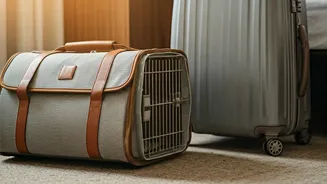
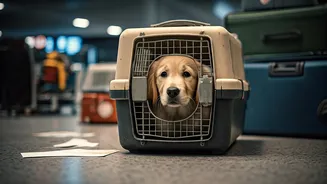
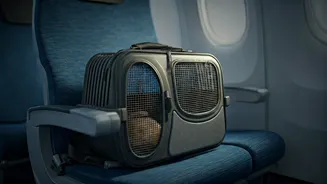
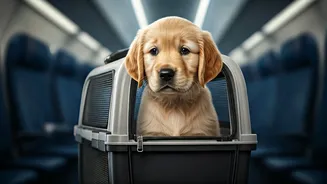
Deciding between in-cabin travel (PETC) and the cargo hold (AVIH) is another major point of confusion. Generally, only small pets under a certain weight limit (often 5-7 kg, including the carrier) are eligible for the cabin. They must remain in an IATA-compliant carrier stowed under the seat in front of you for the entire flight. Larger animals are relegated to the cargo hold, which is a temperature-controlled and pressurised section of the plane. While airlines follow procedures to ensure safety, the idea is understandably stressful for owners. The rules for what qualifies for each section, the specific crate requirements (soft-sided for cabin, hard-sided for cargo), and the booking process are different everywhere, with very little clear, comparative information available.
The Mountain of Paperwork
Navigating the required documentation feels like preparing for a visa application. At a minimum, every domestic flight requires a valid rabies vaccination certificate and a health certificate from a licensed veterinarian, usually issued within 10 days of travel. Some airlines or states may have additional forms. For international travel, the complexity multiplies, often requiring a microchip, a rabies titer test, and a No Objection Certificate (NOC) from the Animal Welfare Board of India (AWBI). These requirements have tight timelines that can be difficult to manage. For example, a rabies titer test for travel to certain countries may require a waiting period of three to six months. A single missing or incorrectly dated document can result in your pet being denied boarding at the check-in counter.
Hidden Costs and Booking Hurdles
The cost of flying with a pet is often far from transparent. Fees can range from ₹3,000 to over ₹15,000 for domestic flights, depending on the airline, whether the pet is in the cabin or cargo, and its weight. These fees are in addition to the cost of an IATA-compliant carrier, which can itself cost several thousand rupees. Furthermore, you usually can't book your pet’s travel through online portals. The process often requires booking your own ticket first and then calling the airline's customer service centre to add your pet, a process that is cumbersome and subject to the limited number of pet slots available per flight.
A Call for Clear, Humane Standards
The core of the problem lies with the Directorate General of Civil Aviation (DGCA), which permits individual airlines to set their own pet travel policies rather than establishing a universal standard. This is why the system is so chaotic. Pet owners are not asking for a free-for-all, but for a common-sense framework. A standardised set of rules for weight classes (e.g., in-cabin, checked baggage, cargo), clear documentation requirements, and a transparent, consistent fee structure across all domestic carriers would transform the experience. If airlines can standardise baggage allowances, they can certainly do the same for the beloved pets that are, for many, part of the family.