








The future of medicine is personal, with treatments tailored to an individual’s unique genetic makeup. A new facility in Hyderabad, the PopVax RNA Foundry, marks a major step towards making this a reality for patients in India and beyond.
A New Hub for Advanced Medicine in Hyderabad
Hyderabad-based
biotechnology company PopVax has officially launched its RNA Foundry, an advanced facility for the research, development, and manufacturing of personalised medicines. The facility, created in collaboration with Stochastic Sciences, is specifically designed to produce messenger RNA (mRNA) vaccines for cancer patients. Unlike traditional pharmaceuticals that are mass-produced, the treatments made here are designed for a single patient at a time, based on the unique genetic signature of their tumour. The launch represents a significant moment for India's growing biotechnology sector, positioning the country as a hub for creating novel therapies, not just manufacturing existing ones. PopVax, founded in late 2021, aims to produce over 100 personalised cancer vaccine candidates in the facility's first year of operation.
What Is an RNA Foundry?
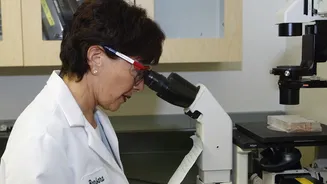
The term 'foundry' traditionally describes a factory for casting metal. In biotechnology, an RNA foundry applies a similar concept to biology: it is a facility designed to rapidly design, build, and test RNA-based products. The PopVax RNA Foundry in Hyderabad is a GMP-capable facility, meaning it is designed to meet the global Good Manufacturing Practice standards required for producing clinical-grade medicines. It integrates every step of the process, from designing the vaccine using artificial intelligence to manufacturing the final product in sterile cleanrooms. This 'full-stack' approach allows PopVax to move from a patient's tumour data to a finished vaccine in as little as eight to ten weeks, a process that would otherwise take years.
The Science of Personalised Cancer Vaccines
The mRNA technology at the heart of this initiative became globally recognized during the COVID-19 pandemic. It works by providing the body's cells with a set of instructions, or a 'blueprint', to produce a specific protein. In the case of COVID-19 vaccines, this protein mimicked a part of the virus, training the immune system to fight it off. Personalised cancer vaccines use the same principle but target the patient's own cancer. The process begins by sequencing the DNA of a patient's tumour to identify unique mutations. AI models then predict which of these mutations will produce abnormal proteins, known as neoantigens, that can trigger an immune response. An mRNA vaccine is then created to carry the instructions for these neoantigens, effectively teaching the patient’s immune system to recognise and destroy its own cancer cells.
Why This Is a Game Changer for India
The establishment of the RNA Foundry is a landmark achievement for India’s pharmaceutical and biotech industries, long known as the 'pharmacy of the world' for their prowess in producing generic drugs and conventional vaccines. This facility moves beyond replication and into original, cutting edge innovation. By developing the capacity to create complex, personalised medicines domestically, PopVax is reducing the reliance on international pharmaceutical giants for next generation therapies. The company's work builds on its existing mRNA platform, which has already produced a fridge stable COVID‐19 vaccine candidate that has entered clinical trials in Australia. This stability at 2‐8°C is a significant logistical advantage over other mRNA vaccines that require ultra cold storage, particularly in a country like India.
The Road Ahead : Challenges and Potential
While the technology is incredibly promising, personalised cancer vaccines are still in the early stages of development and are not yet a routine treatment in India. Each vaccine candidate developed at the RNA Foundry will need to undergo rigorous testing and clinical trials to prove its safety and effectiveness before it can be widely used. The initial cost is also a factor, with a typical project costing around $300,000. However, PopVax plans to work with doctors and patients through compassionate use pathways to make these treatments available to a small number of patients, which will provide crucial early data. If successful, this approach could revolutionize the treatment of hard to treat solid tumours like pancreatic and liver cancer, offering hope where few options currently exist.