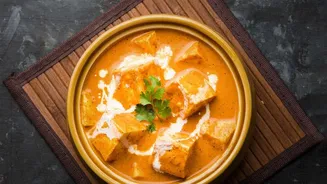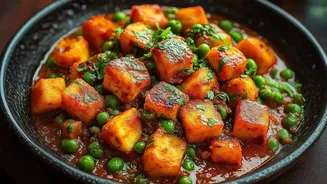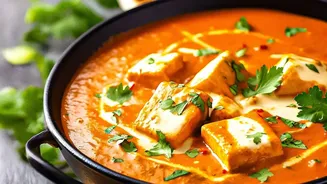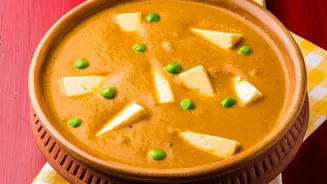


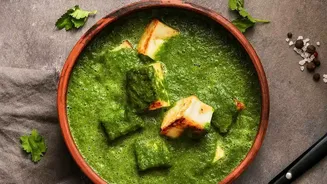
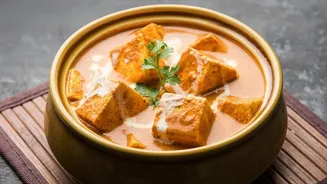

It’s a universal kitchen truth: a curry that was delicious on day one can become transcendent on day two. But this isn't just your imagination. There's real food science at play, a slow, quiet continuation of cooking that happens in the fridge.
It’s Not Magic, It’s Chemistry
The moment
you take a curry off the heat, the cooking process doesn't entirely stop. Instead, a series of slower, more subtle chemical reactions begins. Think of a freshly made curry as a room full of people who have just been introduced. The flavours are all present, but they haven't started to mingle and merge yet. Overnight, those distinct notes—the sharp bite of ginger, the earthy depth of cumin, the tang of tomato—begin to interact. Food scientists refer to this process as 'flavour equilibration'. Slow-moving chemical reactions, including oxidation, continue to occur, breaking down larger compounds and creating new, more complex flavour molecules that weren't there when the dish was fresh off the stove. This results in a more rounded, harmonious, and mellow taste profile where individual ingredients are less pronounced and the overall flavour is more cohesive.
The Crucial Role of Fat
Fat is the ultimate vehicle for flavour, and this is especially true in spice-heavy dishes like curry. Many of the aromatic compounds that give spices like turmeric, cloves, and cardamom their signature scents and tastes are fat-soluble, not water-soluble. This is why Indian cooking often starts by 'blooming' spices in ghee or oil—a process called tadka. This initial step releases the flavour compounds from the spices and dissolves them into the fat. As the curry cools in the refrigerator, this process continues. The flavour-infused fats, now distributed throughout the sauce, have time to penetrate more deeply into the other ingredients, from vegetables to pieces of paneer or meat. The fat acts like a delivery system, ensuring that every spoonful has a more complete and integrated flavour profile.
Aromatics Mellow and Deepen
The foundational ingredients of many curries—onions, garlic, and ginger—also undergo a significant transformation overnight. When freshly cooked, these aromatics can have a sharp, pungent bite. As the curry rests, the cell walls of these vegetables continue to break down, releasing more of their inherent sweetness and complex flavours. Harsh overtones mellow out, allowing subtler notes to emerge. This is particularly true for garlic, whose main flavour compound, allicin, is quite potent when fresh but becomes less intense and more rounded with time and gentle heat. The result is a smoother, more deeply integrated base flavour that supports the spice blend instead of competing with it.
Texture Transforms for the Better
Flavour isn't the only thing that improves; the texture of a curry often becomes richer and more satisfying as well. Ingredients like lentils, potatoes, and onions release starches as they cook and continue to do so as they cool. In meat-based curries, collagen from tougher cuts breaks down during cooking into gelatin. As the curry cools, these starches and gelatin set slightly, thickening the gravy. This process, known as starch retrogradation in starchy ingredients, gives the sauce a more velvety, cohesive mouthfeel. When you reheat the curry, this gelatin melts and the starches loosen, creating a gravy that clings beautifully to rice and bread, ensuring more flavour in every single bite.
The Gentle Art of Reheating
Finally, the act of reheating plays its own part in this flavour evolution. While a cold curry has had time for its flavours to meld, gently warming it up introduces a new wave of aromatic activity. Heat causes volatile compounds to evaporate, which is why a simmering pot of curry smells so enticing. Reheating releases these aromas again, enhancing our perception of flavour before we even take a bite, since smell is a huge component of taste. It also helps release more umami compounds, the amino acids responsible for savoury tastes, making the dish feel more satisfying. The key is to reheat gently on a stovetop, which wakes up the aromas without overcooking the ingredients and destroying the complex flavours that developed overnight.