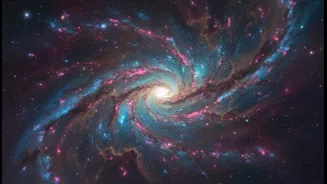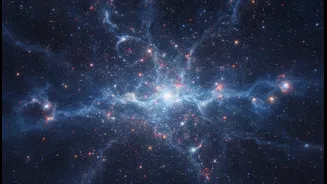


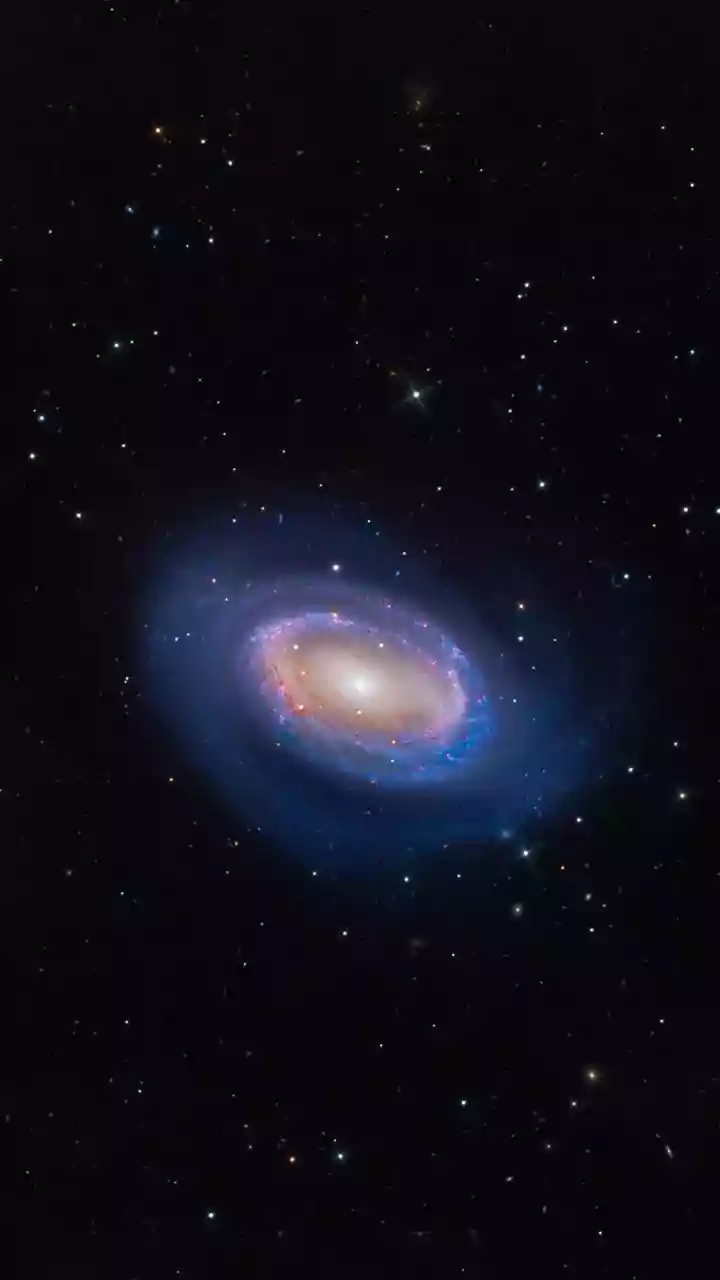
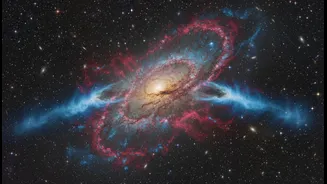
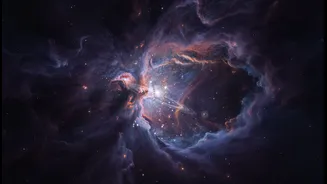
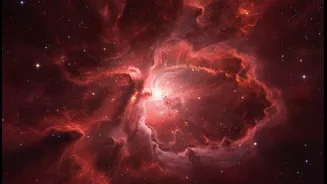


What Are These Cosmic Cities?
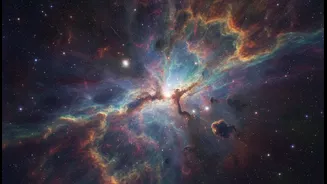
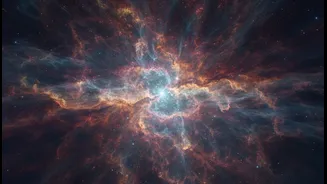
When astronomers talk about 'cosmic cities', they are using a poetic term for something truly vast and fundamental: stellar nurseries. These are enormous, cold clouds of gas and dust, known as molecular clouds, drifting through galaxies. For millions
of years, these clouds can remain quiet. But under the right conditions, gravity begins to pull the densest pockets of material together. These pockets collapse into hot, dense cores called protostars—the seeds of new suns. Surrounding these infant stars are swirling platters of leftover gas and dust called protoplanetary disks. It is from these chaotic, spinning disks that planets, moons, and asteroids eventually form. Think of them as celestial construction sites where new solar systems are being assembled. Every star you see in the night sky was born in a place like this.
A Window to Our Own Past
Why is there such a fervent focus on these distant birthplaces? Because we cannot go back in time to watch our own solar system form. The stellar nursery that gave birth to our Sun nearly five billion years ago is long gone, its sibling stars scattered across the Milky Way. Studying young, active star-forming regions is the next best thing. It’s a form of cosmic archaeology. By observing a protostar in a system like FS Tau, which is only a few million years old, astronomers get a snapshot of what our own Sun may have looked like in its infancy. These observations allow scientists to test and refine their theories about how planets come into being, providing crucial context for our own existence. The process of accretion, where a baby star gobbles up gas and dust from its surrounding disk, is the same one our Sun went through.
The Webb Telescope's Revolution
For decades, thick dust has hidden the intricate details of star birth from view. But now, the James Webb Space Telescope (JWST) is changing everything. Its powerful infrared instruments can pierce through the obscuring clouds, revealing the processes of star formation in unprecedented detail. Webb has captured stunning images of the iconic Pillars of Creation, showing newborn stars glowing within the dense columns of gas. It has detected complex organic molecules and water ice in protoplanetary disks—the raw ingredients for life as we know it—in regions like the Chamaeleon I molecular cloud. These discoveries are transforming our understanding, allowing astronomers to map where the building blocks of habitable worlds are located even before planets have fully formed. The telescope's precision helps researchers create a more complete picture of how these environments evolve.
The 'Hook' That Unlocks Secrets
The headline's 'hook to save' is a metaphor for the crucial data these cosmic cities provide. This information is 'saving' our scientific models from inaccuracy and guesswork. For instance, it was long assumed that stars and their surrounding planetary disks were born neatly aligned. Recent research, however, shows a surprising number of systems are born tilted. This single finding changes how we think about the dynamics of young solar systems, suggesting that some are simply born chaotic rather than being disturbed later. Furthermore, by studying how massive star clusters emerge from their birth clouds, astronomers can better understand 'stellar feedback'—the process where powerful radiation from big stars blows away surrounding gas, influencing how and where other stars in the galaxy can form. This knowledge is essential for building accurate models of galaxy evolution on the largest scales.
More Than Just Pretty Pictures
The study of young cosmic cities is not just an academic exercise; it touches upon the most profound questions we can ask. Are we alone in the universe? What conditions are necessary for a planet to support life? By cataloging the chemical ingredients and physical structures of protoplanetary disks, scientists are building a library of possible planetary recipes. They are learning how the environment a star is born in can dramatically affect its future planets. Some nurseries are calm, while others are blasted by the radiation of massive, nearby stars, which can strip away the planet-forming material. Understanding this diversity is the first step toward predicting which of the billions of stars in our galaxy might host worlds similar to our own. These glowing clouds of gas and dust are not just distant marvels; they are the starting point in the grand story of cosmic origins.