






1. Master Your Drainage Game
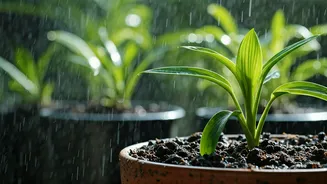
The number one enemy during the rainy season is not the rain itself, but stagnant water. Root rot is a swift and silent killer caused by waterlogged soil that suffocates the roots. The fix is surprisingly simple: ensure every pot has clear drainage holes.
If they’re blocked, poke them open. For extra protection, add a layer of broken pot shards or small stones at the bottom before adding soil. This creates a buffer zone that allows excess water to escape freely. Also, remember to empty the plates or trays under your pots. A pool of water there is just as bad as waterlogged soil.
2. Don't Ditch Watering Completely
It’s raining, so you don't need to water your plants, right? Not exactly. This is one of the most common monsoon misconceptions. Balconies or verandas with an overhead cover might block most of the rain, leaving your plants thirsty despite the downpour outside. The best rule is the 'finger test'. Stick your finger about an inch into the soil. If it feels dry, it's time to water. If it’s damp, let it be. This prevents both under-watering and over-watering, giving your plants exactly what they need.
3. Prune Like a Pro
The monsoon brings rapid, lush growth, but this can make plants dense and overcrowded. This traps moisture and reduces air circulation, creating a perfect breeding ground for fungus and pests. Don’t be afraid to give your plants a haircut. Prune overgrown branches, remove yellowing or dead leaves, and thin out dense foliage. This not only improves airflow but also directs the plant's energy towards producing healthier leaves and flowers. A good trim can be the difference between a struggling plant and a thriving one.
4. Fight Fungus and Pests Preemptively
High humidity and dampness invite unwelcome guests. Fungal infections like powdery mildew and pests like mealybugs and aphids love the monsoon. Instead of waiting for an infestation, be proactive. A simple, organic solution is a neem oil spray. Mix a few drops of neem oil and a bit of liquid soap with water and spray it on the leaves (especially the undersides) once every 10-15 days. This natural pesticide and fungicide keeps most common problems at bay without harming your plants or the environment.
5. Fertilise Smartly, Not Heavily
While the monsoon is a growth period, it’s not the time for heavy chemical fertilisers. The constant rain can wash them away too quickly, or worse, lead to a build-up that burns the roots. Instead, opt for slow-release organic fertilisers like vermicompost (earthworm castings) or well-rotted cow dung manure. Add a handful to the topsoil once a month. These feed the plant gradually and improve soil structure, which is crucial for good drainage and aeration during the wet months. It's a gentle boost that supports sustainable growth.
6. Choose Your Monsoon Champions
Some plants just love the rain! The monsoon is the perfect time to introduce new greenery that thrives in high humidity and moisture. Think about adding plants like hibiscus, balsam (impatiens), jasmine, ginger, turmeric, and various ornamental grasses. For indoor spaces, consider caladiums, syngoniums, or monsteras, which adore the humid air. This is also the ideal season to start a kitchen garden with leafy greens like spinach and herbs like coriander and mint, which grow quickly and robustly in this weather.