






The Anatomy of a Roadside Stop
Across India, roadside checkpoints are a necessary tool for law enforcement. They are used for a variety of reasons, from checking for drunk driving and verifying vehicle documents like registration and insurance to enforcing helmet rules and security
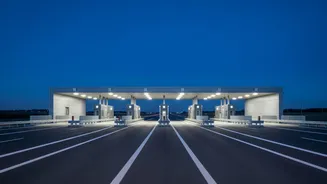
measures. Governed by the Motor Vehicles Act, these stops are a fundamental part of maintaining road discipline. Typically, a section of the road is cordoned off, often with barricades, and vehicles are flagged down by officers. While the intention is to improve safety, the execution can often create new hazards, particularly on high-speed highways where the flow of traffic is suddenly disrupted.
The Hidden Danger: A Risky Re-entry
The real, often unaddressed, danger of a roadside check is the process of rejoining traffic. A vehicle that has come to a complete standstill on the shoulder or in a temporarily cordoned-off lane must accelerate and merge back into a stream of cars and trucks travelling at high speed. This creates a significant speed differential, one of the leading causes of highway accidents. A driver merging too slowly can force oncoming vehicles to brake suddenly or swerve, triggering a chain reaction that can lead to rear-end collisions or sideswipes. This manoeuvre is especially perilous at night, when visibility is reduced, and on highways that lack dedicated, well-lit acceleration lanes.
Why Current Setups Often Fall Short
Many roadside checks in India are set up in an ad-hoc manner. While official guidelines exist for creating safe temporary traffic control zones, they are not always followed. A safe checkpoint should have clear advance warning signs, a tapered channel of cones to guide vehicles out of the main flow, a buffer space for safety, and a designated area for the stop itself, away from moving traffic. Crucially, it also needs a safe re-entry point. Too often, checkpoints lack a proper taper that would allow drivers to accelerate safely before merging. Instead, drivers are left to navigate a difficult and stressful merge from a dead stop, increasing the risk for everyone on the road. The placement of the stop, such as near a blind curve or on a narrow shoulder, can further compromise safety.
A Blueprint for Safer Checkpoints
Improving safety doesn't require reinventing the wheel, but rather a commitment to best practices. Authorities can make clear decisions to significantly reduce re-entry risks. The ideal setup involves using cones and signs to create a dedicated acceleration and merging lane for vehicles leaving the checkpoint. This gives drivers the space and time to match the speed of highway traffic before integrating. Checkpoints should be located on straight, level sections of road with good visibility and, where possible, a wide shoulder or adjacent service lane that can be used for secondary inspections. Furthermore, using high-visibility signs and reducing the glare from police vehicle lights can prevent driver distraction and confusion.
The Driver’s Role in a Safe Merge
While authorities have a responsibility to create safe conditions, drivers also play a crucial role. If you are pulled over, your focus should remain on safety from start to finish. When leaving the stop, use your indicator well in advance. Take the time to find a safe gap in the traffic; do not rush. It is safer to wait for a larger gap than to force your way into a small one. Use your mirrors and check your blind spot by looking over your shoulder before beginning to move. Accelerate as briskly as is safe to match the speed of the traffic flow as you merge into the lane. A predictable and confident, but not aggressive, merge is the safest way to rejoin the road.