


An Accidental Experiment
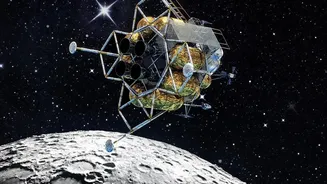
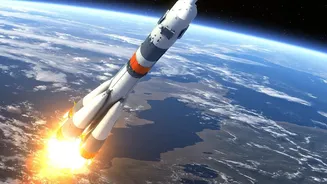
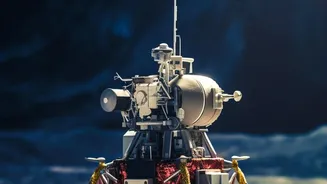
The object in question is a spent upper stage of a rocket, left derelict in a high orbit after completing its mission. Gravitational forces have since nudged it onto a collision course. While the impact is unintentional, it provides a unique chance to study
the lunar surface in a new way. This isn't the first time human-made objects have hit the Moon. During the Apollo era, NASA deliberately crashed parts of Saturn V rockets to test seismometers left on the surface. More recently, a Chinese rocket stage made an uncontrolled impact in 2022. Each crash, whether planned or not, is a chance to learn. Because scientists know the mass, speed, and composition of this rocket stage, they can use the impact to calibrate their models and better understand what happens when objects strike the Moon.
The Science of the Smash
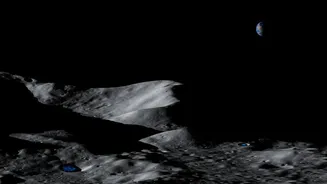
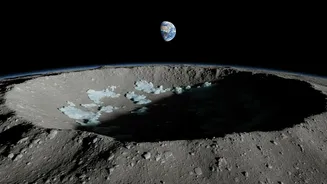
The real science happens in the moments after the collision. The impact will excavate a crater, but more importantly, it will blast a massive cloud of lunar dust and rock, known as an ejecta plume, high above the surface. This material, which is usually buried and hidden from view, gets thrown up into the sunlight. For scientists, this is like getting a free sample of the Moon's subsurface without having to land and drill. Orbiting spacecraft and powerful telescopes on Earth will be watching this plume, ready to analyze its properties. The goal is to see what the Moon is really made of just beneath its dusty top layer.
Hunting for Lunar Resources
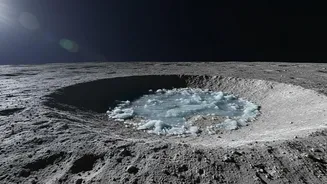
One of the most sought-after discoveries is water ice. In 2009, NASA's LCROSS mission deliberately slammed a rocket stage into a permanently shadowed crater near the Moon's south pole. By studying the resulting plume, scientists confirmed the presence of significant amounts of water ice. This was a landmark discovery, as water is a critical resource for future human exploration—it can be used for drinking, creating breathable oxygen, and making rocket fuel. Today's impact is not targeted at a permanently shadowed region, but it can still reveal the presence and distribution of water or other volatile compounds that might be trapped in the soil. Analyzing the plume with instruments called spectrometers, which read the chemical signatures in light, can reveal a detailed list of ingredients in the lunar soil.
Understanding the Lunar Environment
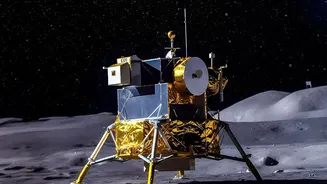
Beyond the search for water, the impact provides crucial data on the physical properties of the Moon itself. The size and shape of the resulting crater, and the way the ejecta plume travels, give geologists invaluable information about the strength and composition of the lunar regolith—the layer of loose dust and broken rock covering the surface. Understanding this is vital for future missions. When a lander touches down, its rocket exhaust can kick up this regolith at high speeds, potentially damaging the lander itself or nearby equipment. Studying this impact helps engineers design better landing systems and plan for safer operations on the lunar surface as humanity looks to build permanent bases.