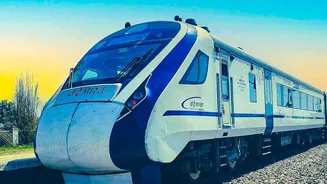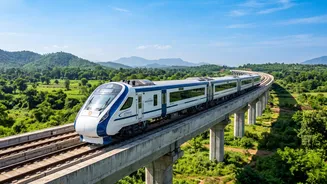





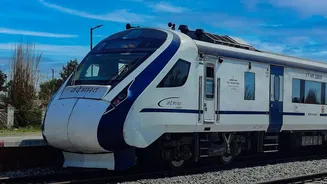

India's dream of high-speed rail is rapidly taking shape. With a target for the first bullet train to run in 2027, the ambitious Mumbai-Ahmedabad corridor is a hive of activity. But what does this timeline really mean for the project?
A Vision of Speed and Progress
The Mumbai-Ahmedabad
High-Speed Rail (MAHSR) Corridor is more than just a railway line; it's a statement of intent. Spanning approximately 508 kilometres, the project aims to connect India's financial capital, Mumbai, with the economic hub of Ahmedabad. Once complete, trains are expected to operate at speeds up to 320 km/h, slashing the journey time from over seven hours to around two. This leap in connectivity is envisioned to catalyse economic growth, create jobs, and establish a new benchmark for transportation infrastructure in the country. The project is being executed by the National High Speed Rail Corporation Limited (NHSRCL) with significant technical and financial assistance from Japan, incorporating its world-renowned Shinkansen technology.
What 'First Start In 2027' Really Means
While the 2027 target is a significant milestone, it doesn't mean the entire 508 km route will be open for passengers. Officials have clarified that the launch will be phased. The first operational section is expected to be a stretch within Gujarat, between Surat and Vapi or Surat and Bilimora, slated to begin commercial services in the latter half of 2027. Progress in Gujarat has been significantly faster, with land acquisition complete and major civil works, such as the erection of viaducts and construction of stations, at an advanced stage. In a recent development in November 2026, the 50-km Surat-Bilimora section's overhead electrical system was successfully energised, a critical step paving the way for trials. Railway Minister Ashwini Vaishnaw has indicated that trial runs on this section could begin by May or June of 2027.
The Journey So Far: Milestones and Hurdles
The path to India's first bullet train has been complex. Originally targeted for a 2022 completion, the project faced significant delays, primarily due to challenges in land acquisition, especially in Maharashtra, and pandemic-related disruptions. The project's cost has also escalated from its initial estimate of ₹1.08 lakh crore to nearly ₹2 lakh crore. Despite these setbacks, construction has gained immense momentum. As of late 2026, all required land for the project has been acquired, and overall physical progress has crossed the 60% mark. Hundreds of kilometres of viaducts—the elevated structures the train will run on—have been erected, and work on all stations in Gujarat is nearing completion.
Engineering Marvels on the Track
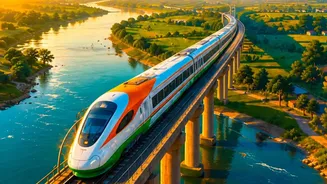
Bringing Shinkansen technology to India involves overcoming unique geographical and logistical challenges. The corridor features complex engineering feats, including the construction of numerous bridges over rivers and a 21-km tunnel, a portion of which will be India's first undersea rail tunnel near Mumbai. In Gujarat, progress is visible, with the first traction substation at Bilimora—which will power the trains—ready. The use of a sophisticated 2x25 kV overhead traction system and the installation of thousands of noise barriers are examples of the advanced technology being deployed to ensure safety, efficiency, and minimal environmental impact. This project is also a proving ground for new construction technologies in India, such as the use of LiDAR for surveying.
Looking Beyond the First Corridor
The Mumbai-Ahmedabad line is seen as a pioneer project that will lay the foundation for a larger high-speed rail network across India. Several other corridors are already in the planning stages, including routes like Delhi-Ahmedabad, Delhi-Varanasi, and Mumbai-Nagpur. The successful implementation and operation of the first corridor are crucial for demonstrating the viability and benefits of high-speed rail in the Indian context. It will not only test the country's ability to execute such mega-projects but also build the domestic expertise needed for future expansion. The long-term vision is to create a web of high-speed lines connecting major economic and population centres, transforming passenger travel and fostering regional integration.