



Our Sun's Volatile Temperament
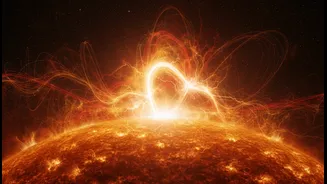
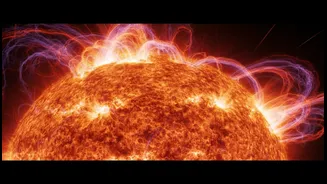
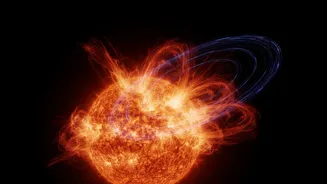
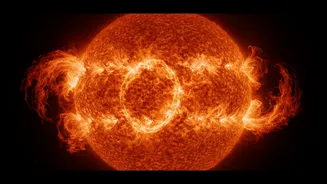
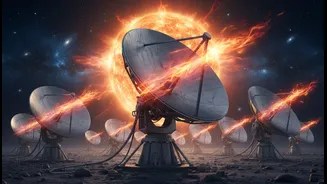
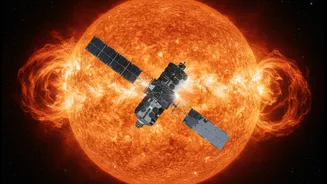
Our star is a dynamic and sometimes violent entity. It occasionally releases enormous bursts of energy and particles in events known as solar flares and coronal mass ejections (CMEs). Think of a solar flare as a colossal flash of light, while a CME is a giant
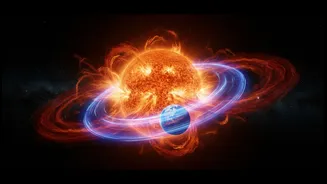
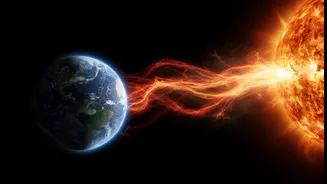
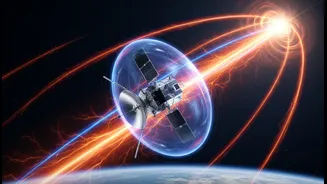
bubble of magnetised gas hurled into space at immense speeds. When these events are directed at Earth, they can interact with our planet's magnetic field, creating what is known as a geomagnetic storm. While these storms can produce beautiful auroras, they also pose a significant threat to our modern, technology-dependent civilisation. The current solar cycle, Cycle 25, which began in December 2019, has been significantly more active than originally predicted, producing numerous strong flares and geomagnetic events.
The High-Tech Risks We All Face
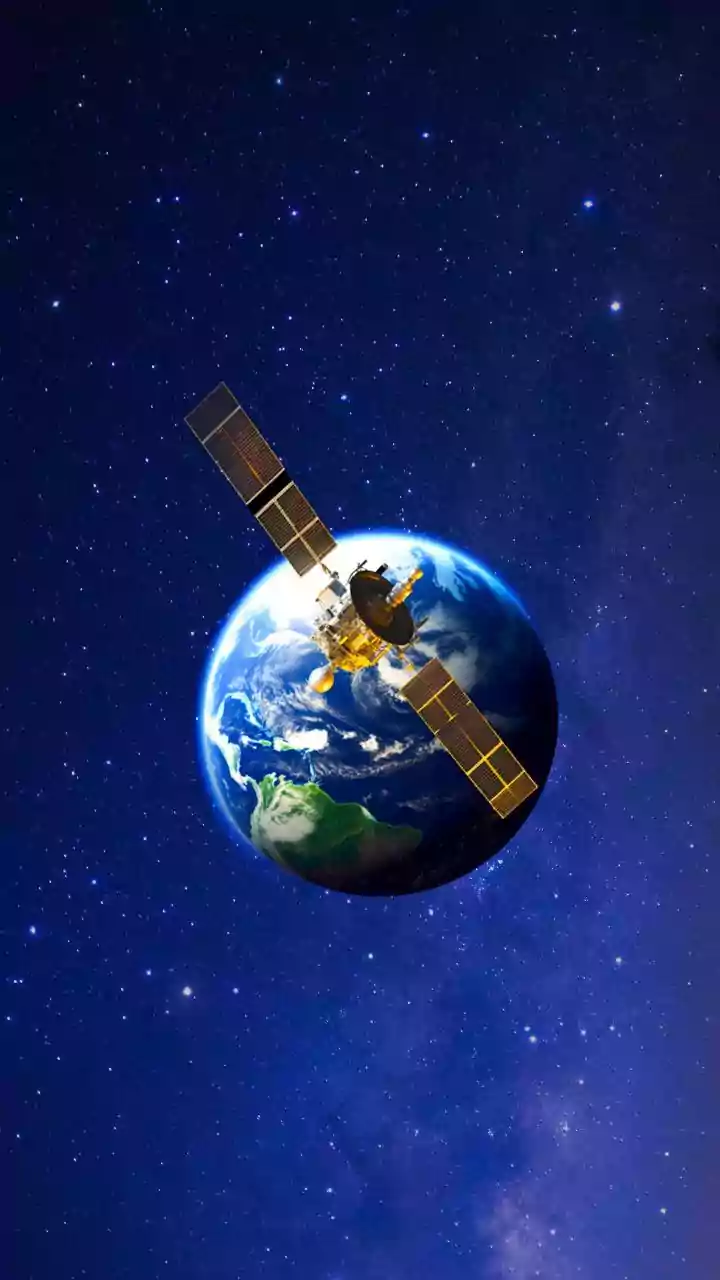
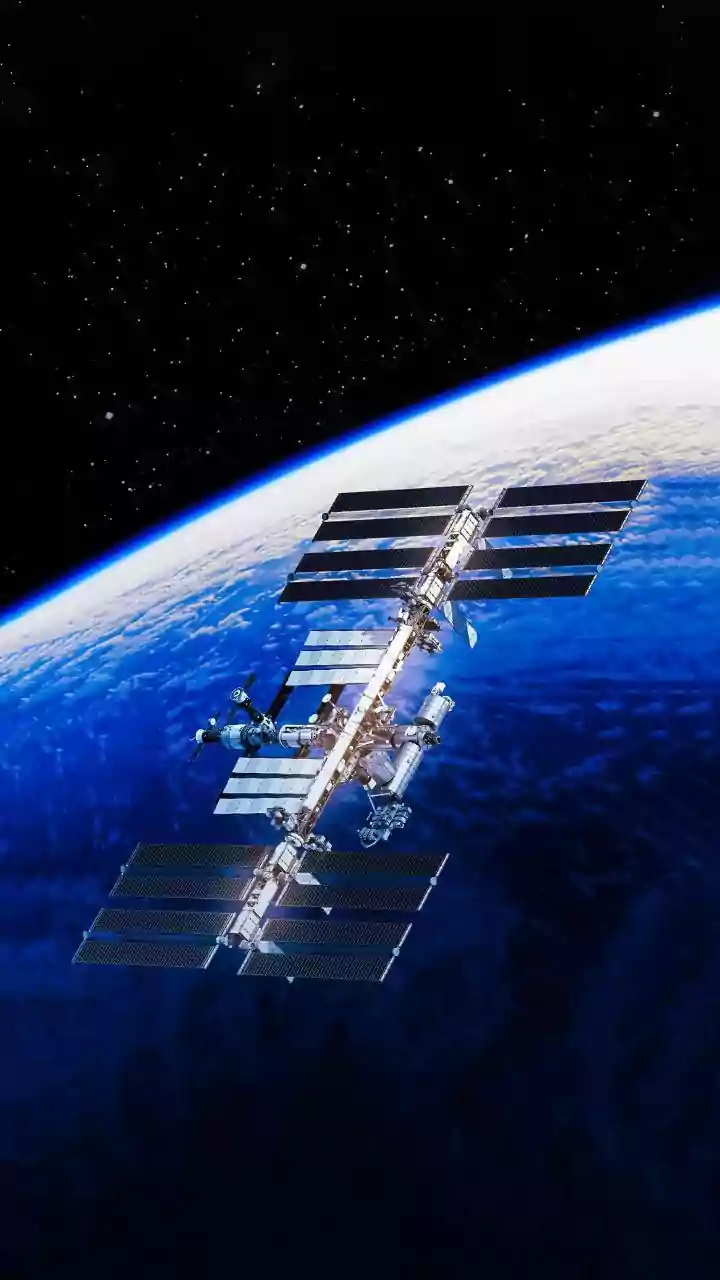
In today's world, the impact of a severe solar storm would be far-reaching. Our reliance on technology makes us more vulnerable than ever. A powerful storm could induce currents in power grids, potentially damaging transformers and causing widespread blackouts that could last for weeks or months. Satellites, the backbone of our global communication and navigation systems, are particularly at risk. A direct hit could fry sensitive electronics, disrupting everything from GPS navigation and television signals to financial transactions and weather forecasting. The most extreme solar storm on record, the 1859 Carrington Event, caused telegraph systems worldwide to spark and fail. A similar event today would have consequences on an entirely different scale, potentially costing the global economy trillions of dollars.
India's Eye on the Sun: The Aditya-L1 Mission
India is playing a crucial role in the global effort to understand and predict space weather. The Indian Space Research Organisation (ISRO) launched its first solar observatory, Aditya-L1, in September 2023. Positioned 1.5 million kilometres from Earth at a strategic point called Lagrange Point 1, the spacecraft has an uninterrupted view of the sun. This allows it to monitor solar activity in real-time and provide an early warning of Earth-directed CMEs. ISRO is constantly monitoring over 50 operational Indian satellites, ready to take protective measures based on data and alerts. Data from Aditya-L1 has already provided breakthrough insights, helping scientists understand how the turbulent regions of solar storms interact with and compress Earth's magnetic shield, which is vital for safeguarding our critical space assets.
The AI Revolution in Solar Forecasting
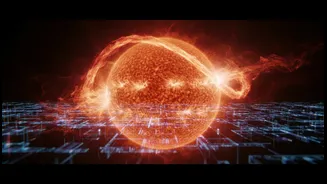
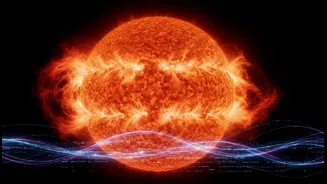
One of the most significant recent advancements in solar storm prediction is the application of artificial intelligence. Scientists are now using machine learning models to analyse vast amounts of data from solar observatories. These AI systems, such as the open-source model developed by IBM and NASA, can identify complex patterns in the sun's activity that may signal an impending flare or CME, often with more notice than previous methods allowed. Deep learning models, like Long Short-Term Memory (LSTM) networks, are being trained to process real-time data and calculate the probability of major solar events. This gives grid operators and satellite controllers crucial extra time to take preventative measures, such as rerouting power or putting satellites into a safe mode.
A New Method for Long-Term Prediction
Beyond immediate forecasting, scientists are also getting better at long-range predictions. Recent research presented in July 2026 revealed a new method for forecasting the strength of the next solar cycle up to seven years before its peak. The method identifies a specific point in each 11-year cycle when the most extreme space weather suddenly 'switches off'. By observing the number of sunspots at this point, researchers can make a more precise prediction for the intensity of the following cycle. This approach successfully predicted that the current Solar Cycle 25 would be stronger than many initial forecasts suggested. Scientists expect to be able to use this method in about two years to make an early, more accurate prediction for Solar Cycle 26, which will help in long-term planning for satellite deployment and infrastructure resilience.