





Elon Musk's industrial empire is rarely static. In a significant clarification of his strategy, Musk has detailed how SpaceX will act as a foundational support pillar for future AI data centres, rather than operating them as a service.
A Strategic Clarification
In a series of recent
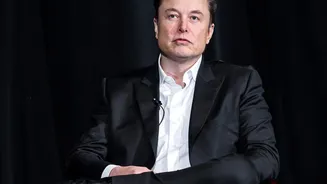
discussions, including one with Baron Capital CEO Ron Baron, Elon Musk has outlined a vision that positions SpaceX not as a direct operator of AI services, but as a crucial infrastructure provider. The core idea is to leverage SpaceX's unique capabilities to solve one of the biggest bottlenecks facing the artificial intelligence industry: the immense and growing demand for power and land for data centers. Instead of running the AI models themselves as a primary business, SpaceX would provide the backbone—specifically, the orbital infrastructure—that enables next-generation AI computing on a massive scale. This marks a strategic distinction, framing SpaceX and its Starlink satellite constellation as the enablers of an AI future, synergizing with Musk's other ventures like xAI and Tesla.
The Orbital Data Center Vision
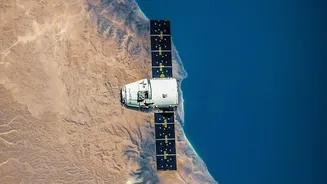
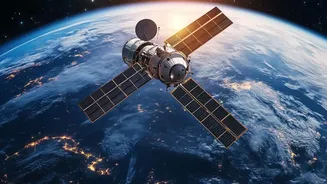
The centerpiece of this strategy is the concept of orbital data centers. Musk argues that terrestrial data centers are facing a growing crisis, constrained by power grid limitations, water usage for cooling, and increasing local opposition. His proposed solution is to move a significant portion of AI computing into space. These orbital data centers, potentially under the project name 'Starmind', would be satellites equipped with powerful processors from partners like NVIDIA and Google. In space, they can harness continuous solar power without atmospheric interference, getting about 30% more energy, and radiate heat directly into the vacuum, bypassing Earth's physical limits. Musk has expressed high confidence in this approach, stating that initial tests of NVIDIA and Google processors in orbit are working well.
Starship and Starlink: The Twin Pillars
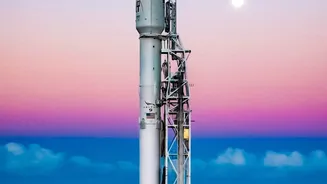
This ambitious plan hinges on two key SpaceX technologies: Starship and Starlink. Starship, designed as a fully reusable rocket, is essential for making the deployment of thousands of data center satellites economically viable. Musk claims it could lower the cost of accessing space by a factor of 100 or more. Meanwhile, the existing Starlink satellite internet constellation provides the blueprint for the communications layer. The orbital data centers would be interconnected with high-speed laser links, forming a mesh network in space that can process data in orbit before transmitting it to ground stations. This integration of launch capability and an existing orbital network gives SpaceX a formidable advantage in building out this new class of infrastructure.
An Empire Built on Synergy
This strategy isn't just about SpaceX; it's about creating a vertically integrated ecosystem across Musk's companies. His AI firm, xAI (now part of SpaceX and sometimes referred to as SpaceX Super Intelligence), requires colossal computing power to train its models like Grok. Tesla needs vast computational resources for developing its Full Self-Driving (FSD) technology and the Optimus robot. By building his own terrestrial and orbital data center infrastructure, Musk can ensure his companies have priority access to the most constrained resource in the AI industry: raw compute. This reduces reliance on thirdrd party cloud providers and gives his ventures a strategic edge. The massive scale is already visible in terrestrial projects, such as a proposed 6nd gigawatt campus in Arizona.
Challenges and a Trillion - Dollar Bet
Despite the bold vision, the path forward is fraught with challenges. Experts point to significant hurdles, including the physics of dissipating immense heat from processors in a vacuum and protecting sensitive electronics from cosmic radiation. Furthermore, the plan to launch up to a million satellites has raised serious concerns among astronomers about light pollution and the proliferation of space debris. However, Musk is moving forward aggressively. Following its IPO, SpaceX has already entered into major compute agreements with companies like Anthropic and Google for its terrestrial data centers. With plans to begin launching the first 'Starmind' computers as early as the third quarter of next year and ramp up significantly in 2028, Musk is betting that space is the ultimate high ground in the global AI arms race.