


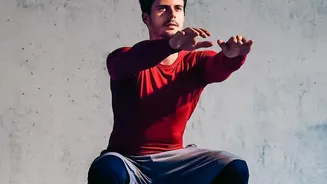
The Power Trio: Compound Movements
The reason squats, push-ups, and planks are so effective is that they are 'compound' exercises. This means they work multiple muscle groups across several joints simultaneously. Instead of isolating one tiny muscle, you engage large portions of your body
with every single rep. This is key for an efficient workout, giving you the most benefit in the shortest amount of time. For a student pressed for time, this efficiency is everything. This trio targets your lower body, upper body, and core, providing a balanced, full-body routine without needing any equipment.
Squats: The Foundation of Strength
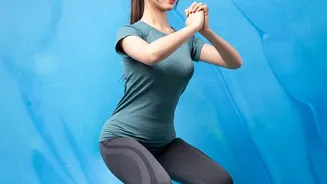
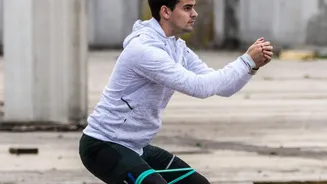
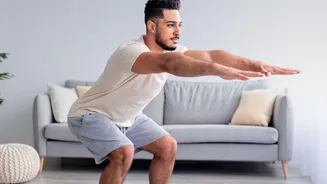
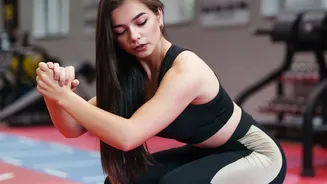
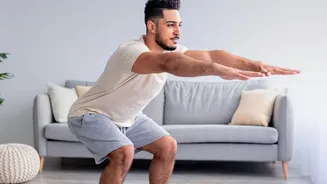
The bodyweight squat is the king of lower-body exercises. It primarily targets your quadriceps, hamstrings, and glutes—the largest muscles in your body. Working these big muscles helps build functional strength, which you use every day when climbing stairs or lifting a heavy bag. Squats also heavily engage your core to keep your torso upright and stable throughout the movement. To perform a basic squat, stand with your feet shoulder-width apart, keep your chest up, and lower your hips as if sitting in a chair. Go as low as you can comfortably, then press through your heels to return to the start. This single move builds leg power, improves mobility, and burns a significant number of calories.
Push-Ups: For Upper Body and Core
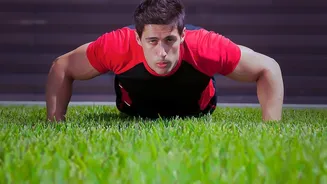
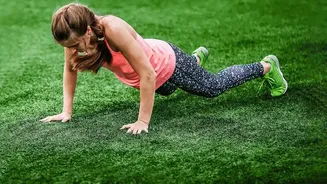
The push-up is a fundamental exercise for building upper-body strength. It works your chest muscles (pectorals), shoulders (deltoids), and the back of your arms (triceps). But its benefits don't stop there. To hold a proper push-up position, you must maintain a rigid, straight line from your head to your heels, which requires immense core stabilisation. This makes it an excellent core workout, just as effective as a plank in many ways. If a standard push-up is too difficult, you can start with incline push-ups (placing your hands on a desk or bed) or by doing them on your knees. These modifications allow you to build strength progressively until you can perform a full push-up with perfect form.
Planks: The Ultimate Core Stabiliser
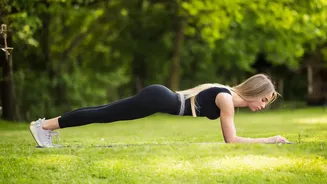
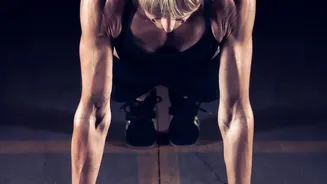
While squats and push-ups engage the core, the plank isolates it. A strong core is not just about having visible abs; it's about creating a stable centre that protects your spine and improves posture—crucial for students who spend hours hunched over books and laptops. The plank strengthens the deep internal abdominal muscles that support your back. To perform a plank, hold a push-up position, either on your hands or forearms, keeping your body in a perfectly straight line. Avoid letting your hips sag or rise too high. Holding this position for as long as you can builds endurance and stability throughout your entire torso.
Putting It All Together: Your Hostel Workout
Consistency is more important than intensity. Aim to perform this workout 3-4 times a week on non-consecutive days to allow your muscles to recover. A great way to structure it is as a circuit. Perform one set of each exercise back-to-back with minimal rest in between. After completing all three, rest for 60-90 seconds, and then repeat the entire circuit 3-4 times. A sample routine could be: 10-15 squats, followed immediately by 8-12 push-ups (or a modified version), followed by a 30-60 second plank hold. This entire workout can be completed in less than 20 minutes in the small space between your bed and desk, making it a perfect, no-excuses routine for hostel life.