


The Versatile Roles of Dahi
Before diving into specific dishes, it's crucial to understand why dahi is so essential. Its primary function is to provide a sour taste and creamy texture, acting as a balancing agent for the bold, warming spices typical in Indian food. Dahi is a natural
souring agent, offering a gentler tang than tamarind or vinegar. It's also a tenderizer and, most importantly, the base for entire categories of gravies that are distinct from those built on tomatoes, onions, or coconut milk. This versatility allows it to star in everything from uncooked side dishes to slow-simmered main courses.
Kadhi: The Quintessential Dahi Curry
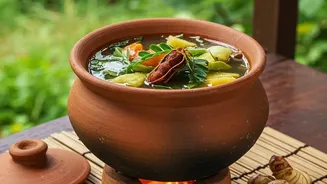
Perhaps the most famous dahi-based dish is kadhi. At its core, kadhi is a gravy made by simmering a mixture of dahi and besan (gram flour) with spices. The besan acts as a stabilizer, preventing the curd from splitting and giving the gravy its characteristically thick, smooth consistency. From this basic principle, countless regional variations emerge. Punjabi kadhi is thick, sour, and often includes fried vegetable fritters (pakoras). In contrast, Gujarati kadhi is thinner, lighter, and has a unique sweet and sour taste from the addition of jaggery or sugar. Rajasthani kadhi is known for being particularly spicy and tangy, often omitting pakoras in favour of a robust tempering of ghee and chillies.
Raita and Pachadi: The Cooling Companions
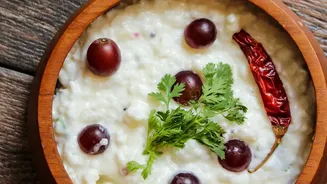
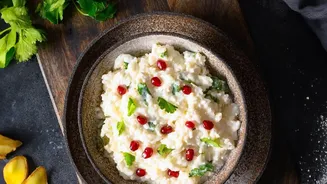
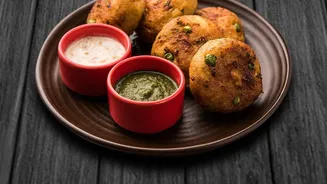
On the simpler side of the spectrum are raitas and pachadis. These are cooling yogurt-based side dishes that provide a refreshing contrast to spicy main courses. Raita, popular across North India, typically involves whisked dahi mixed with raw or lightly cooked vegetables like cucumber, onion, or tomato, and seasoned with spices like roasted cumin powder. Pachadi is the South Indian counterpart, but the preparations can be more complex. While some pachadis are similar to raita, others involve cooking the vegetables and grinding them with coconut, green chillies, and mustard seeds before mixing with the yogurt. The key difference often lies in the tempering (tadka); where a raita might get a simple spice dusting, a pachadi is almost always finished with a sizzle of mustard seeds and curry leaves in hot oil.
Dahi Gravies Beyond Kadhi
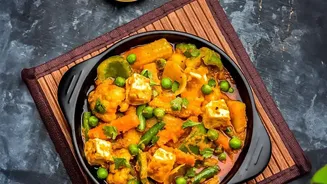
Beyond the world of kadhi, dahi is used to create rich, standalone gravies for vegetables. Dishes like Dahi Aloo (potatoes in a yogurt gravy) or Dahi Bhindi (okra in a yogurt sauce) showcase this beautifully. In these preparations, dahi forms the main body of the curry. Unlike a korma, where yogurt might be combined with nuts and cream for richness, these dishes put the tangy flavour of the curd front and centre. The result is a gravy that is lighter than a creamy tomato-based makhani but more substantial than a simple stir-fry, clinging perfectly to vegetables like potatoes, okra, or bottle gourd.
Cooking with Dahi: The Golden Rules
The biggest challenge when cooking with dahi is preventing it from splitting or curdling when it hits a hot pan. The protein in yogurt can separate from the whey when heated too quickly. There are a few golden rules to avoid this. First, always use full-fat dahi, as the higher fat content provides stability. Second, bring the dahi to room temperature and whisk it until it is perfectly smooth before adding it to your dish. For extra insurance, you can whisk in a teaspoon of besan (gram flour) or cornstarch to stabilize the yogurt. Finally, always lower the heat of your pan before adding the dahi, and stir continuously until it is fully incorporated and gently warmed. Never let the gravy come to a rapid boil after the yogurt has been added.