






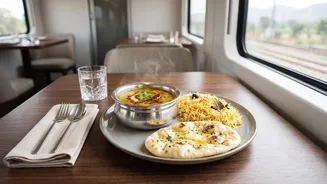


A Long-Standing Passenger Grievance
For decades, the experience of dining on Indian Railways has been inconsistent at best. Complaints about unhygienic preparation, poor quality ingredients, overcharging, and stale food have been a constant thorn in the side of millions of daily passengers.
While the Railways serves an astonishing number of meals—averaging around 1.65 million daily—concerns over food safety have often overshadowed the convenience. In response to this persistent issue, which has seen numerous complaints filed through portals like RailMadad, the authorities are now implementing a multi-pronged strategy designed to bring transparency and reliability to onboard catering.
Introducing Independent Audits
A cornerstone of the new plan is a strategic partnership between the Indian Railway Catering and Tourism Corporation (IRCTC) and the Quality Council of India (QCI). This collaboration introduces independent, third-party audits of catering services, a significant shift from relying solely on internal checks. QCI-certified professionals will conduct surprise inspections of mobile pantry cars and static base kitchens. These audits will be unannounced and conducted at regular intervals to ensure vendors are always compliant. To guarantee transparency and prevent data tampering, inspectors will use a mobile application to log their findings, complete with geo-tagged photos and timestamps. This digital trail ensures that any violations are documented with concrete evidence, leaving no room for dispute.
Technology as the Watchful Eye
Beyond human audits, technology is being deployed as a round-the-clock supervisor. Indian Railways has begun installing AI-enabled CCTV cameras in base kitchens and pantry cars. These systems are not just for passive recording; they are programmed to actively monitor for hygiene lapses. The AI can detect if staff are not wearing caps or gloves, identify the presence of rodents, or flag other unsanitary conditions in real-time. If a violation is detected, an alert is automatically generated. The system is designed to escalate the issue to higher officials if the local contractor fails to take corrective action within a set time, ensuring that problems are addressed swiftly.
Stricter Penalties and Greater Transparency
To give the new system teeth, Railways is enforcing stricter penalties for non-compliant vendors. Over the last few years, fines amounting to crores have been imposed on service providers for various violations. Actions have included not just financial penalties but also the termination of contracts and the debarring of licensees who repeatedly fail to meet standards. To further empower passengers and increase transparency, IRCTC now publishes a list of debarred vendors on its website. This move holds vendors publicly accountable and informs passengers about contractors with a poor track record. The goal is to create a system where the fear of tangible consequences—financial and reputational—drives adherence to quality standards.
The Passenger's Role in Accountability
The new framework also empowers passengers to become active participants in quality control. Many food packets now come with QR codes that, when scanned, reveal crucial information like the name and location of the preparing kitchen and the date of packaging. This allows travelers to instantly verify the freshness and origin of their meal. Furthermore, to combat the issue of unauthorized vendors, all official catering staff are being issued QR-code enabled identity cards. Passengers can scan these cards to confirm the vendor's authenticity, ensuring they are purchasing from a legitimate and accountable source. By using these tools and continuing to report issues through official channels, passengers play a vital role in making the new system effective.