







The Push for Segregation
Under national campaigns like the Swachh Bharat Mission, cities and towns have made significant strides in encouraging citizens to separate their household waste. The logic is sound: organic (wet) waste, which makes up more than half of the municipal
solid waste in India, can be transformed into valuable resources instead of rotting in landfills. This reduces the burden on overflowing dump sites and cuts down on harmful methane gas emissions. The familiar system of green bins for wet waste and blue bins for dry waste is the visible frontline of this battle. However, the journey of that waste is far more complex than just its collection. The real challenge, and the frequent point of failure, lies in what happens after the collection truck drives away. Without a solid plan for the next stage, the entire effort of segregation can be wasted.
Two Paths for Wet Waste
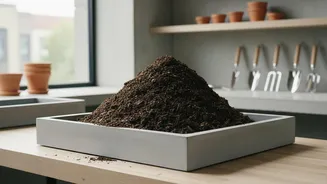
Once collected, segregated kitchen waste typically follows one of two main processing routes: composting or anaerobic digestion. Composting is an aerobic process where microorganisms break down organic matter in the presence of oxygen, creating a dark, nutrient-rich material called humus, or compost. This product is an excellent soil conditioner, ideal for agriculture and horticulture. The second path is anaerobic digestion, or biomethanation. In this process, waste is broken down by microbes in an oxygen-free environment. This produces two main outputs: biogas, a mixture of methane and carbon dioxide that can be used for cooking or generating electricity, and a nutrient-rich liquid slurry that can also be used as a fertiliser. Both paths align with the principles of a circular economy, turning waste into wealth. The key, however, is that both produce a tangible product that needs a home.
The Missing Market Bottleneck
This is where many well-intentioned projects falter. A city can set up a state-of-the-art composting plant, but if there is no one to buy or use the compost it produces, the facility will soon be overwhelmed. The compost piles up, occupying space and eventually becoming a new kind of landfill. Several factors contribute to this, including a lack of awareness among potential users and competition from subsidised chemical fertilisers. Similarly, a biogas plant is only economically viable if there is a buyer for the energy it generates. If a plant is designed to produce Bio-CNG for vehicles, for example, it needs a reliable agreement with fuel companies to offtake the gas. Without these secure end markets, the revenue stream dries up, and the plant cannot cover its operational costs, often leading to it running at a fraction of its capacity or shutting down entirely. Reports on failed or underperforming plants frequently cite inconsistent feedstock supply and the absence of a viable business model for the outputs as primary reasons for failure.
Planning Backwards for Success
The most successful waste-to-value projects are those that are planned backwards. Instead of a “collect and hope” model, they begin with a clear and secured end use. This means identifying the market first. Before construction begins, project developers secure agreements with fertiliser companies, local farmer cooperatives, horticulture departments, or energy purchasers. For example, a project in Indore processes hundreds of tons of city waste into Bio-CNG, demonstrating a model where the end product has a clear destination. Some corporate campuses and residential societies have also found success by creating a closed-loop system, using the biogas generated from their canteen waste to replace LPG in their kitchens and using the slurry as manure for their own gardens. This approach, known as securing the feedstock and the offtake, de-risks the project and ensures its long-term sustainability. It transforms the project from a simple waste management exercise into a viable, circular economic activity.